

DX2B Thermal UAV Gimbal: Compact 4K EO/IR Tracking
Compact Airborne Imaging Across Visible and Thermal Spectrums
The DX2B thermal UAV gimbal combines visible-light imaging, infrared observation, and laser ranging in one 125 g payload. Therefore, operators can gather several types of mission data without changing airborne equipment. The integrated EO camera records 3840 × 2160 video at 30 fps. Additionally, it offers 10× continuous optical zoom and up to 40× hybrid zoom. The thermal module produces 640 × 512 imagery at 50 fps for responsive day-and-night observation. Meanwhile, the integrated laser rangefinder gimbal measures distances of at least 1,000 meters. Built-in vehicle and human recognition also make the unit a capable target tracking gimbal. Because every sensor shares the same stabilized platform, the operator receives a more coordinated view of the scene. The three-axis system controls yaw, pitch, and roll while maintaining a stabilization accuracy of 0.1 mrad under the stated test condition. Furthermore, its palm-sized micro drone gimbal design supports compact UAV and robotic observation platforms. Picture-in-picture viewing can place thermal information beside or within the visible feed. In addition, rich OSD overlays can present camera, target, and robot information. The enclosed CNC-machined metal housing offers protection, heat dissipation, and EMC-compliant anti-interference performance. As a result, the DX2B provides a practical payload for public security, environmental monitoring, forest-fire observation, and law-enforcement missions.
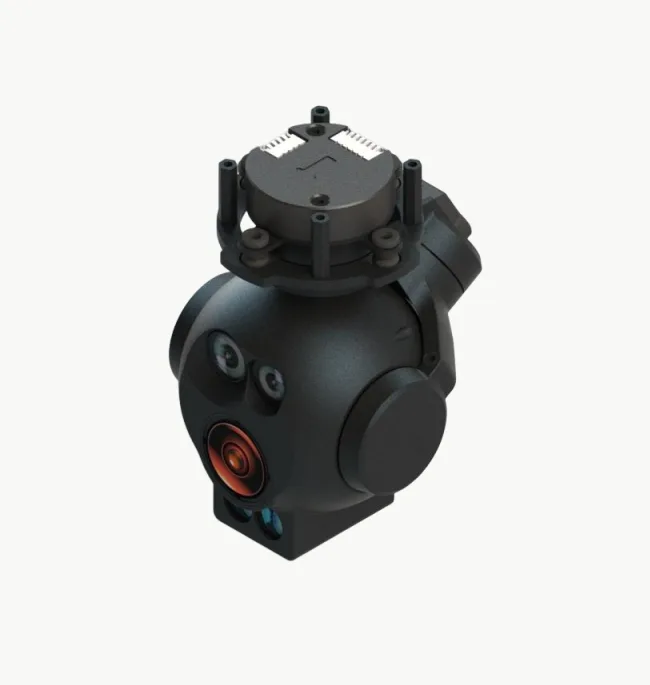
DX2B Thermal UAV Gimbal Specifications
The core specifications show how the DX2B balances imaging performance with compact integration. Notably, the visible and thermal modules use the same three-axis platform and network video connection. The table below summarizes the principal operating details.
| Category | DX2B specification |
|---|---|
| Payload | Triple-mode micro-pod weighing 125 g |
| EO imaging | 3840 × 2160 CMOS, 4K at 30 fps |
| EO zoom | 10× continuous optical zoom and 40× hybrid zoom |
| EO field of view | 84° × 53° wide; 20° × 11° telephoto |
| Thermal imaging | 640 × 512 at 50 fps; 32° × 26° field of view |
| Laser range | At least 1,000 m |
| Movement range | Yaw ±110°; pitch -100° to +40°; roll ±45° |
| Precision | Position accuracy ≤0.3°; stabilization accuracy 0.1 mrad |
| Tracking speed | At least 100°/s |
| Video | Ethernet and RTSP; H.264/H.265 encoding; MP4 storage |
| Control | TTL 3.3 V and RS232 through UART; optional SBUS |
| Power | 12–28 V DC; average ≤6 W and maximum ≤15 W |
| Temperature limits | Operation from -20°C to +55°C; storage from -20°C to +60°C |
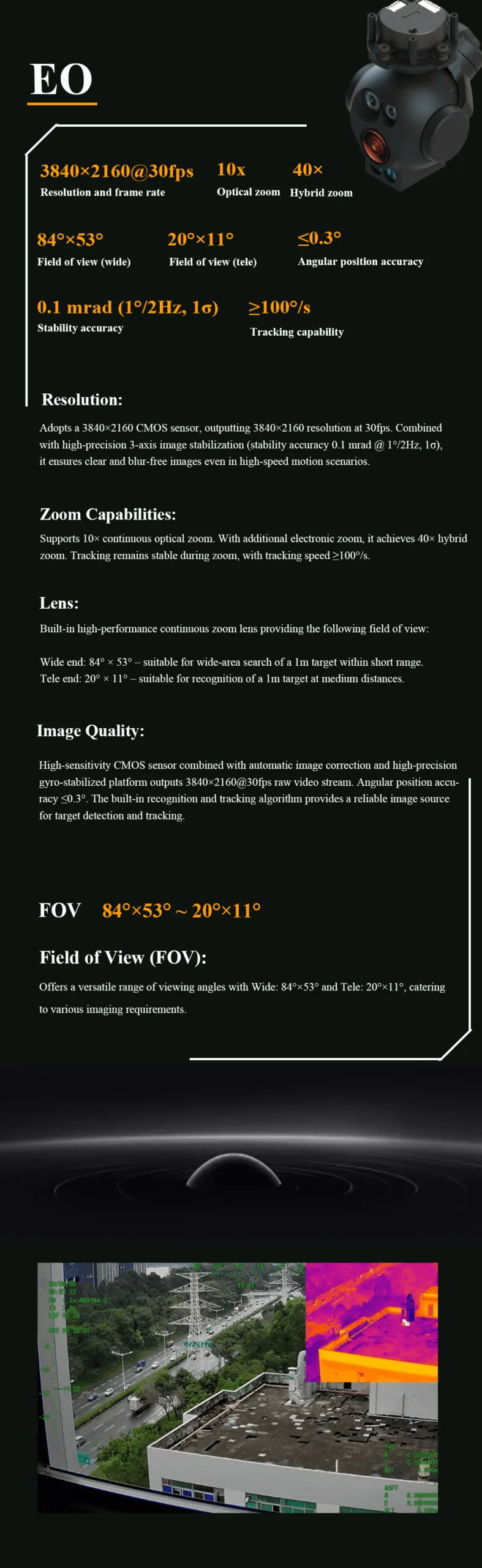
Visible and Thermal Imaging for Day-and-Night Missions
The visible camera supports both wide-area searching and closer target recognition. Its 84° × 53° wide view helps operators scan broad scenes. In contrast, the 20° × 11° telephoto view provides a narrower perspective for examining distant details. The 10× optical zoom preserves optical detail while changing magnification. Moreover, 40× hybrid zoom extends the available viewing range when conditions allow.
When visible light becomes limited, the thermal camera adds heat-based observation. The module supports White Hot, Black Hot, Iron Red, Rainbow, and Fusion palettes. Depending on the installed infrared configuration, operators can select from six to fifteen palette options. Therefore, they can adapt the display to different scenes and viewing preferences. A temperature-bar overlay is also supported. Additionally, the DX2B thermal UAV gimbal can combine visible and thermal streams through picture-in-picture display.
This multispectral approach benefits several field applications. For instance, environmental teams can observe industrial areas with visible and infrared views. Similarly, fire-monitoring teams can use thermal imagery to identify heat signatures. Public-security operators can also switch between wide-area search and closer recognition. As a result, the micro drone gimbal supports changing light and mission conditions without requiring a payload swap.
How the Laser Rangefinder Gimbal Supports Target Tracking
The integrated laser rangefinder gimbal adds measured distance to the imaging workflow. It provides a stated range of at least 1,000 meters. Therefore, an operator can observe a target and request ranging data from the same compact payload. This arrangement reduces the complexity associated with separate imaging and ranging units.
Meanwhile, the target tracking gimbal includes selectable recognition modes for vehicles and people. After the relevant mode is selected, the system can identify and follow the corresponding target type. Notably, its tracking capability and maximum angular velocity reach at least 100° per second. Tracking is also designed to remain stable while the camera zooms. Consequently, operators can adjust framing without intentionally ending the tracking process.
The laser rangefinder gimbal and tracking functions share the same stabilized structure. However, each function contributes different information. Tracking helps keep the selected subject within the frame. Ranging, on the other hand, supplies distance data. In addition, rich OSD can display camera, target, and robotic platform information on the video feed. Together, these features improve situational awareness during vehicle observation, human tracking, and medium-distance recognition.
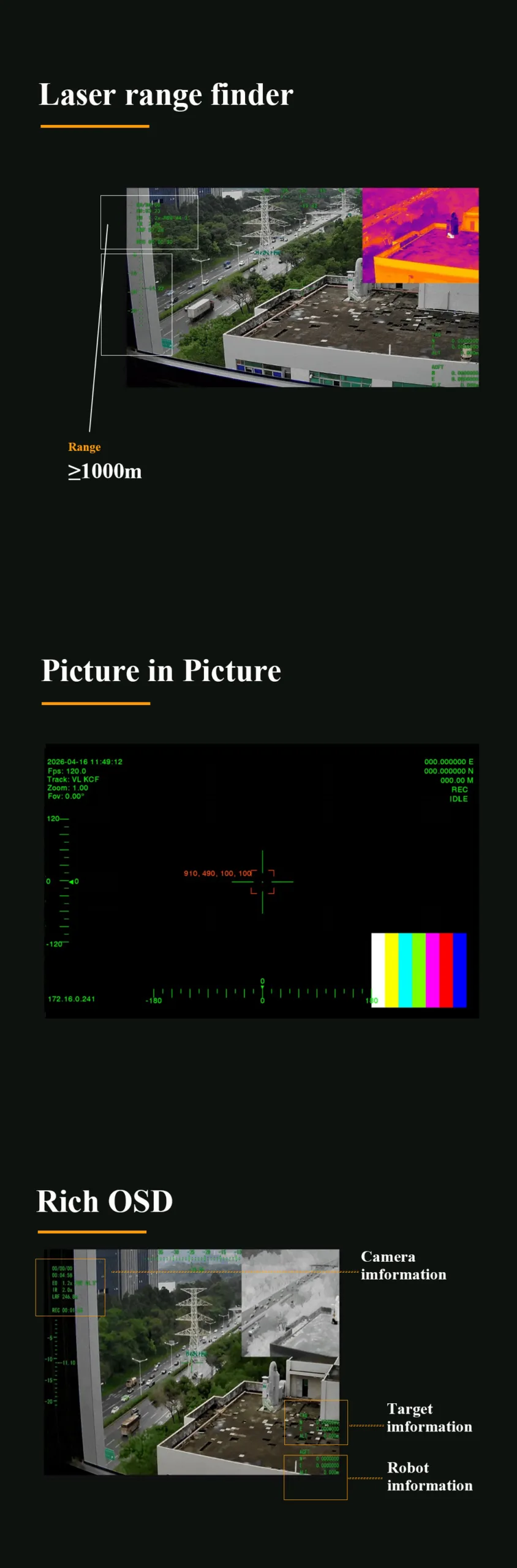
Three-Axis Stabilization and Compact Integration
A compact payload still needs controlled movement during flight. Accordingly, the DX2B thermal UAV gimbal stabilizes yaw, pitch, and roll. The yaw axis rotates ±110°, while the pitch axis moves from -100° to +40°. Meanwhile, the roll axis provides ±45° of movement. This roll control helps maintain a level horizon during rapid aircraft maneuvers.
The platform specifies angular position accuracy of no more than 0.3°. Furthermore, its listed stabilization accuracy is 0.1 mrad under a 1°/2 Hz, one-sigma test condition. These values support clear imaging when the aircraft changes direction or encounters vibration. Automatic EO image correction also contributes to a more consistent visible feed.
Integration is supported through Ethernet and RTSP network video. Additionally, H.264 and H.265 encoding can reduce bandwidth requirements for compatible systems. Control options include TTL 3.3 V and RS232, while SBUS is optional. The default control method is TTL. Therefore, system integrators can select an interface that matches the intended UAV or robotic platform.
The machined-metal housing encloses the electronic components and avoids exposed external B2B connectors. Moreover, the structure is designed for heat dissipation and anti-interference performance. The average power requirement is no more than 6 W, although peak consumption can reach 15 W. As a result, this micro drone gimbal balances several sensor functions with modest average power demand.
Practical Applications for the DX2B
The DX2B thermal UAV gimbal is suited to operations that require compact, stabilized, multispectral observation. Firstly, public-security teams can use vehicle or human recognition during airborne monitoring. Secondly, environmental projects can compare visible imagery with thermal patterns. Additionally, forest-fire teams can examine heat signatures across monitored areas. Law-enforcement and border-observation teams can also combine tracking with measured range data.
- Day-and-night surveillance: Switch between 4K EO and 640 × 512 thermal imagery.
- Vehicle monitoring: Use the target tracking gimbal mode for roadway and perimeter scenes.
- Human observation: Apply infrared recognition and tracking in suitable operational environments.
- Environmental inspection: Combine visible details with thermal patterns and OSD information.
- Fire monitoring: Use thermal palettes to observe heat signatures and changing fire conditions.
- Medium-distance recognition: Use telephoto EO imaging together with the laser rangefinder gimbal.
Finally, integrators should confirm mechanical and electrical compatibility before installation. The engineering drawing labels an overall height of 71.9, a front width of 47.60, and a side depth of 54.4. However, the visible drawing does not explicitly state the measurement unit. It also shows a four-hole M2 mounting pattern. Therefore, installers should verify the final dimensional drawing and connector requirements with the supplier.
Related links
website
product-link
Phone
Related Posts
-
DA60N Mini Infrared UAV Pod: 200g Thermal Camera Payload for Catapult Drones
-
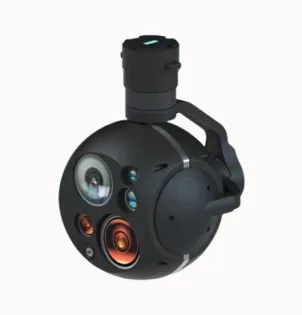
DT30DL Multi-Sensor Dual-Field EO/IR Laser Rangefinder Gimbal for Drone Surveillance
-
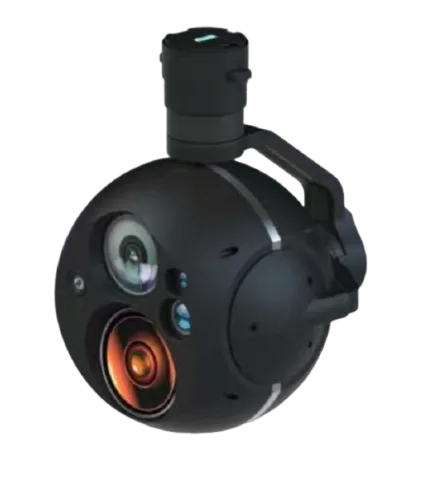
DS30E EO/IR Gimbal: Triple-Sensor Thermal Drone Camera with Laser Rangefinder & AI Tracking
-
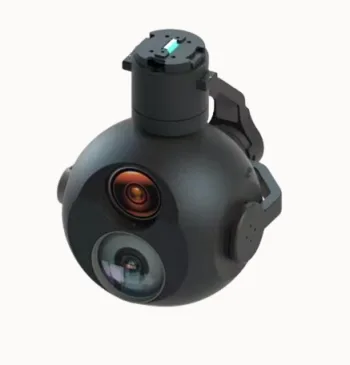
DD360Pro Micro Gimbal Pod: Professional Triple-Mode EO/IR Payload for UAVs