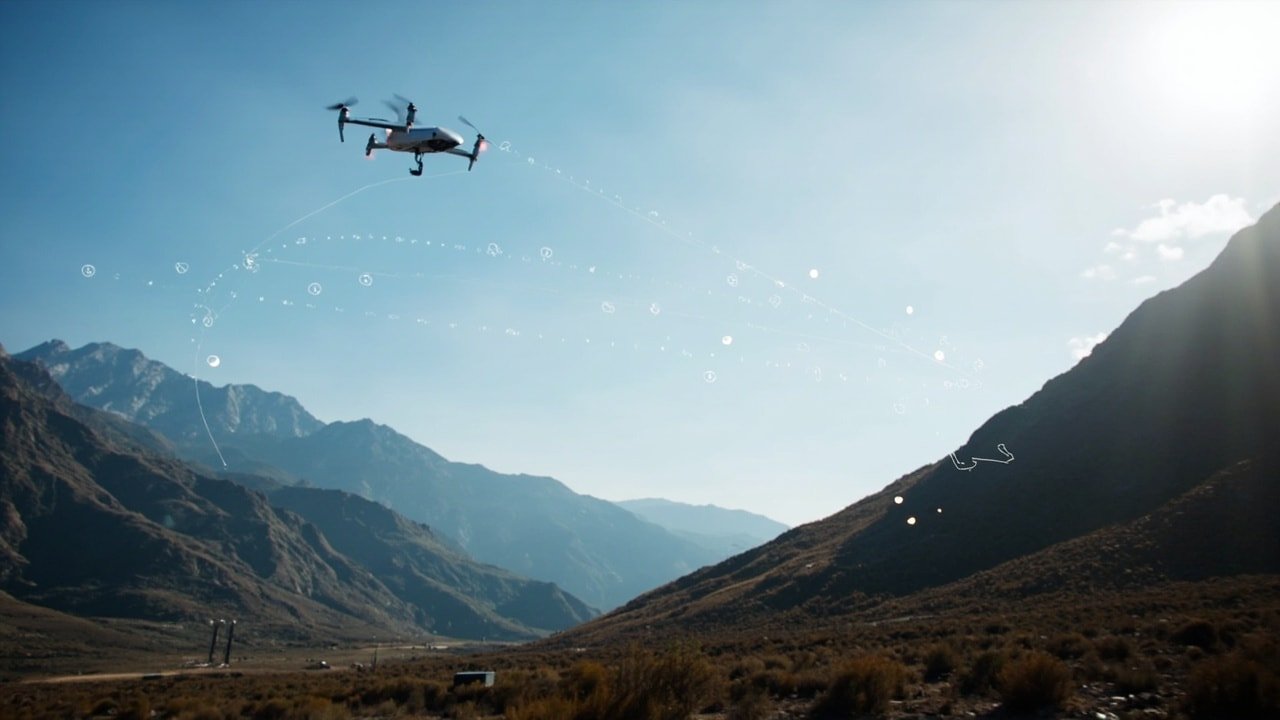
DA531 EO/IR Gimbal: Imaging, Ranging and Tracking for UAV Missions
Camera Systems · Product guide
The DA531 is a lightweight three-axis EO/IR gimbal for UAV operators who need stabilized visible-light and thermal observation in one payload. It adds laser ranging, vehicle and human recognition, automatic tracking, picture-in-picture display and target coordinate output. Its approximately 180 g weight and 12–28 V DC input make it a candidate for UAV platforms where payload capacity, electrical integration and sensor positioning require careful evaluation.
Verified specifications
| Weight | Approximately 180 g |
|---|---|
| Visible-light sensor | 5 MP, 1/1.8-inch sensor with a 6 mm lens and F2.0 aperture |
| Visible-light video | 2560×1440 at up to 50 fps; H.265 encoding |
| Thermal imaging | 640×512 or 256×192, up to 50 Hz; 8–14 μm wavelength |
| Laser ranging | Approximately 5–1000 m range, ±1 m accuracy and 1–5 Hz measurement frequency |
| Video output interface | Ethernet |
| Control interfaces | TTL, RS232 and S.BUS; TTL is the default |
| Power requirements | 12–28 V DC; average consumption ≤6 W and maximum consumption ≤15 W |
Visible and thermal imaging
The DA531 pairs a 5 MP, 1/1.8-inch visible-light camera with a separate infrared sensor. The visible channel records and transmits 2560×1440 video at up to 50 fps, while its 6 mm lens provides a listed field of view of 49.8° horizontally and 29.3° vertically. A 10× digital zoom is available for closer observation, although the gimbal does not provide optical zoom.
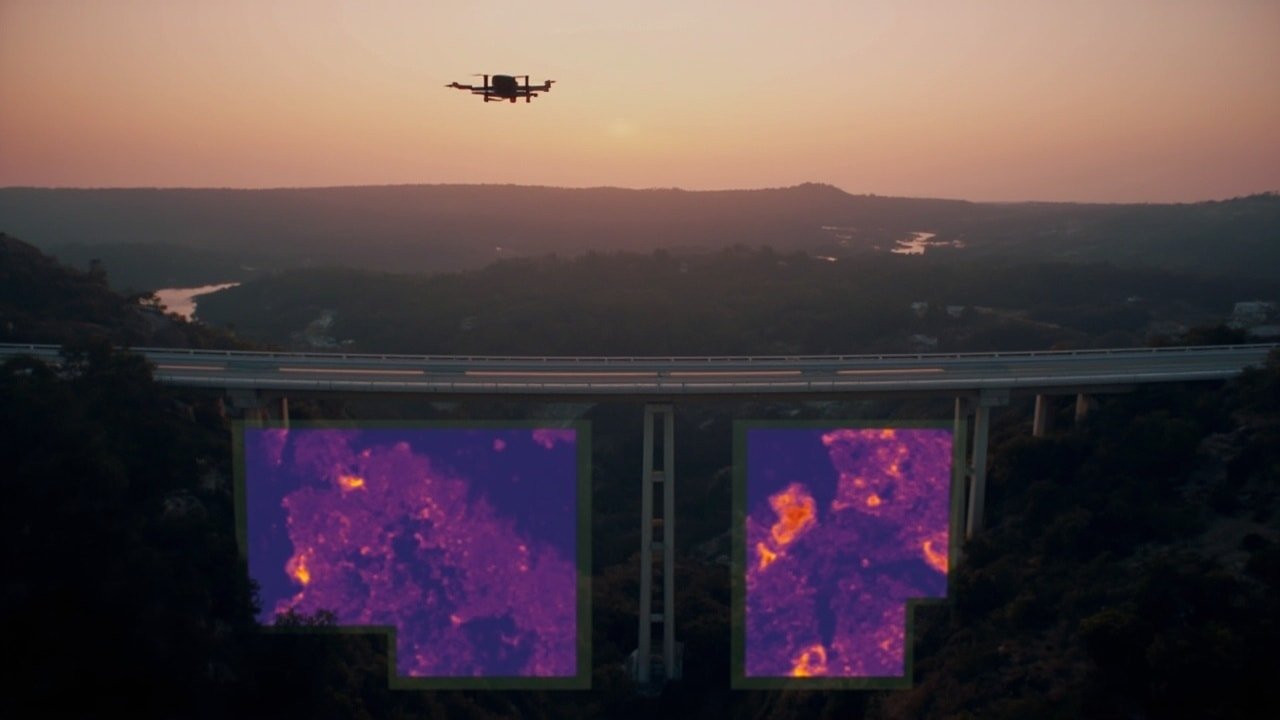
Thermal imaging is available at 640×512 or 256×192 with frame rates up to 50 Hz. The infrared channel uses a 9.1 mm lens, F1.0 aperture and 12 μm pixel pitch. Operators can view the channels independently, use dual-light fusion or combine them in a picture-in-picture layout, making the payload useful when visible detail and heat-source context need to be considered together.
Ranging, recognition and tracking
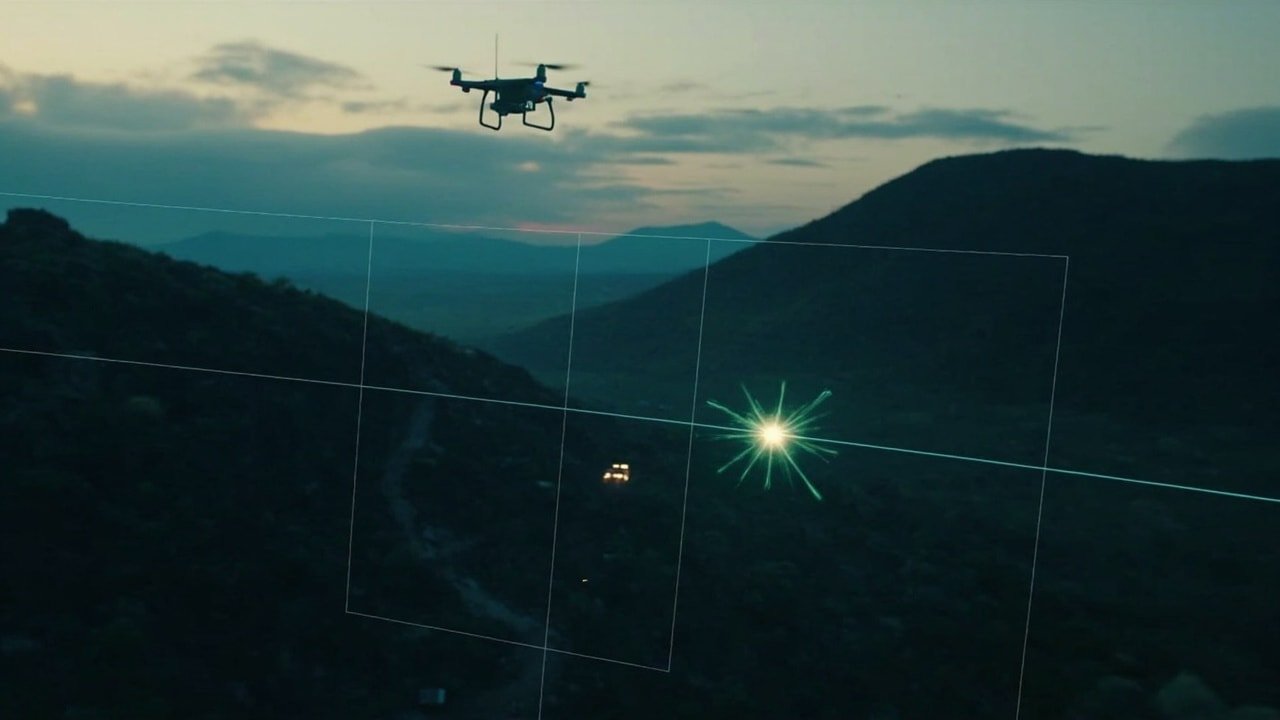
An integrated laser range finder measures from approximately 5 m to 1000 m, with stated accuracy of ±1 m and a measurement frequency of 1–5 Hz. The DA531 also supports target latitude and longitude output. These functions can support reconnaissance workflows that require distance or positional information, but operators should verify how coordinate data is generated, transmitted and represented within their own ground-control environment.
The imaging system supports vehicle and human recognition along with automatic target tracking. Picture-in-picture presentation allows visible and thermal views to remain available together, while the OSD can display camera, target and platform information. Recognition and tracking are confirmed product functions, but performance in a particular scene depends on target visibility, environmental conditions and the selected operating workflow.
- Confirm the format and timing of target coordinate output.
- Check how tracking commands and target information appear in the ground station.
- Test recognition and tracking with the target types used in your mission.
UAV mission applications
The combination of stabilized EO/IR imaging, ranging and tracking supports UAV reconnaissance, public-security patrol, event monitoring and observation of important areas. Thermal imaging can help operators locate heat sources in darkness or reduced visible-light conditions, while the visible channel records detail at 2560×1440. These are suitable civilian uses for authorized aerial observation and monitoring.
The payload also fits environmental inspection, forest-fire monitoring and emergency-search workflows where thermal anomalies may need review from the air. Video is stored in MP4 format on a TF card using FAT32, with support for cards up to 256 GB. Local storage and Ethernet transmission give operators options for recording imagery, but actual mission suitability depends on available onboard storage, flight duration and ground-station connectivity.
- Use thermal views to identify areas for closer visible-light inspection.
- Plan recording capacity around the selected resolution and mission duration.
- Apply target recognition and tracking only within authorized monitoring activities.
Integration and selection checks
At approximately 180 g, the DA531 is relatively light, but payload integration still requires checking the UAV’s available mounting capacity, center of gravity and flight-time impact. The gimbal accepts 12–28 V DC and may consume up to 15 W, so the power system and wiring must accommodate both supply voltage and peak demand. Its listed operating range is -20°C to +55°C, with storage temperatures from -40°C to +70°C.
The video path uses Ethernet, while control options include TTL, RS232 and S.BUS, with TTL listed as the default. Before installation, confirm the required control protocol, connector arrangement, data flow and coordinate-message format with the supplier. The gimbal also has a stated shock resistance of at least 400 g, but that specification should not be treated as proof of compatibility with every airframe or mounting arrangement.
Selection should balance payload mass, power draw, stabilization, field of view and thermal-resolution needs. Operators comparing alternatives should also distinguish digital from optical zoom, verify the required thermal output mode and confirm how picture-in-picture and OSD data will be used in their mission display.
- Verify payload capacity, mounting geometry and center-of-gravity impact.
- Confirm the 12–28 V DC supply and up-to-15 W power requirement.
- Check Ethernet video, control protocol and coordinate-output compatibility.
- Validate environmental requirements and shock expectations for the airframe.
Frequently asked questions
What imaging does the DA531 provide?
The DA531 combines a 5 MP visible-light camera with an infrared thermal sensor. Visible video and photos use 2560×1440 resolution, while thermal modes provide 640×512 or 256×192 output. Operators can use the channels separately, with dual-light fusion or in picture-in-picture presentation.
Does the gimbal support optical zoom?
No. The visible-light channel supports up to 10× digital zoom, but optical zoom is not supported. The specified visible-light lens is 6 mm, so operators requiring optical magnification should account for the fixed optical configuration when planning target observation.
Which interfaces are available for integration?
Video output is provided through Ethernet, and control interfaces include TTL, RS232 and S.BUS, with TTL identified as the default. Network communication uses TCP or UDP. These connections describe the available interfaces, but connector details, protocol settings and ground-station compatibility should be verified before installation.
How much power and payload capacity does it require?
The DA531 operates from 12–28 V DC, with average power consumption stated at no more than 6 W and maximum consumption at no more than 15 W. Its approximate weight is 180 g. Airframe payload capacity, center-of-gravity effects, available power and flight-time impact should be checked separately.