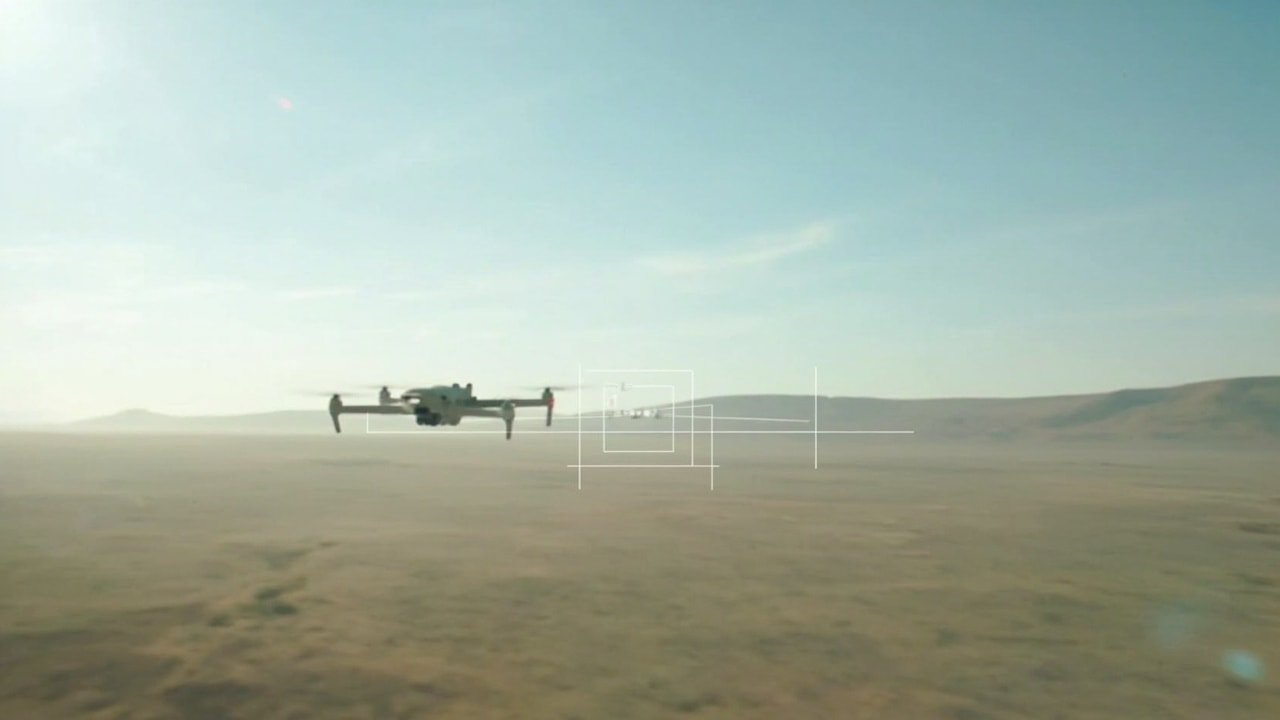
DX2A 4K EO/IR Micro UAV Gimbal with Target Tracking
Gimbal Pod · Product guide
The DX2A is a compact three-axis micro UAV gimbal that combines a 4K electro-optical camera, thermal imaging, servo stabilization, and target tracking in one payload. It suits UAV integrators and robotics teams needing stabilized day-and-night observation, network video, and human or vehicle tracking within a 105–120 g payload.
Verified specifications
| Payload weight | 105 g without shock absorber; 120 g with shock absorber |
|---|---|
| EO resolution and frame rate | 3840 × 2160 at 30 fps |
| EO zoom | 10× optical zoom and 40× hybrid zoom |
| Thermal resolution and frame rate | 640 × 512 at 50 fps, with a 13 mm focal length |
| Stabilization accuracy | 0.1 mrad at 1°/2 Hz, 1 sigma |
| Video output | Ethernet and RTSP output with H.264/H.265 encoding |
| Control interfaces | UART with TTL 3.3 V or RS232 protocol; optional SBUS |
| Power | 12–28 V DC input; average consumption up to 6 W and maximum consumption up to 15 W |
Dual-Mode Imaging and Zoom
The electro-optical channel records 3840 × 2160 video at 30 fps. Its 10× optical zoom narrows the wide field of view to a 20° × 11° tele view, while the documented 40× hybrid zoom provides additional framing flexibility when digital magnification is acceptable.
A separate thermal channel captures 640 × 512 imagery at 50 fps through a 13 mm lens. White hot, black hot, iron red, rainbow, and fusion palettes give operators different ways to interpret thermal contrast, with configuration options ranging from 6 to 15.

Stabilization and Tracking Operation
The three-axis gimbal provides ±110° yaw, -100° to +40° pitch, and ±45° roll movement. Servo stabilization is specified at 0.1 mrad under the stated 1°/2 Hz, 1-sigma condition, while angular position accuracy is listed as no more than 0.3°.
Built-in tracking supports human and vehicle observation, with EO tracking speed listed at or above 40°/s. Picture-in-picture and OSD information can present camera, target, and robot data alongside the image, helping operators understand tracking status without leaving the live view.
Network Video and Integration
The DX2A outputs video through Ethernet or RTSP and supports H.264/H.265 encoding. Recorded material uses MP4. This combination can fit a network-based ground workflow, although operators should verify the exact stream, recording, and command requirements with their control system before integration.
Control is available through UART using TTL 3.3 V or RS232, with optional SBUS. The payload accepts 12–28 V DC and has a 4 × M2 mounting pattern, making mechanical fit, voltage regulation, data bandwidth, and control wiring the main installation checks.
- Confirm the airframe can accommodate the 120 g installed weight.
- Verify the available voltage remains inside the 12–28 V DC input range.
- Check Ethernet, RTSP, UART, or SBUS compatibility with the control station.
- Confirm that the ground system supports the selected stream and codec.
Civilian Surveillance and Inspection Uses
For public security and law enforcement work, the EO and thermal channels support observation across daylight and low-light conditions, while tracking can assist with monitoring a human or vehicle. The network output allows imagery to be passed to a separate display or recording system.
Environmental monitoring and forest-fire observation are also documented application areas. Thermal palettes and stabilized viewing can help personnel inspect heat-related conditions, but the payload alone does not establish sensor accuracy, detection range, or performance in a particular scene.
Selection Tradeoffs and Checks
The DX2A balances EO detail with a lighter thermal channel and a payload weight below 130 g. Its operating temperature range is -20°C to +55°C, and the CNC metal housing is described as an integrated structure designed for heat dissipation and EMC compliance.
Buyers should assess zoom needs, thermal resolution, stabilization behavior, and available power against their mission. Shock absorber configuration also changes the installed weight from 105 g to 120 g, so payload calculations and mounting clearances should use the final configuration.
- Choose based on the required EO field of view and zoom level.
- Account for the shock absorber when checking payload allowance.
- Confirm tracking behavior and command support during integration testing.
- Review thermal performance under the expected operating conditions.
Frequently asked questions
What imaging modes does the DX2A provide?
The DX2A combines a 4K electro-optical camera with a 640 × 512 thermal camera. EO video is recorded at 3840 × 2160 and 30 fps, with 10× optical and 40× hybrid zoom. Thermal imagery runs at 50 fps and supports several color palettes.
How much does the gimbal payload weigh?
The payload weighs 105 g without the shock absorber and 120 g with it. Integrators should check the final installed configuration against the aircraft’s payload allowance and account for the gimbal, mounting hardware, wiring, and other equipment where applicable.
Which control and video interfaces are available?
Control uses UART with TTL 3.3 V or RS232 protocol, and SBUS is optional. Video can be delivered through Ethernet or RTSP with H.264/H.265 encoding. These documented interfaces do not by themselves confirm compatibility with a particular flight controller or ground station.
What power supply does the DX2A need?
The DX2A accepts 12–28 V DC input. Average power consumption is listed at no more than 6 W, with a maximum of 15 W. The power system must stay within that input range and provide adequate capacity for the configured operating load.