F405 vs F722 vs H743: How to Choose the Right Flight Controller for Your Frame
Why the Flight Controller Defines Your Build
Every FPV build starts with one decision that shapes everything else: the flight controller. In the F405 vs F722 vs H743 debate, the right answer depends on your frame, your firmware, and how far you plan to push tuning. Therefore, this guide compares all three boards using manufacturer specifications only.
The comparison covers the D-F405 V3, the D-F722 V2, and the D-H743. Moreover, all three share the same 30.5mm mounting pattern, so the choice comes down to computing power, sensors, and logging. As a result, you can move between them without changing your frame.
One Mounting Standard, Three Levels of Computing
All three boards use STM32 processors from different performance classes. Specifically, the F405 V3 runs an STM32F405RGT6 (Cortex-M4), the F722 V2 an STM32F722RET6 (Cortex-M7), and the H743 an STM32H743VIH6 (Cortex-M7, the top tier). In other words, the ladder goes value, then performance, then maximum headroom.
However, the MCU is only part of the story. Gyro configuration, BlackBox capacity, and power rails differ just as much across the three boards.
| Spec | D-F405 V3 | D-F722 V2 | D-H743 |
|---|---|---|---|
| MCU | STM32F405RGT6 (Cortex-M4) | STM32F722RET6 (Cortex-M7) | STM32H743VIH6 (Cortex-M7) |
| Gyro | ICM42688P | ICM42688P | MPU6000 + optional BMI270×2 |
| Barometer | SPL06 | BMP280 | BMP280 / DPS310 / MS5611 (optional) |
| BlackBox | 16MB (microSD) | 16MB | 128MB |
| Motor outputs | 8 | 8 | 8 |
| UARTs | 5 | 5 | 5 |
| BEC output | 5V/2.5A, 9V/3A | 4.5V/2A, 5V/2.5A, 9V/3A | 5V/2A, 5.9V/3A |
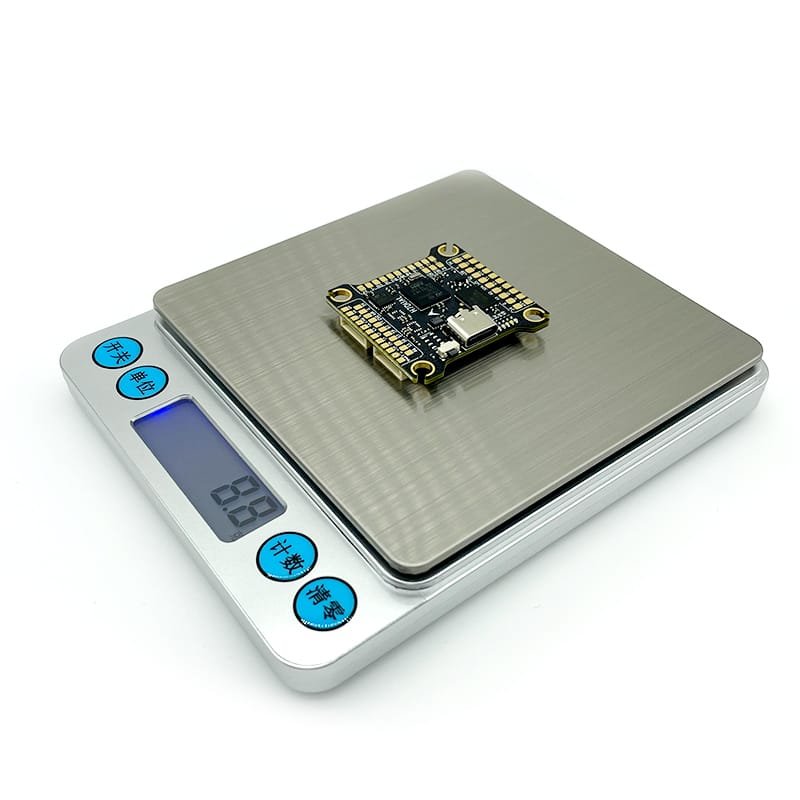
| Weight | 9.6g | 9.4g | 8.8g |
| Board size | 36×36mm | 37×37mm | 37×37mm |
| Mounting | 30.5×30.5mm | 30.5×30.5mm | 30.5×30.5mm |
| Firmware name | RCF405V3 / RCF405V3SD | RCF722V2 | RCH7DUAL |
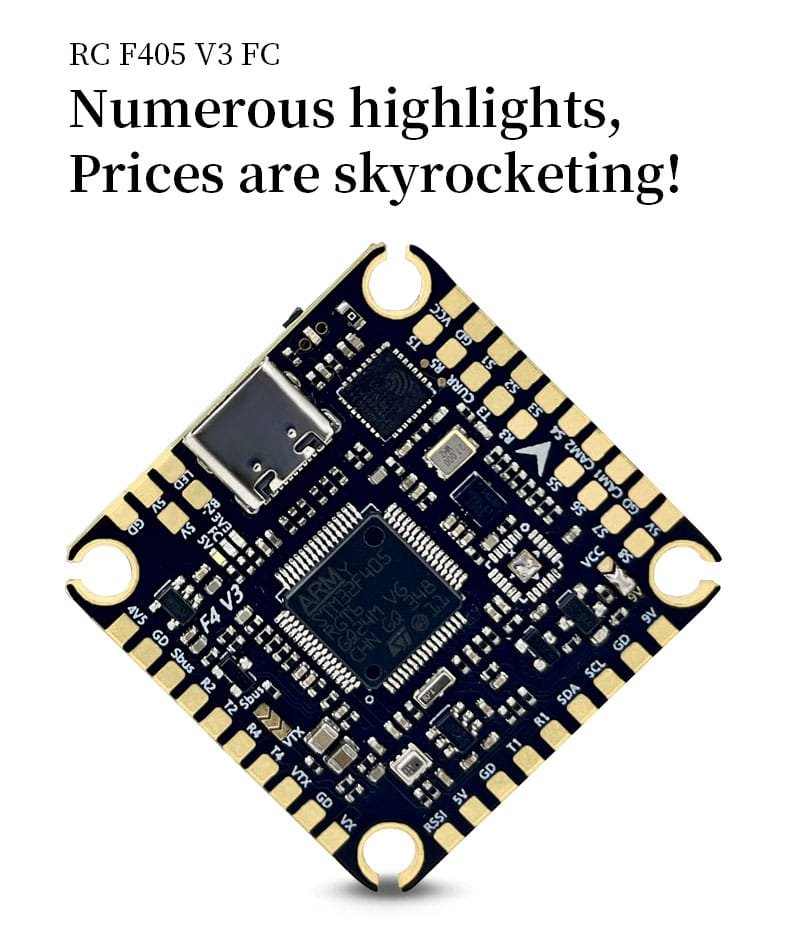
D-F405 V3: The Lightweight All-Rounder
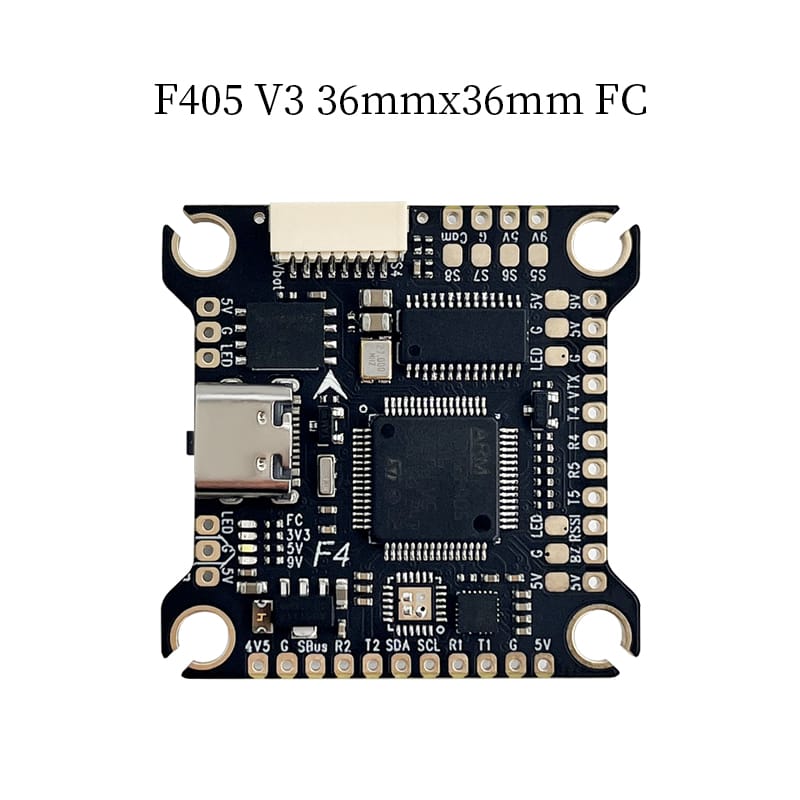
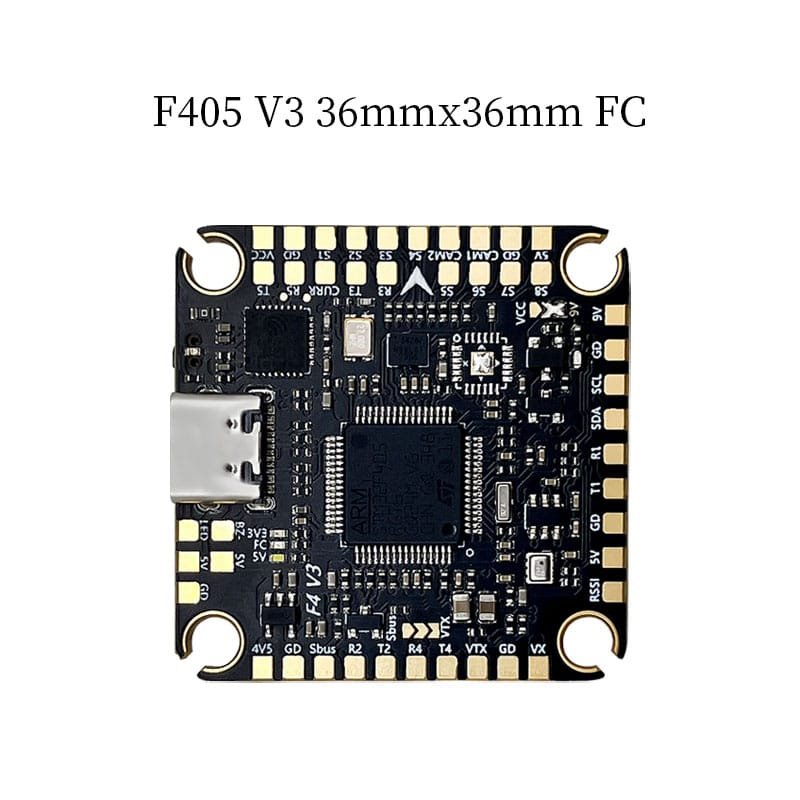
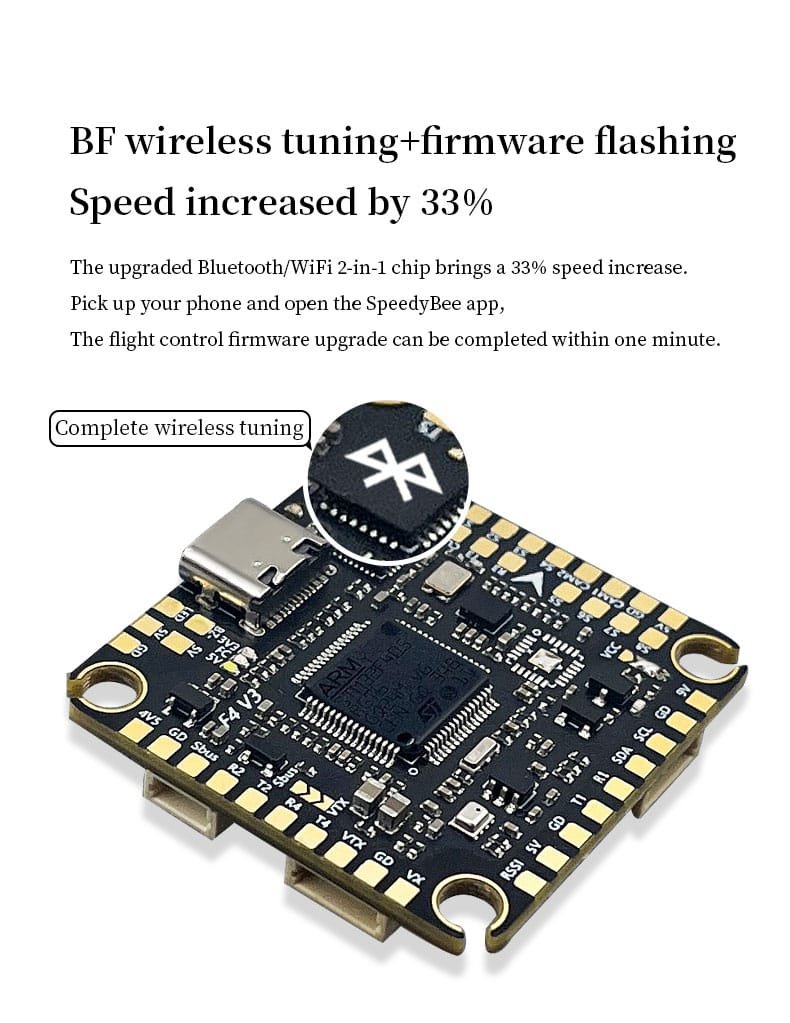
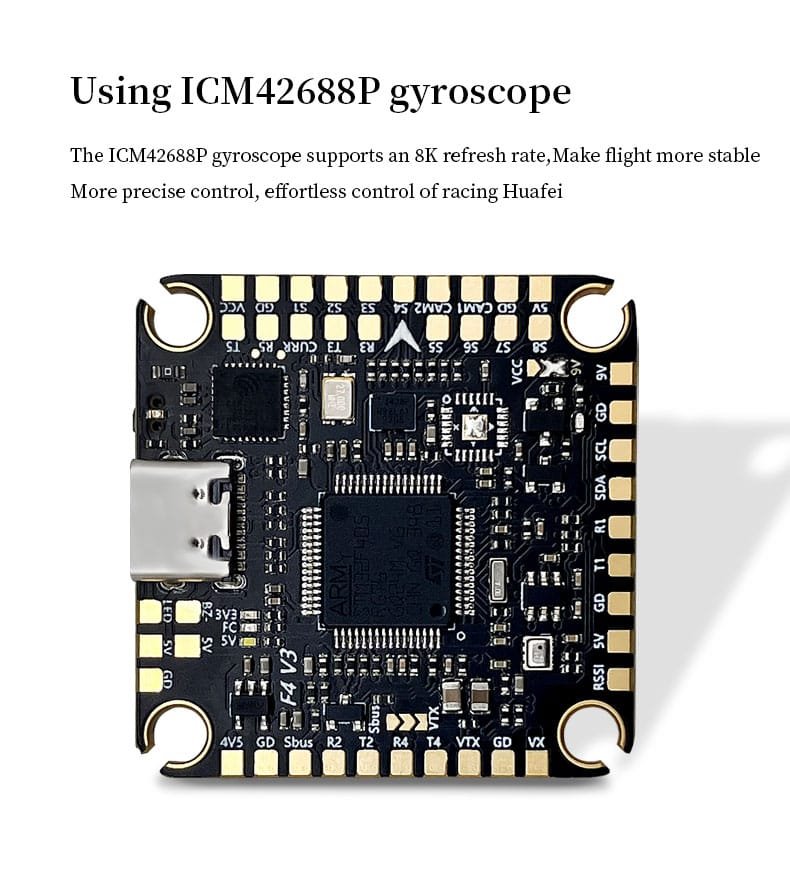
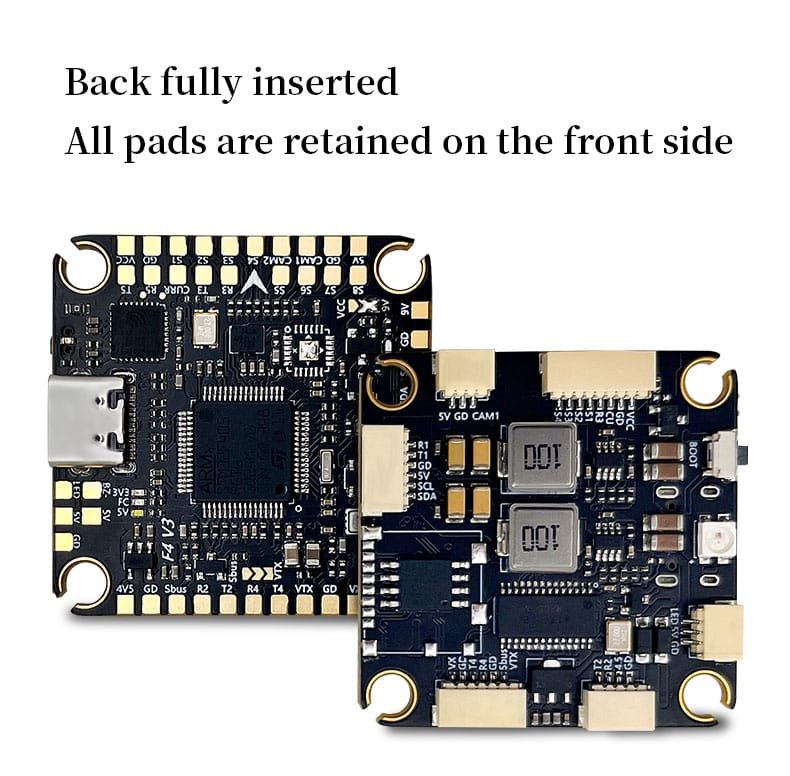
The D-F405 V3 pairs its STM32F405RGT6 with an ICM42688P gyro and an SPL06 barometer. In addition, it carries onboard OSD, a 16MB BlackBox on microSD, and Bluetooth for wireless tuning.
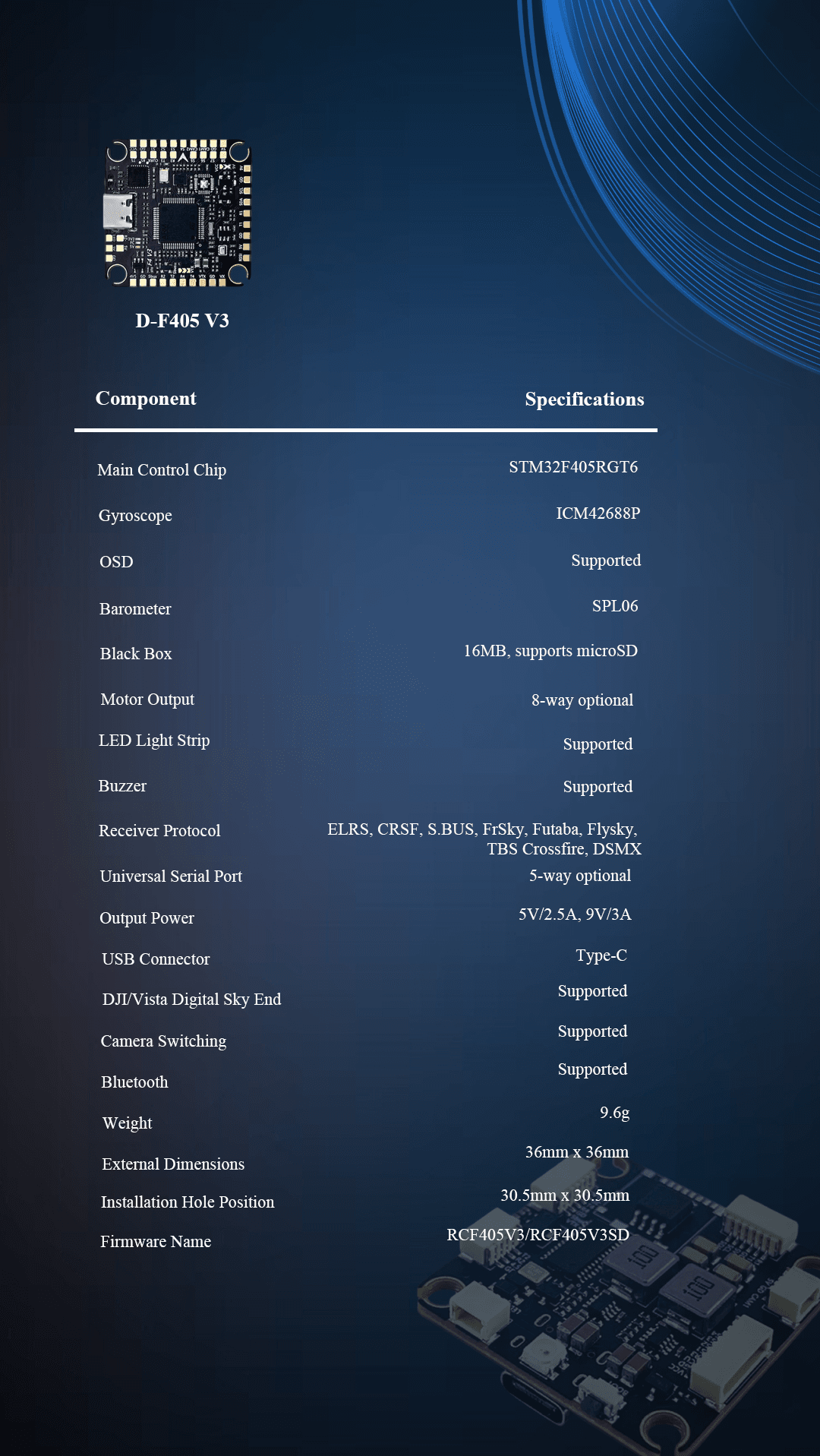
Digital FPV pilots get extra convenience here. For instance, the board supports DJI Vista and camera switching directly, plus a Type-C port for quick firmware updates.
At 9.6g and 36×36mm, it is a simple route to a clean 3–5 inch freestyle or cinewhoop build. Meanwhile, receiver support spans ELRS, CRSF, S.BUS, FrSky, Futaba, FlySky, TBS Crossfire, and DSMX.
D-F722 V2: Built for X8 Racing
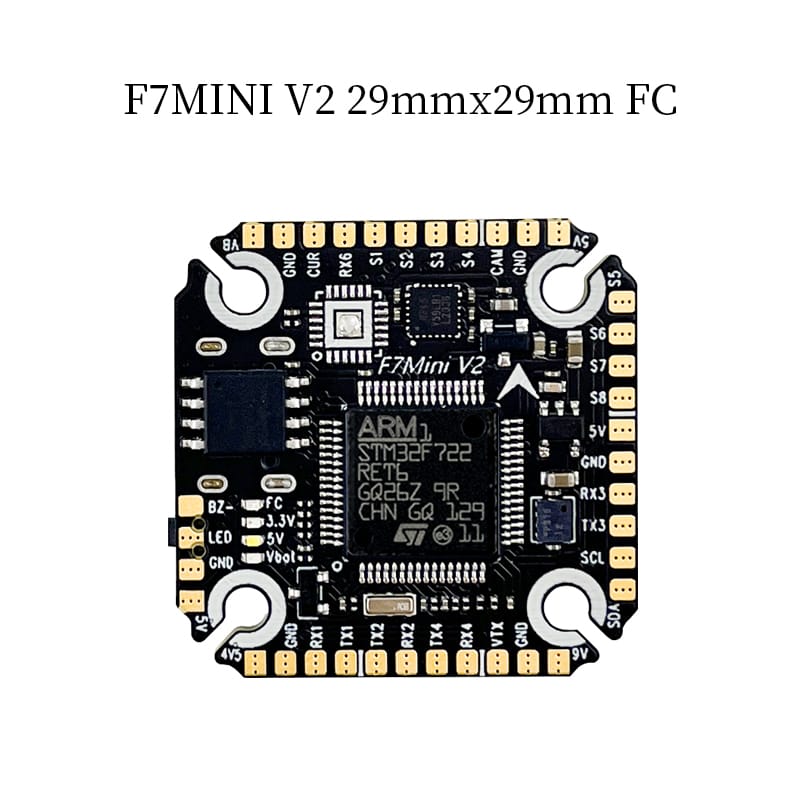
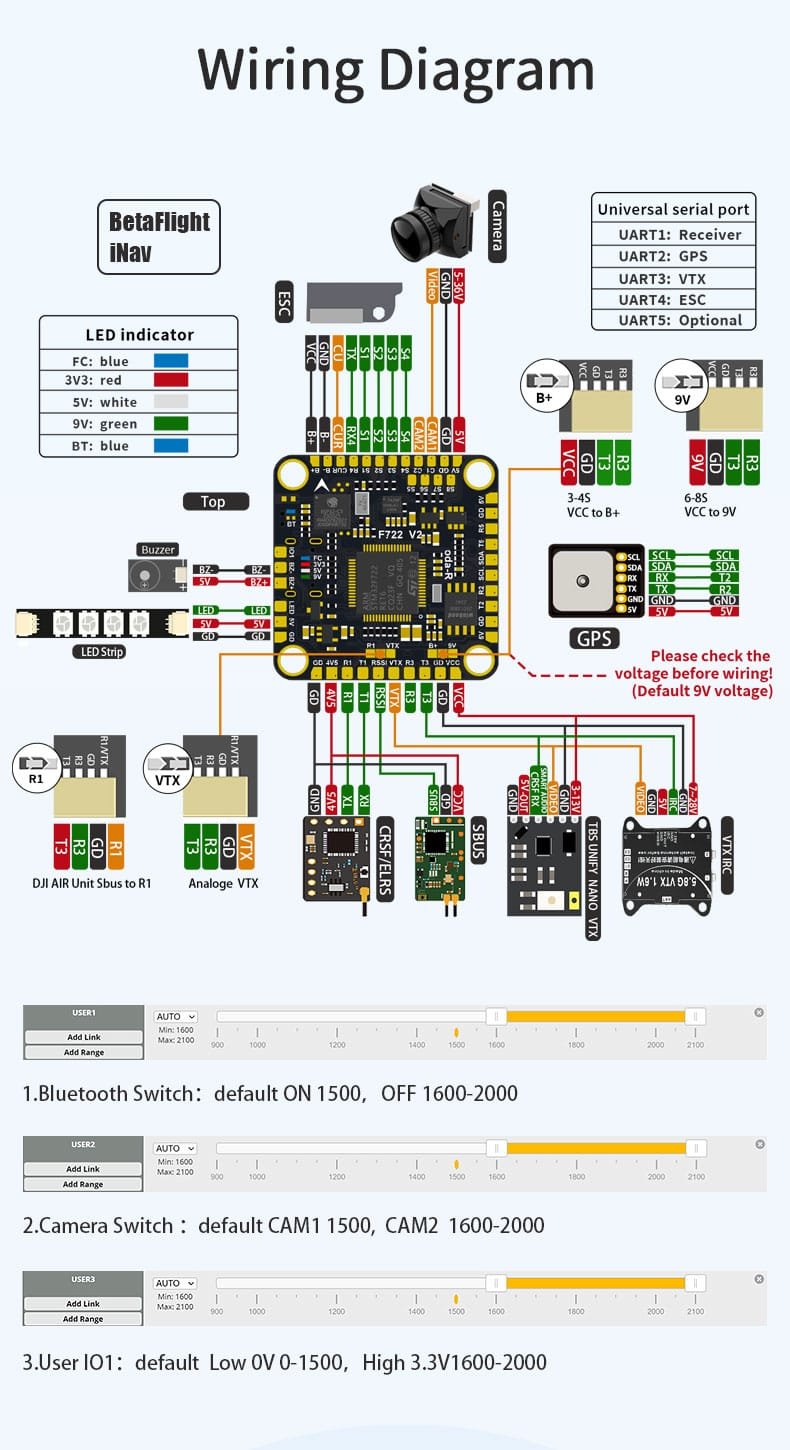
The D-F722 V2 steps up to an STM32F722RET6 while keeping the same ICM42688P gyro and adding a BMP280 barometer. Meanwhile, it supports both BetaFlight and iNav, which matters if you race and also fly long-range firmware.
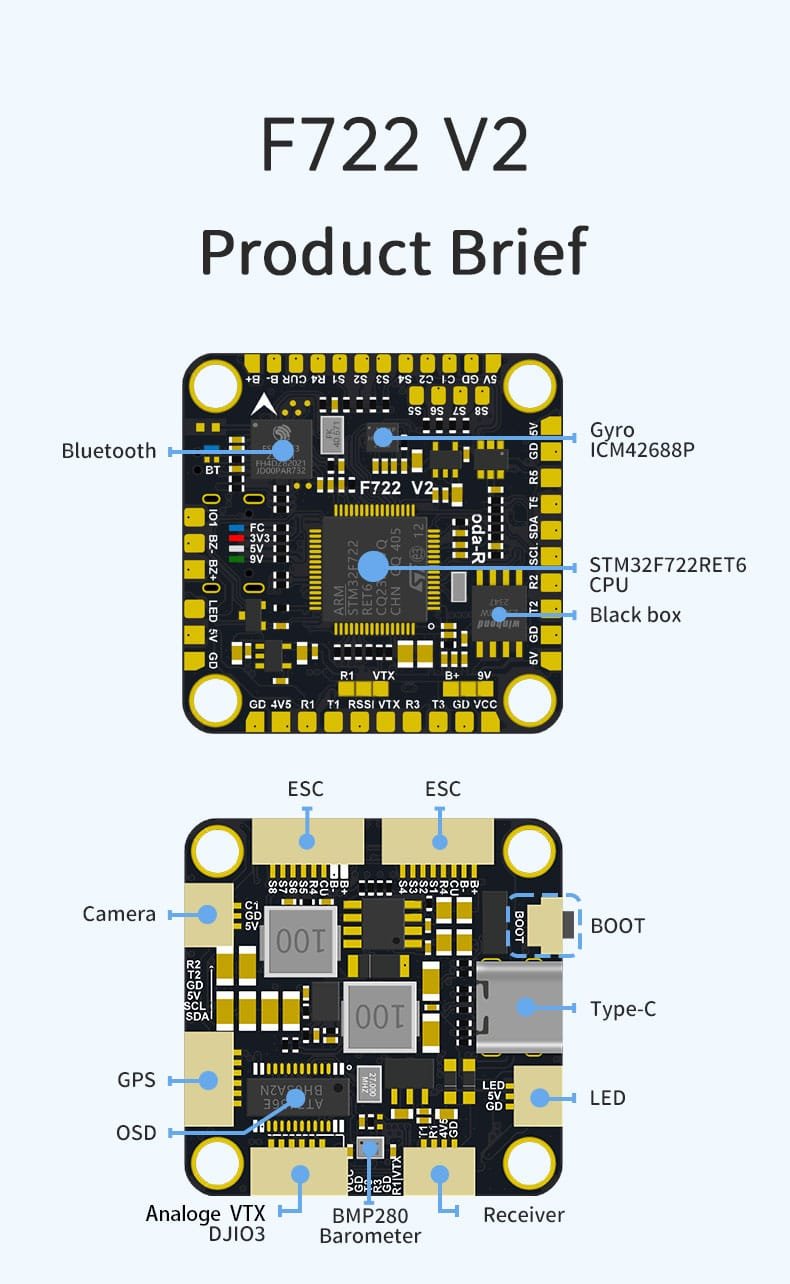
Connectivity is the strong suit. Specifically, five UARTs, eight motor outputs, and three BEC rails (4.5V/2A, 5V/2.5A, 9V/3A) power a full racing stack with room for peripherals.
The board weighs 9.4g at 37×37mm. Therefore, it drops into any standard 30.5mm stack without a weight penalty.
D-H743: The Tuning Powerhouse
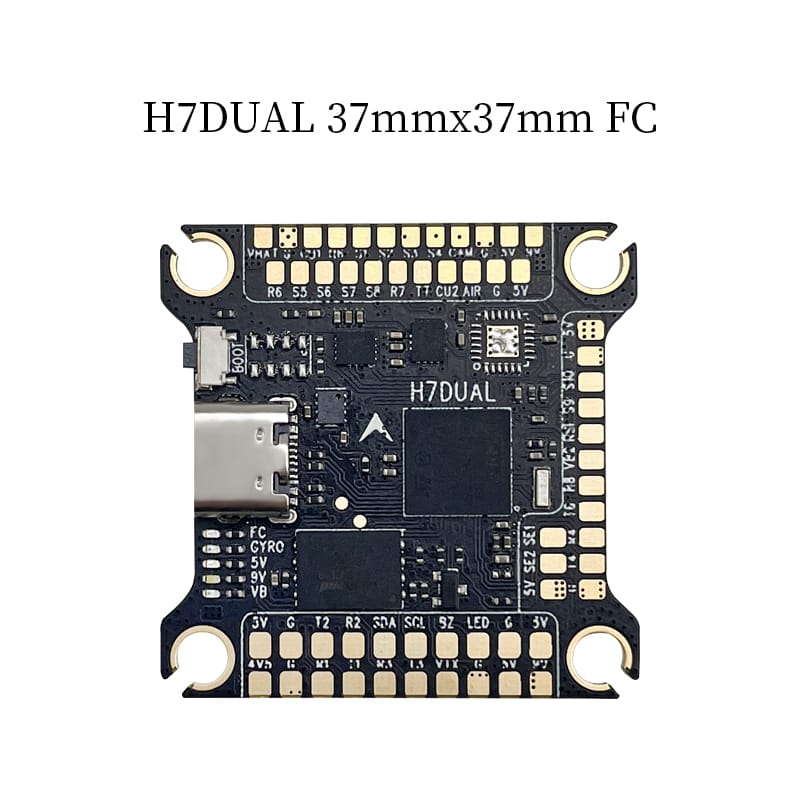
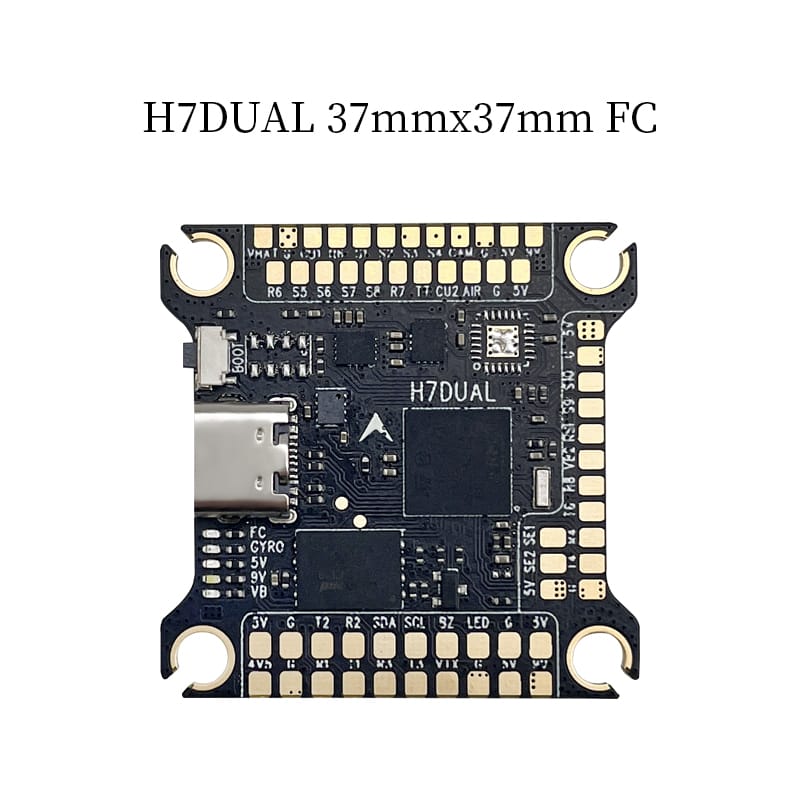
The D-H743 is the flagship of the three. Its STM32H743VIH6 delivers the most processing headroom, and its 128MB BlackBox records far longer tuning sessions than the 16MB chips on the other boards.
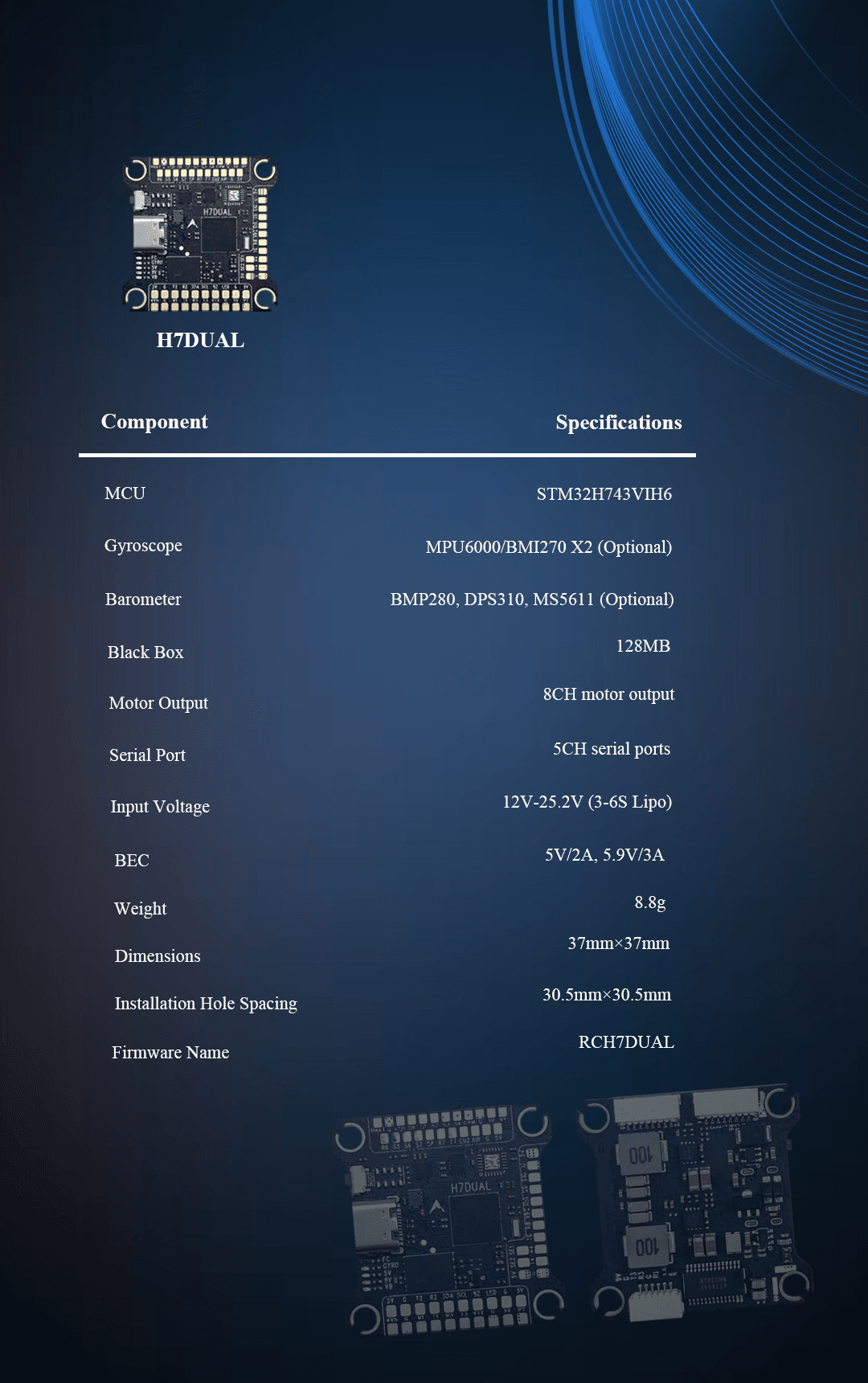
Sensor configuration is unique here. The standard MPU6000 can be joined by two optional BMI270 gyros, plus a choice of BMP280, DPS310, or MS5611 barometers. As a result, it is the only board of the three set up for gyro redundancy.
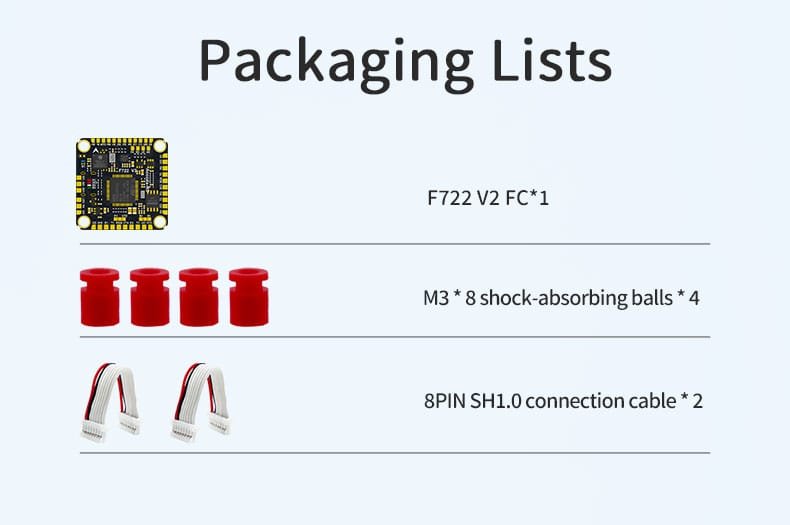
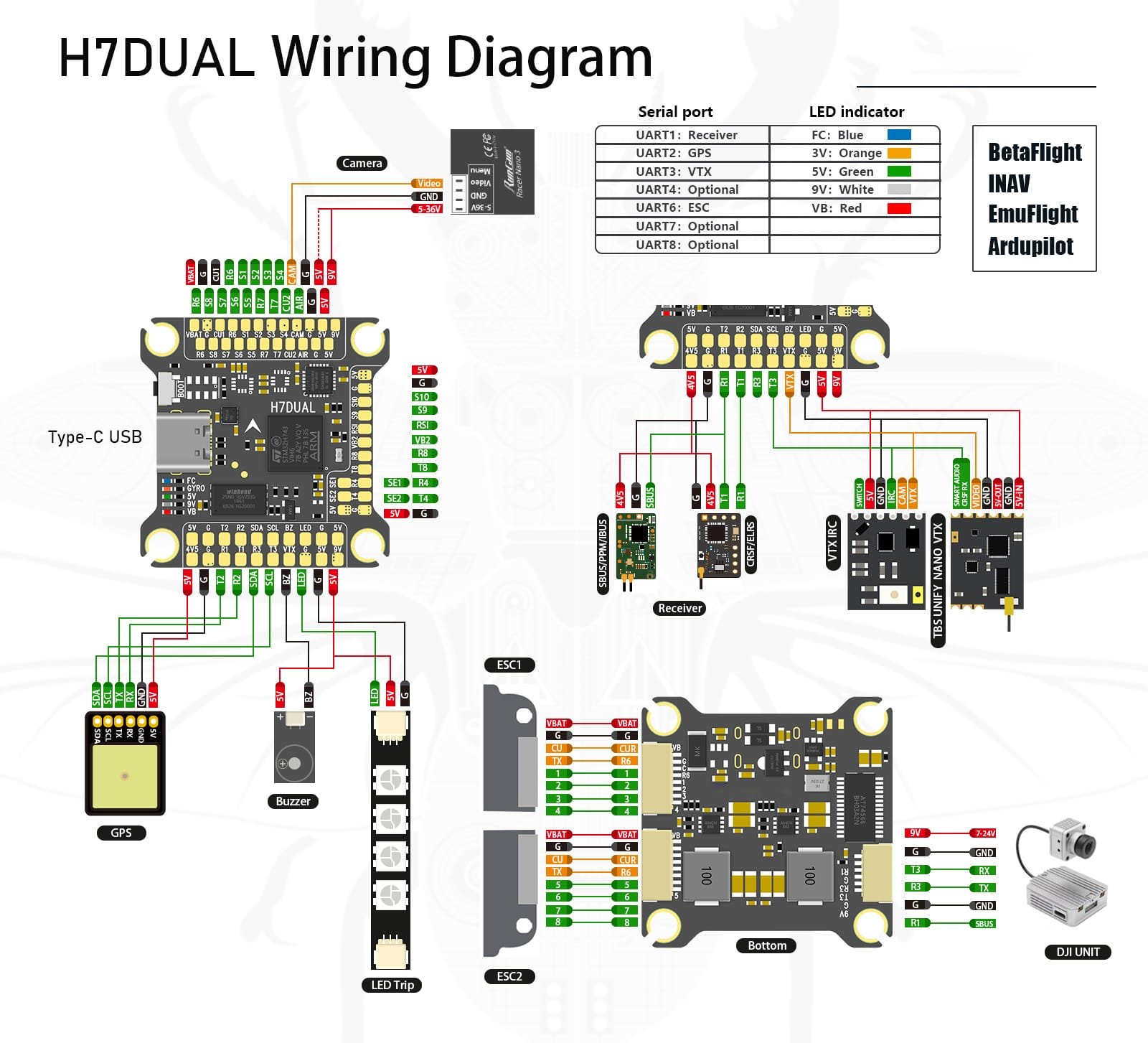
With 3–6S direct input (12V–25.2V) and 5V/2A plus 5.9V/3A BEC rails, it targets heavier long-range and precision builds. The package also includes two 8PIN SH1.0 signal wires and four M3×8 shock-absorbing balls.
F405 vs F722 vs H743: Which Board Fits Your Frame
For lightweight 3–5 inch freestyle frames, the D-F405 V3 is the value answer in the F405 vs F722 vs H743 matchup. Its DJI Vista support and Bluetooth tuning make daily flying convenient, and 9.6g suits small builds.
For X8 racing frames and pilots who switch between BetaFlight and iNav, the D-F722 V2 fits best. Moreover, its three BEC rails simplify wiring on dense racing stacks.
For heavy 7 inch, long-range, or data-heavy builds, choose the D-H743. The Cortex-M7 headroom handles demanding filters, while 128MB logging captures every flight for analysis.
- 3–5 inch freestyle / cinewhoop, digital FPV convenience → D-F405 V3
- X8 racing, BetaFlight + iNav, heavy peripheral loads → D-F722 V2
- 6S long-range, gyro redundancy, deep BlackBox tuning → D-H743
Quick Checklist Before You Order
- Confirm the firmware target name: RCF405V3, RCF722V2, or RCH7DUAL.
- Check your battery: the D-H743 takes 3–6S (12V–25.2V) direct input.
- Match your receiver: all three support ELRS, CRSF, S.BUS, FrSky, Futaba, FlySky, TBS Crossfire, and DSMX.
- Plan your logging: 16MB on the F405/F722, 128MB on the H743.
Finally, remember that all three boards share 30.5mm mounting and eight motor outputs. In other words, your frame will accept any of them, so let your flying style make the decision.
Related links
website
Products
Phone