DD360plus+ Triple-Sensor Stabilized UAV Gimbal Pod
Gimbal Pod · Product guide
The DD360plus+ is a three-axis stabilized micro-pod that pairs a Full HD electro-optical camera, an infrared thermal camera and a 3 km laser rangefinder. At 700 g or less, it suits compact UAV and robotic platforms used for surveillance, inspection, forest fire watch and vehicle or human tracking.
Verified specifications
| Product type | Triple-mode stabilized micro-pod (EO + IR + laser rangefinder) |
|---|---|
| Weight | ≤700 g |
| EO resolution and frame rate | 1920 × 1080 @ 60 fps |
| EO zoom and field of view | 10× optical zoom; 61.3° × 36.9° wide to 6.8° × 3.9° tele |
| IR resolution and field of view | 640 × 512 @ 60 fps; 12.5° × 10° |
| Laser rangefinder | 3000 m measuring distance, ±1 m accuracy |
| Gimbal travel | Yaw 360° continuous; pitch -100° to +100°; roll ±45°; max angular velocity ≥100°/s |
| Power | 12–28 V DC; average ≤10 W, max ≤20 W |
| Control and video output | RS232/TCP control; network video; H264/H265 encoding; MP4 storage; operating temperature -20 °C to +50 °C |
Triple Sensors in One Stabilized Pod
The DD360plus+ combines three sensing channels in a single compact housing: a Full HD visible-light camera, an infrared thermal camera and a laser rangefinder. Keeping them on one stabilized axis means the operators see the same scene in three ways without swapping payloads or re-aligning separate mounts.
The gimbal itself is a three-axis design, with yaw, pitch and roll controlled continuously. Published angular position accuracy is 0.3° or better, and maximum angular velocity is listed at 100°/s or higher, which is the range typically needed to follow a vehicle or a person crossing the frame without lag.
- EO stability accuracy listed at 0.1 mrad (1°/2 Hz, 1 sigma)
- Rich OSD covering camera, target and robot information
- Picture-in-picture display for combined EO and IR viewing
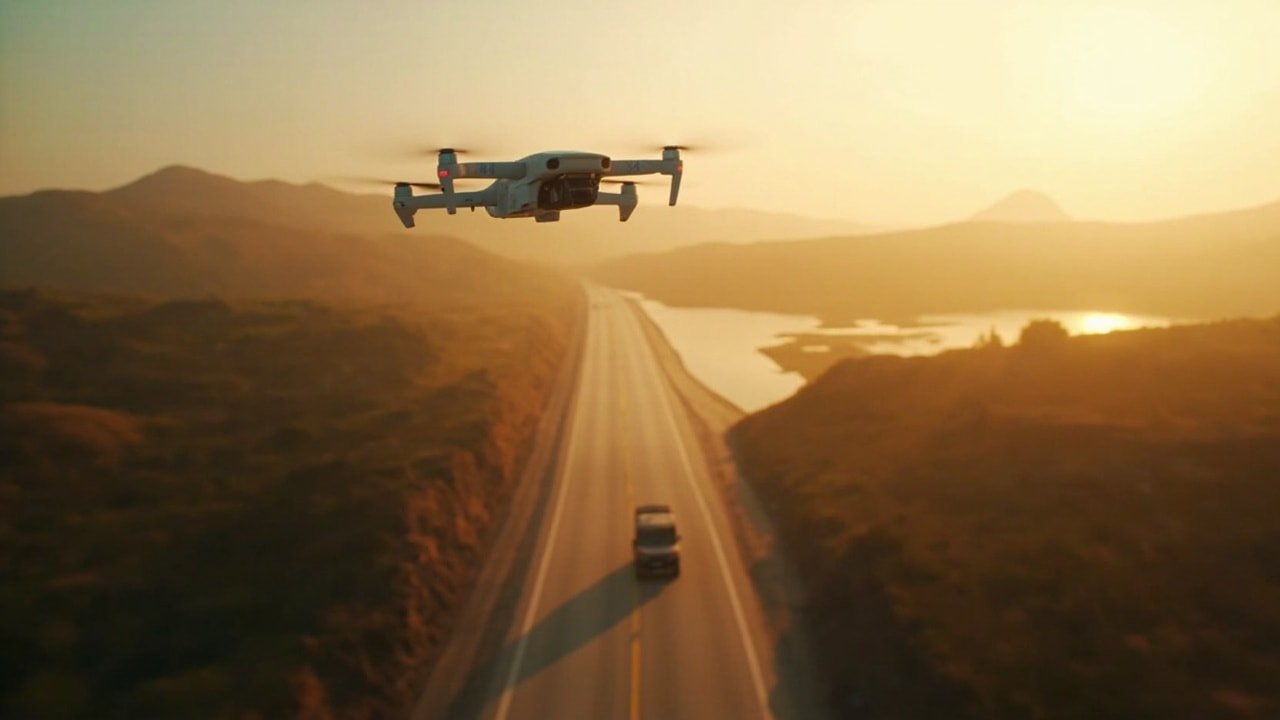
Day and Night Observation Workflow
In daylight, the EO channel delivers 1920 × 1080 at 60 fps with 10× optical zoom, so the same camera covers a wide 61.3° × 36.9° scene and a narrow 6.8° × 3.9° detail view. That range lets an operator scan an area and then tighten onto a specific object without a second sensor.
When light drops, the thermal channel at 640 × 512 and 60 fps with a 12.5° × 10° field of view continues to produce usable imagery. Palette options include white hot, black hot, iron red, rainbow and fusion, with roughly 6–15 choices depending on the integrated infrared module configuration, and the display supports a temperature bar overlay with visibility control.
- Wide-to-tele EO zoom spans roughly 9:1 in field of view
- Temperature bar overlay can be shown or hidden
- Tracking speed of ≥40°/s is published for EO and tracking functions
Ranging and Target Tracking
The laser rangefinder measures to 3000 m with a listed accuracy of ±1 m, which adds a numeric distance to an otherwise visual contact. That is useful when a team needs a position rather than an estimate, for example when reporting a vehicle location or marking a point for inspection.
Object identification and tracking covers vehicle tracking and human tracking, with recognition and tracking mode selection available through the control interface. The feature set as published confirms the presence of these modes; actual tracking reliability depends on scene conditions, contrast and how the tracking mode is configured on the ground segment.
- Laser distance output complements the EO and thermal imagery
- Vehicle and human tracking modes are selectable
- Confirm mode availability in your ground control software before fielding
Integration Checks Before You Fly
Power and data are where most integrations succeed or fail. The unit runs on 12–28 V DC and draws an average of 10 W or less, peaking at 20 W, so your airframe supply and cabling should be sized with the peak figure in mind rather than the average.
Control is handled over RS232 or TCP, and video leaves as a network stream encoded in H264 or H265 with MP4 available as the storage format. Because control and video use standard interfaces, platform-specific software and command sets still need verification with your integrator rather than assumption.
- Confirm 12–28 V DC supply and headroom for the 20 W peak
- Validate your ground control software against the RS232/TCP command set
- Check the 4 × M2.5 mounting pattern and stated drawing dimensions for your airframe
- Confirm operating range covers your local environment within -20 °C to +50 °C
Where This Payload Fits
Typical civilian uses include public security and law enforcement observation, day and night surveillance, environmental inspection and forest fire risk monitoring. The value is in consolidation: one stabilized unit replacing a separate EO camera, thermal camera and rangefinder reduces mounting points and the number of video feeds to handle.
The tradeoffs follow from the same consolidation. The IR channel is a 640 × 512 module rather than a high-resolution thermal sensor, and the listed payload ceiling of 700 g constrains which airframes can carry the pod at all. Operators should compare the wide-to-tele EO coverage, thermal palette needs and tracking requirements against simpler single-sensor gimbals before committing.
- Best suited to platforms with spare payload capacity near 700 g
- Strong fit for missions needing imagery and distance in one pass
- Consider a higher-resolution thermal option if long-range heat detail is critical
Frequently asked questions
What does the DD360plus+ weigh and where does that limit it?
Published weight is 700 g or less for the complete triple-sensor pod. That keeps it in the range of compact multirotor airframes and robotic platforms with limited payload capacity, but heavier professional aircraft can also carry it. Confirm your platform's rated payload and centre-of-gravity limits before mounting.
How accurate is the laser rangefinder at 3000 m?
The rangefinder measures to a listed distance of 3000 m with a stated accuracy of ±1 m. This gives a numeric range alongside the EO and thermal imagery, which is useful for reporting positions or marking points. Treat the figure as the manufacturer's specification rather than a guaranteed result under all conditions.
How is the pod controlled and does video stream out?
Control runs over RS232 or TCP, and video is delivered as a network stream encoded in H264 or H265, with MP4 supported for storage. These are common interfaces, but the exact command set and stream handling must be validated against your ground control station and recording setup before operational use.
Can it track vehicles and people automatically?
Object identification and tracking covers vehicle tracking and human tracking, with selection between recognition and tracking modes. This confirms the functions exist in the published feature set. Real-world effectiveness varies with target size, contrast, background clutter and sensor configuration, so validate on representative footage.