
DS100T Three-light Miniature Pod: Thermal Imaging, AI Tracking and Stabilization
Why the DS100T Stands Out in Compact UAV Imaging
The DS100T Three-light Miniature Pod combines high-resolution thermal imaging, dual visible-light channels, and intelligent AI tracking in a compact gyro-stabilized platform. Weighing no more than 340 g, it supports installations where payload capacity, imaging clarity, and dependable stabilization are equally important. Specifically, the pod includes large-field-of-view and small-field-of-view visible-light cameras alongside a dedicated infrared channel. As a result, operators can capture broad situational details, inspect distant targets, and observe thermal activity through one integrated system. Moreover, its dual-light capability synchronizes visible appearance with temperature information, helping users interpret a scene more efficiently. The two-axis platform dynamically adjusts yaw and pitch to reduce image shake during movement or vibration. Meanwhile, AI-assisted recognition and tracking can follow target features and movement trajectories while keeping a selected person or vehicle near the center of the frame. Therefore, the DS100T is well suited to aerial surveillance, heat-source detection, industrial inspection, emergency response, infrastructure observation, and other demanding imaging applications.
Key Imaging and Stabilization Benefits
- Three imaging apertures for infrared, large-FOV visible, and small-FOV visible observation
- Two-axis gyro stabilization with 0.5 mrad specified stability accuracy
- AI tracking, target recognition, and real-time target-centering support
- Synchronized visible and thermal capture for appearance and temperature analysis
- Compact metallic enclosure with EMC shielding and a weight of no more than 340 g
- RS232 control, network video output, and a flexible 12–28 V power input
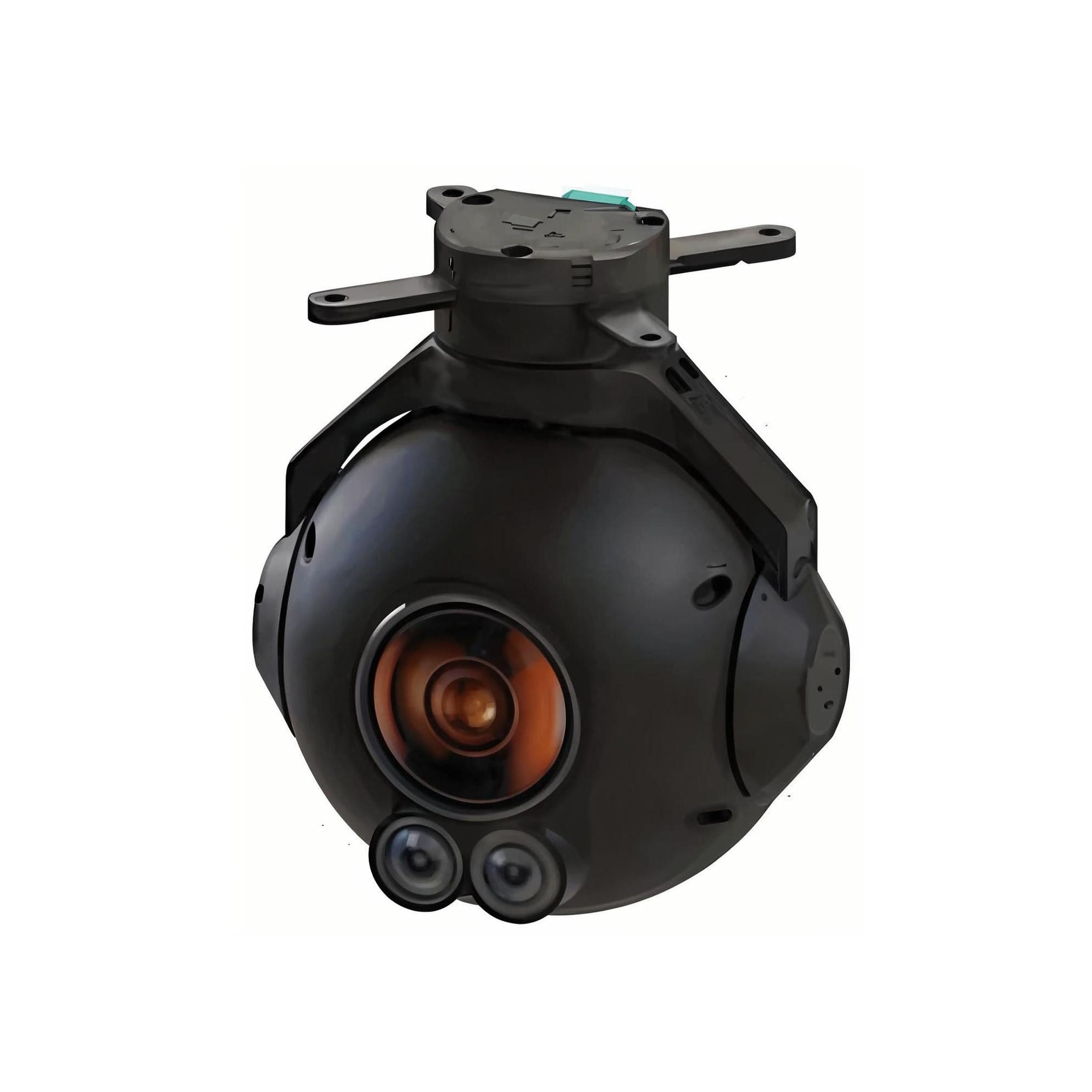
Visually, the pod uses a compact black spherical housing suspended within a rigid upper yoke. Its front face features a large orange-tinted optical window above two smaller circular lenses. In addition, circular side pivots support independent pitch and yaw movement. The upper mounting assembly includes projecting tabs with fastener holes, while the rear housing has a prominent circular finned or vented section.
DS100T Specifications at a Glance
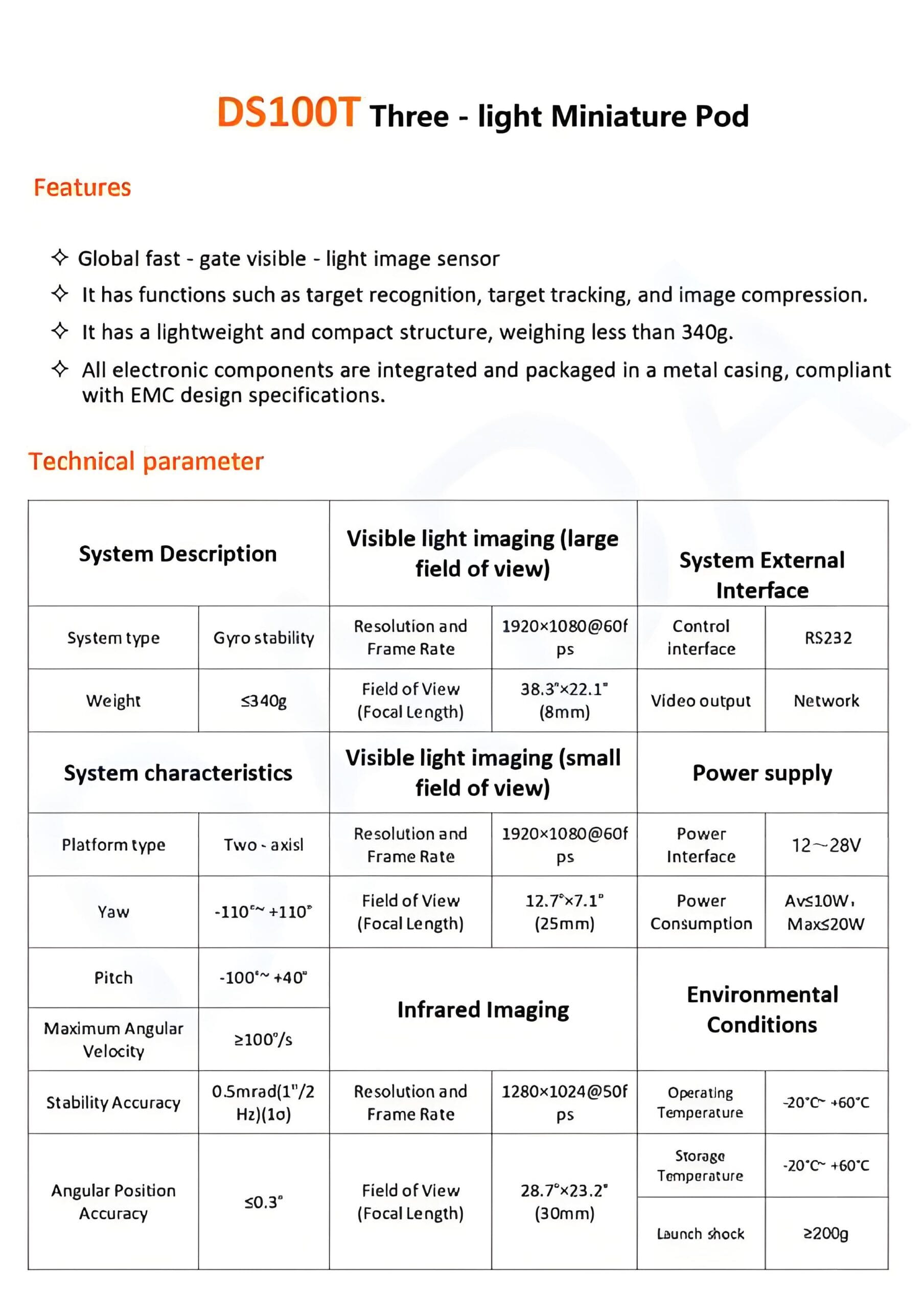
The following specifications summarize the pod’s imaging channels, stabilization platform, interfaces, power requirements, and environmental limits. Notably, the visible channels share the same Full HD frame rate but use different focal lengths and fields of view. Consequently, operators can switch between broad scene awareness and more focused observation.
| Category | Specification |
|---|---|
| Model and product type | DS100T three-light miniature pod |
| System and platform | Gyro-stabilized, two-axis platform |
| Weight | ≤340 g |
| Yaw range | -110° to +110° |
| Pitch range | -100° to +40° |
| Maximum angular velocity | ≥100°/s |
| Stability accuracy | 0.5 mrad (1°/2 Hz, 1σ) |
| Angular position accuracy | ≤0.3° |
| Large-FOV visible channel | 1920×1080 at 60 fps; 38.3° × 22.1° FOV; 8 mm focal length |
| Small-FOV visible channel | 1920×1080 at 60 fps; 12.7° × 7.1° FOV; 25 mm focal length |
| Infrared channel | 1280×1024 at 50 fps; 28.7° × 23.2° FOV; 30 mm focal length |
| Control and video | RS232 control interface and network video output |
| Power input | 12–28 V DC |
| Power consumption | Average ≤10 W; maximum ≤20 W |
| Operating and storage temperature | -20°C to +60°C |
| Launch shock | ≥200 g |
| Mounting | Four M4 mounting holes distributed around the circumference |
| Reference drawing dimensions | Front width 87, overall height 116, and additional width 75.30; units are not shown in the source drawing |
The structural drawings present front, side, rear, top, and perspective views of the enclosure. Specifically, they show four M4 mounting holes positioned evenly around the circumference. The drawings also display measurements of 87, 116, and 75.30. However, the measurement units are not clearly identified, so installers should confirm dimensional requirements before designing a custom mounting interface.
Three Optical Channels for Flexible Observation
The DS100T uses three dedicated imaging apertures rather than relying on one general-purpose camera. Firstly, the 8 mm large-FOV visible channel provides a 38.3° × 22.1° view for broad situational awareness. Secondly, the 25 mm small-FOV channel narrows the view to 12.7° × 7.1°, making it better suited to focused observation. Both visible-light channels capture 1920×1080 video at 60 fps. Therefore, they can deliver smooth motion detail when the platform or target is moving.
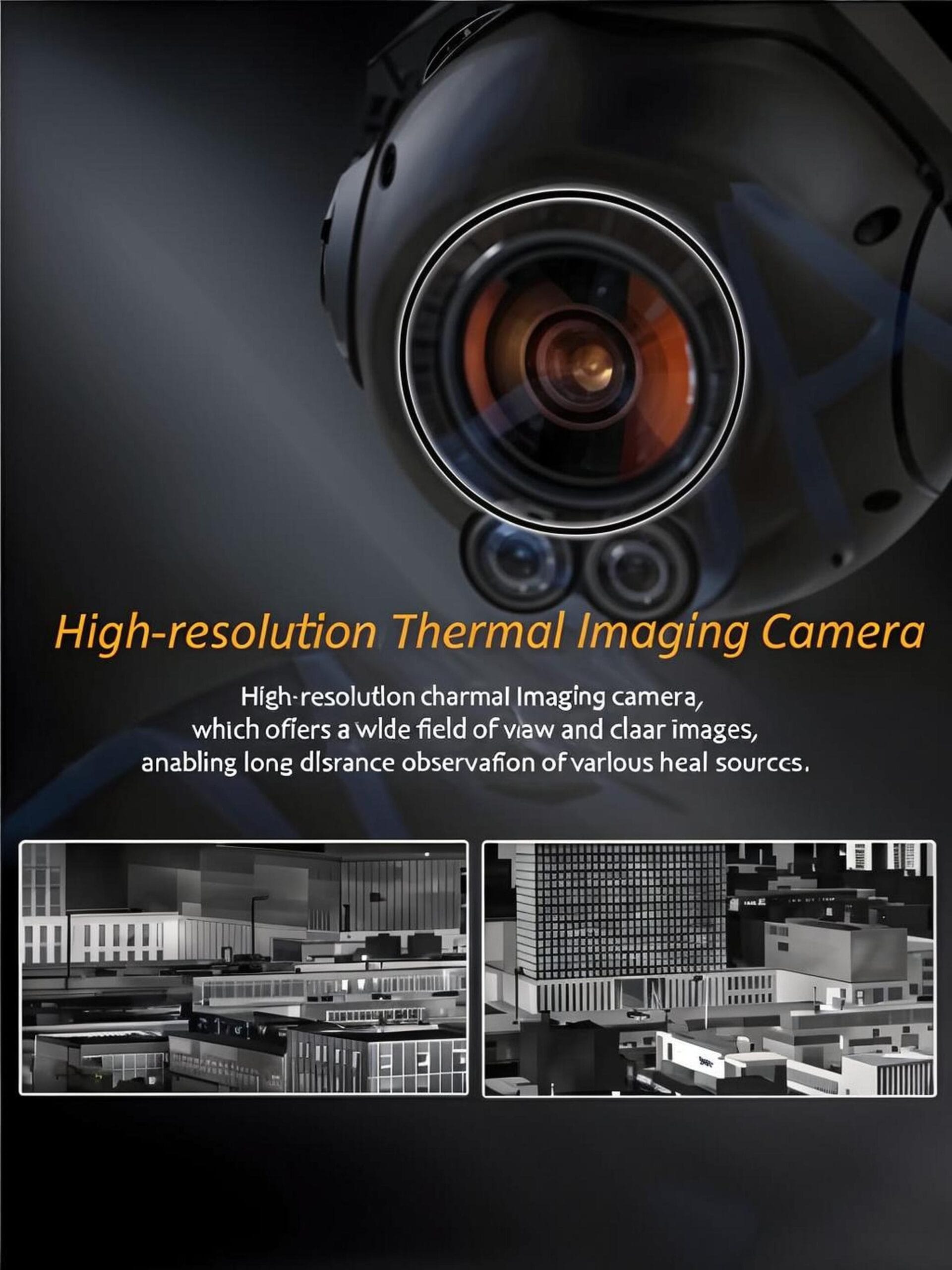
Meanwhile, the 30 mm infrared channel records 1280×1024 thermal imagery at 50 fps with a 28.7° × 23.2° field of view. This high-resolution thermal imaging channel helps reveal heat sources that may remain difficult to identify with ordinary visible-light footage. In addition, dual-light thermal capture synchronizes visible details with temperature information. As a result, operators can compare object shape, color, position, and thermal contrast within the same observation workflow.
Practical imaging advantage: Wide-FOV footage can establish context, while the narrow visible channel provides a more concentrated view. At the same time, the infrared channel supports long-distance heat-source observation and thermal analysis.
AI Tracking That Keeps Moving Targets Centered
The integrated AI tracking system continuously evaluates target features and movement trajectories. Once a relevant subject is identified, the pod can adjust its viewing angle and focal length in real time. Consequently, it reduces the amount of manual correction required to keep a moving target centered. The visible-light sensor also supports target recognition, target tracking, and image compression.
For instance, the system can assist with aerial-style tracking of pedestrians moving along a walkway. Similarly, it can lock onto a vehicle traveling through a road scene. However, mission planning and operator oversight remain important, particularly when the background is complex or several similar targets enter the frame.
Operational benefit: AI tracking works with two-axis stabilization to maintain a usable line of sight. Therefore, the system can support surveillance and observation from moving or vibration-prone platforms.
Precision Dual-Axis Stabilization
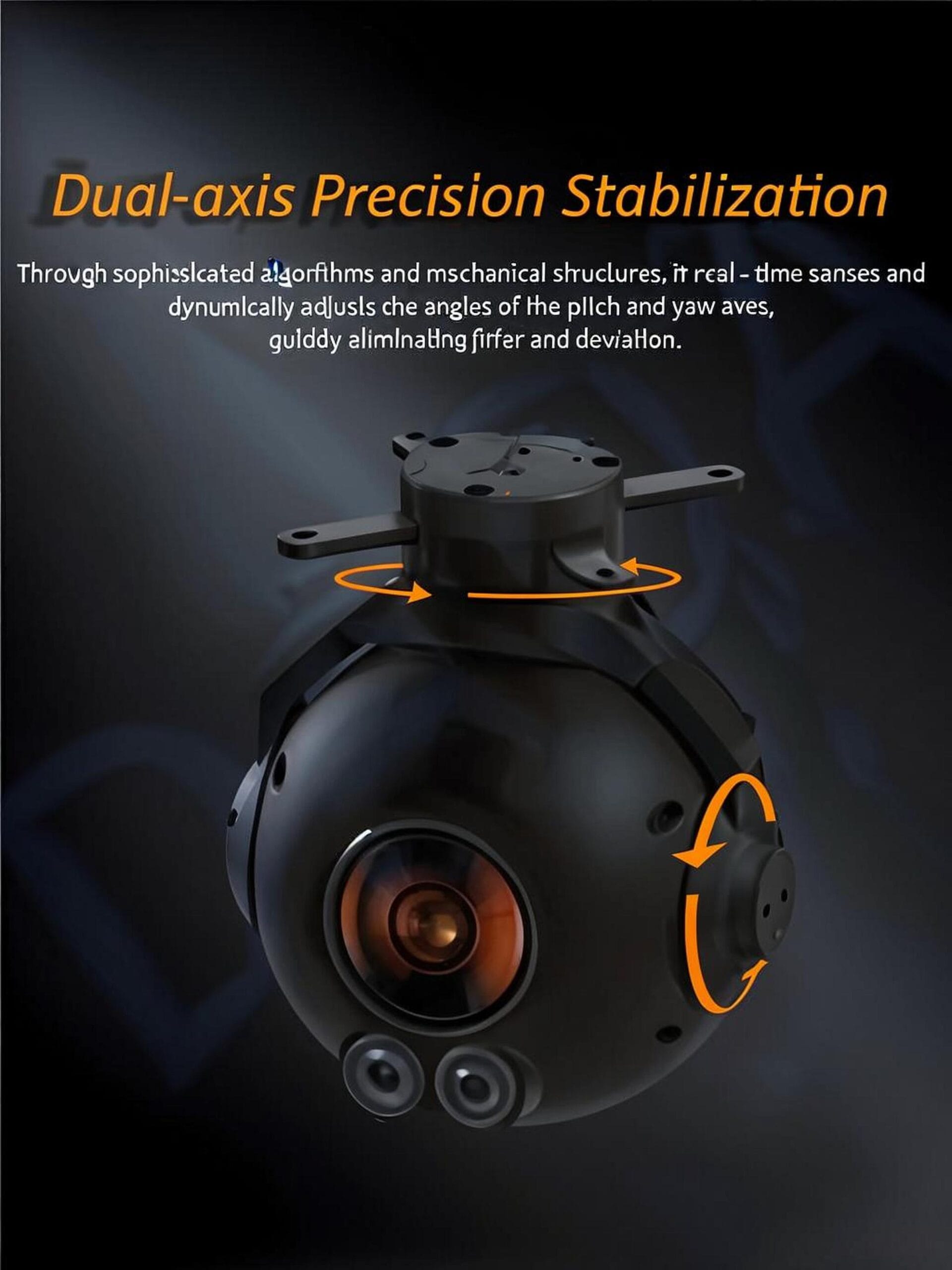
A compact imaging payload must remain stable enough to make its optical performance useful. Accordingly, the DS100T platform adjusts pitch and yaw to compensate for shake and directional deviation. Its yaw range extends from -110° to +110°, while pitch movement covers -100° to +40°. Furthermore, a maximum angular velocity of at least 100° per second supports rapid repositioning during target acquisition.
The listed stability accuracy is 0.5 mrad under the specified test notation, and angular position accuracy is no more than 0.3°. Therefore, the platform can maintain more consistent framing during moving-platform observation. This capability is especially valuable when using the narrow-FOV camera, where small movements have a greater visual effect.
Designed for Harsh Operating Conditions
The metallic enclosure integrates the electronic components within an EMC-shielded casing. As a result, it provides structural protection while supporting operation in challenging electromagnetic environments. Moreover, the specified operating and storage range extends from -20°C to +60°C. A launch-shock rating of at least 200 g further supports deployment on platforms exposed to severe short-duration forces.
Power requirements are also practical for integration. Specifically, the unit accepts a 12–28 V DC input and consumes no more than 10 W on average or 20 W at maximum load. In addition, RS232 control and network video output provide established options for command and video-system integration.
Application Scenarios
Because it combines visible observation, thermal imaging, stabilization, and AI tracking, the pod can support several specialized workflows:
- Aerial surveillance: Track people or vehicles while maintaining a stabilized view from a moving installation.
- Firefighting and rescue: Locate heat sources from a safer observation distance and compare them with visible scene details.
- Industrial inspection: Identify abnormal thermal patterns in equipment, buildings, or infrastructure.
- Long-distance observation: Combine broad scene coverage with a narrow visible-light field of view for closer inspection.
- Border and perimeter monitoring: Use AI tracking to assist operators following moving targets.
- Wildlife and environmental surveys: Observe distant subjects while reducing disturbance to the monitored area.
- Thermal analysis: Detect temperature variation that may indicate insulation faults, energy loss, or developing maintenance issues.
Ultimately, suitability depends on the aircraft, mounting arrangement, control system, and mission requirements. Nevertheless, the combination of low weight, three optical channels, and stabilized tracking gives integrators a versatile foundation for compact imaging systems.
Discuss Your Imaging Requirements
Contact the team to discuss platform compatibility, mounting requirements, imaging objectives, and integration options for the DS100T Three-light Miniature Pod.
🌐 Website
🛒 Product Page
Related Posts
-
DA60N Mini Infrared UAV Pod: 200g Thermal Camera Payload for Catapult Drones
-
DT30DL Multi-Sensor Dual-Field EO/IR Laser Rangefinder Gimbal for Drone Surveillance
-
DS30E EO/IR Gimbal: Triple-Sensor Thermal Drone Camera with Laser Rangefinder & AI Tracking
-
DD360Pro Micro Gimbal Pod: Professional Triple-Mode EO/IR Payload for UAVs