Starlight FPV Camera Review: D-RC Falcon Low-Light Performance
A Closer Look at Night-Flying Image Quality
The D-RC Falcon Starlight FPV Camera is built for pilots who need a clearer view when daylight fades. As a starlight FPV camera, it combines a Sony 1/3-inch CMOS sensor with 1200 TVL resolution and a CVBS analog video output. Therefore, it can provide detailed FPV footage without adding much weight to the aircraft. The camera weighs 12.2 grams, excluding the cable, and its compact housing suits space-constrained drone installations. In addition, the 5–36 V input range supports many FPV power systems. The camera also offers PAL and NTSC switching, while the image format can change between 4:3 and 16:9. For low-light FPV camera users, these practical controls make integration more flexible. The specification images advertise a minimum illumination figure of 0.00001 lux in the parameter table. They also describe full-color low-light operation down to 0.02 lux. Because these figures appear in different product graphics, pilots should confirm the intended operating conditions before purchase. Meanwhile, under-30 ms latency helps keep the live view responsive during flight. Features such as 3D digital noise reduction, 100 dB wide dynamic range, automatic white balance, and selectable day/night modes further support dependable viewing. Consequently, the Falcon is suited to FPV drones and other remote-controlled vehicles used in dusk, nighttime, inspection, wildlife, or shadowed environments.
Starlight FPV Camera Specifications at a Glance
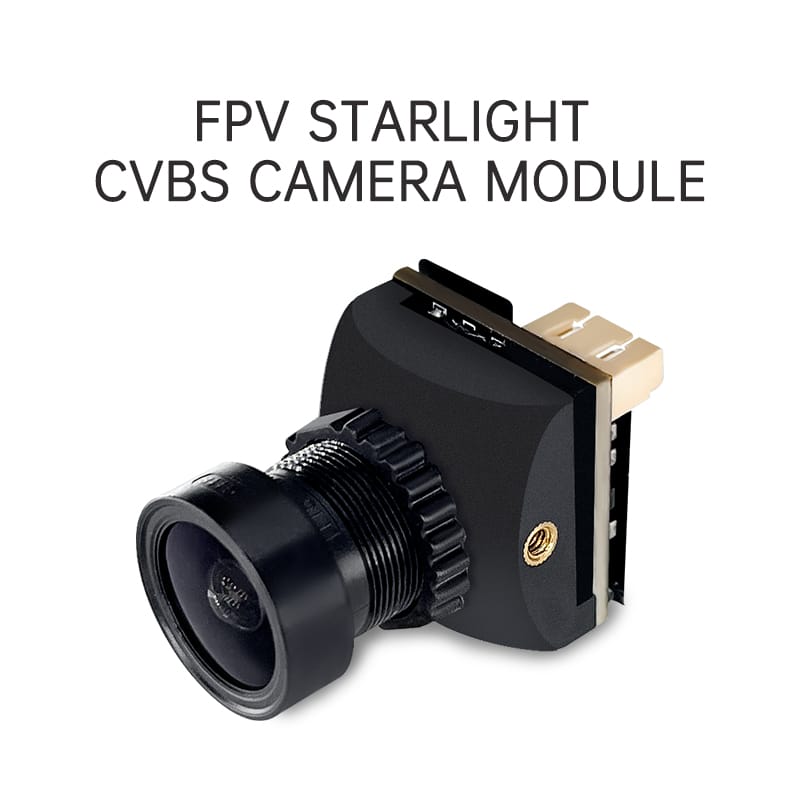
First, the Falcon focuses on practical analog FPV performance. Its Sony sensor, wide-angle lens, and image-processing features are designed to preserve detail in difficult lighting. The following specifications summarize the available product information.
| Specification | Details |
|---|---|
| Module and sensor | FPV Starlight Level CVBS camera; Sony 1/3-inch CMOS |
| Resolution and output | 1200 TVL; CVBS analog PAL/NTSC high-definition output |
| Lens and viewing angle | M12, 2.1 mm, F1.2 lens; up to 125° diagonal field of view in 4:3 mode |
| Input voltage | 5–36 V |
| Latency | Advertised below 30 ms |
| Operating temperature | -10°C to 50°C |
| Weight | 12.2 g, excluding cable |
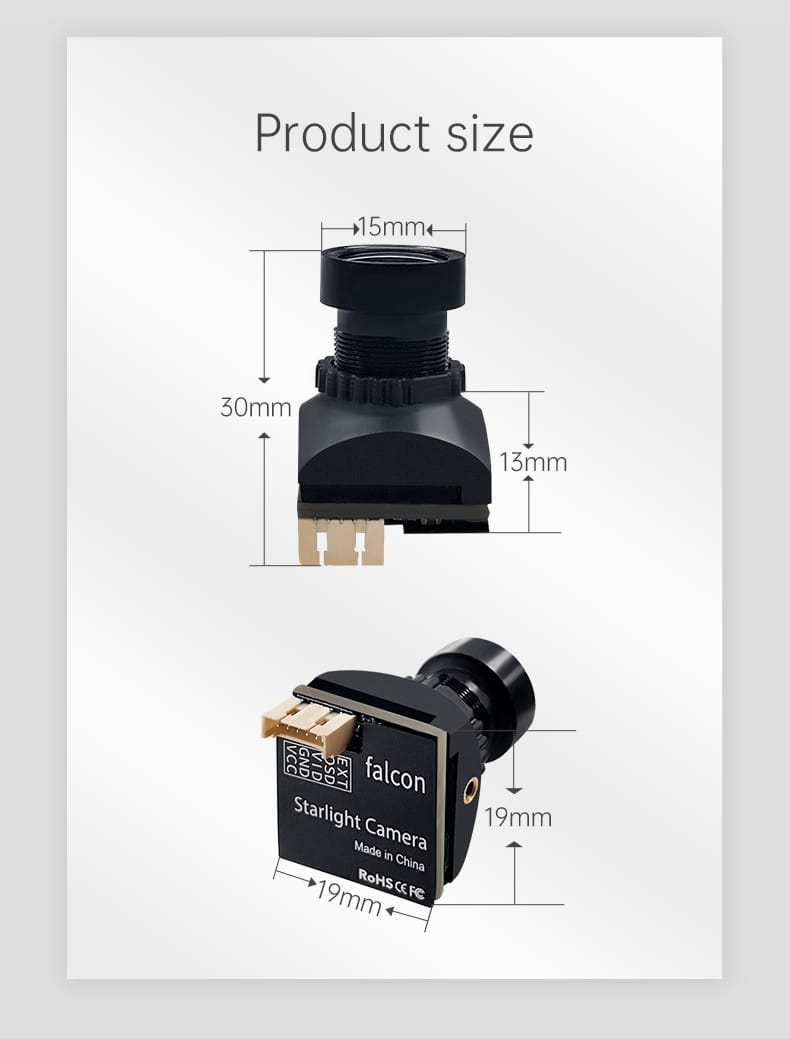
| Approximate body size | Approximately 30 mm high × 19 mm wide × 19 mm deep |
How the Falcon Handles Low-Light FPV Flight
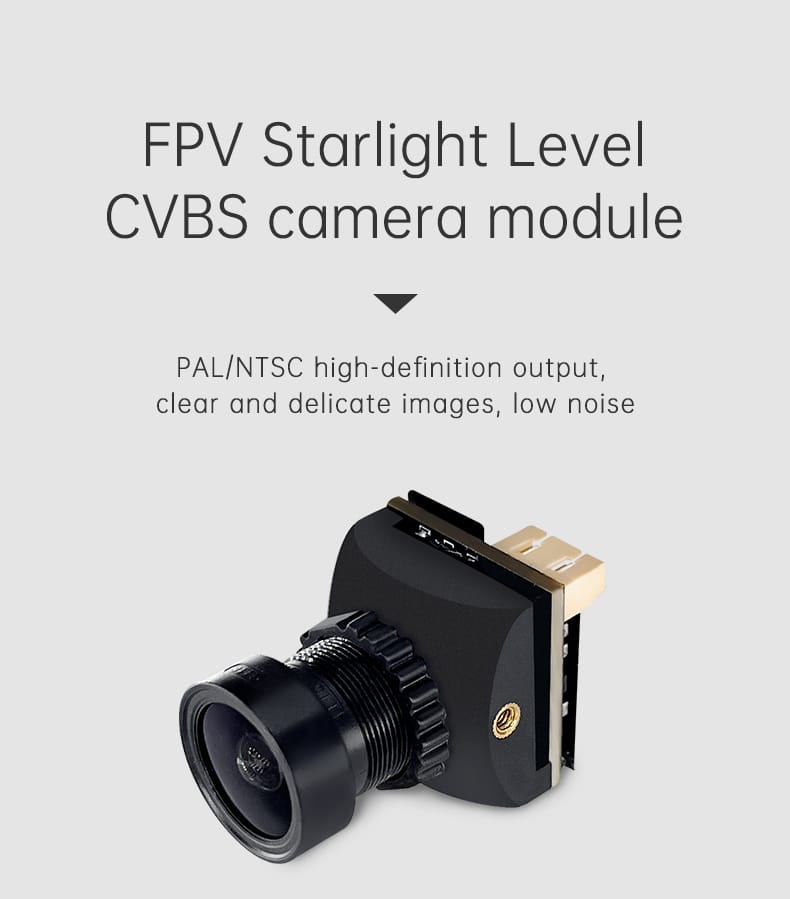
The camera’s main advantage is its focus on starlight-level imaging. In particular, the Sony CMOS sensor works with the F1.2 lens to gather available light efficiently. As a result, pilots can retain a useful color image in conditions that challenge standard FPV cameras. The product graphics also list 3DNR and 100 dB wide dynamic range. These technologies can help reduce visible noise and manage scenes with strong contrast. Additionally, automatic white balance supports more consistent color reproduction. The selectable EXT, Auto, Color, and B&W modes give pilots extra control over how the image responds to changing conditions.
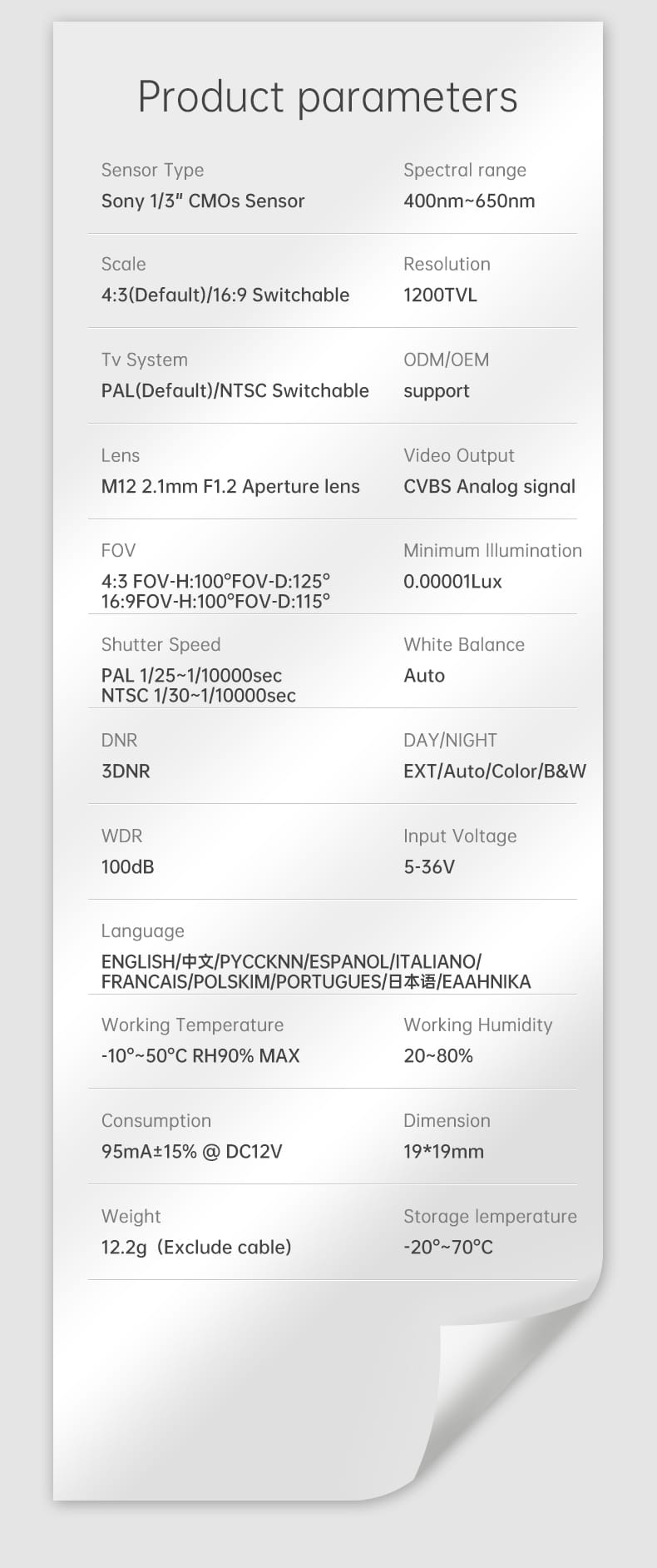
The supplied graphics show both 0.00001 lux in the parameter table and 0.02 lux for advertised full-color operation. Treat these as separate stated figures, and confirm performance expectations for your specific setup.
Flexible Installation for FPV Builds
Because the Falcon accepts 5–36 V, it can suit a variety of drone power arrangements. Nevertheless, installers should verify voltage, connector wiring, and the selected PAL or NTSC setting before powering the camera. The compact board-camera design is helpful when space is limited. A side mounting insert and included M2 hardware also make physical installation more straightforward. The package includes one camera, four M2 screws, and one connection cable.
The camera uses a small exposed connector and a flat rear panel. Its matte black housing includes a protruding cylindrical lens with a ridged adjustment ring. Therefore, the unit has a practical appearance that matches many compact FPV builds. The product images show the Falcon and Starlight Camera markings on the rear housing, along with visible compliance marks.
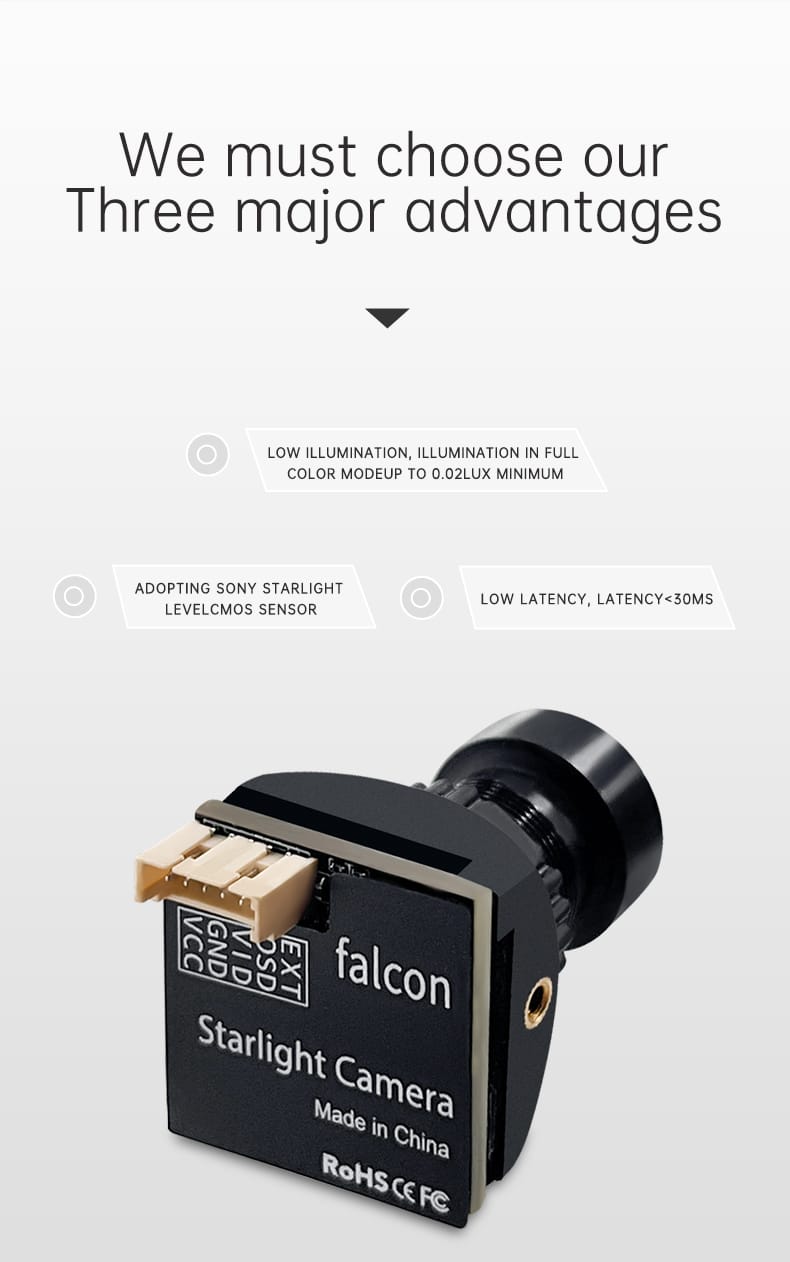
The lightweight housing, broad voltage range, switchable video standards, and adjustable image formats make this camera a practical upgrade for compatible analog FPV systems.
Practical Uses Beyond FPV Racing
The Falcon is not limited to fast daytime flights. Instead, its low-light focus can support pilots working around dusk or in shadowed areas. Potential applications include:
- FPV drones and other remote-controlled vehicles
- Infrastructure and equipment inspection
- Search and rescue support flights
- Security and property observation
- Wildlife and environmental monitoring
The wide field of view is useful when pilots need situational awareness. In 4:3 mode, the listed field of view reaches 100° horizontally and 125° diagonally. In 16:9 mode, the diagonal figure is listed at 115°. Meanwhile, the under-30 ms latency supports responsive control during live flight. These features make the camera appealing for pilots who value both visibility and compactness.