Built for Boundaries: The MARK4 7-Inch FPV DroneThe demand for a versatile 7 inch fpv drone that can conquer vast distances, carry substantial payloads, and still deliver blistering speed has never been greater. Enter the MARK4 7-inch traversing drone – a meticulously engineered aircraft that redefines what a long range fpv platform can achieve. Whether you're building a fpv drone build for cinematic mountain surfing, long-distance exploration, or even a 7 inch racing drone capable of dominating open-class events, this frame and component package creates a robust foundation. Crucially, the MARK4 integrates a 2.5W video transmitter, a high-sensitivity Caddx camera, and a powerful flight controller to deliver a seamless, responsive piloting experience. Additionally, with an image transmission distance of 15 km and a total flying distance of up to 20 km, you can confidently explore beyond visual line of sight. In fact, the 7-inch propeller design ensures stable, efficient lift that supports payloads from 2 kg to an impressive 3.5 kg, making it suitable for heavy-lift applications. In short, this 7 inch fpv drone is a true multi-role FPV workhorse built for pilots who refuse to compromise on performance.Technical Specifications at a GlanceComponentSpecificationModelMARK4 7-inch FPVFrameGEP-MK4-7Flight ControllerHAKRC F405 V2ESCHK2130 50AMCUSTM32F405RGT6GyroscopeICM-42688-POSDBetaflight OSD with AT7456E chipVideo TransmitterpandaRC 5.8G VTX 2.5WCameraCaddx H1AntennaMomoda 5.8G RHCP SMAMotorCADDXFPV 2812 900kvPropellerGemfan 7037-3Weight500gReceiver OptionsPNP / TBS NanoRX / GEPRC ELRS 2.4G / ELRS 915Recommended BatteryLipo 6S 5000mahFlight Time21-30 minutesFlight Speed120-150 km/hImage Transmission Distance15 kmTotal Flying Distance15-20 kmUltra-Long Range FPV: 15 km Video Link on a 7 Inch FPV DroneKey Benefit: The MARK4’s pandaRC 2.5W VTX paired with a Momoda RHCP antenna provides a rock-solid 15 km video transmission range, making it a true long range fpv solution.One of the most critical metrics for any 7 inch fpv drone is its ability to maintain a clear video link at extreme distances. In this regard, the MARK4 excels. Specifically, the 5.8 GHz pandaRC VTX pushes out 2.5 watts of power, a significant upgrade over standard 800 mW transmitters. Consequently, even in noisy RF environments or behind natural obstacles, you can expect crisp, low-latency video. Moreover, the Betaflight OSD with AT7456E chip overlays essential flight data directly onto your goggles – battery voltage, GPS coordinates, and signal strength – ensuring you stay fully informed. As a result, your long range fpv missions gain an extra layer of safety and confidence. For those building a dedicated fpv drone build for cross-country exploration, this communication package is a decisive advantage. Furthermore, the 7-inch platform naturally accommodates larger antennas, boosting overall link reliability compared to smaller 7 inch racing drone setups.Blistering Speed Meets Heavy Payload VersatilityThe MARK4’s propulsion system combines CADDXFPV 2812 900 kV motors with Gemfan 7037-3 three-blade propellers, unlocking a top flight speed of 120–150 km/h. Therefore, this 7 inch racing drone can tear through open courses with ferocity, while still retaining the torque to lift payloads ranging from 2 to 3.5 kilograms. In addition, the 50A HK2130 ESC handles sustained high current without overheating, so you can push aggressive throttle punches without fear. Notably, the payload capability means you can mount a GoPro, a supplementary camera, or even lightweight delivery packages – turning the 7 inch fpv drone into a versatile tool rather than just a racing machine. For long range fpv expeditions, this payload flexibility allows carrying larger batteries or additional GPS modules, extending your operational envelope significantly. As a consequence, every fpv drone build based on the MARK4 can be tailored precisely to your mission profile.Pro Tip: Pair with a 6S 5000 mAh LiPo to achieve flight times between 21 and 30 minutes, depending on payload and throttle management.Advanced Flight Controller & Gyroscope for Precise ControlAt the heart of this 7 inch fpv drone sits the HAKRC F405 V2 flight controller, powered by the STM32F405RGT6 MCU. This proven chipset runs Betaflight firmware with exceptional efficiency. In tandem with the ICM-42688-P gyroscope, the drone delivers incredibly smooth flight characteristics and precise response to stick inputs. As a result, even at high speeds or when buffeted by wind, the gyro’s noise-rejection capabilities keep the aircraft locked in. Moreover, the AT7456E OSD chip provides a customizable overlay that supports advanced warnings and crosshair adjustments, elevating your fpv drone build to a professional-grade instrument. Whether you are fine-tuning PID loops for a 7 inch racing drone or simply enjoying a responsive freestyle session, this controller stack offers the tuning flexibility that experienced pilots demand.Robust 7-Inch Frame Design for Stability and EnduranceThe GEP-MK4-7 frame is the backbone of this capable 7 inch fpv drone. Designed specifically for 7-inch propellers, it offers a lightweight yet rigid structure that weighs only 500 grams. Importantly, this low dry weight contributes directly to the impressive flight time of 21–30 minutes. Furthermore, the 7-inch format naturally dampens vibrations and provides more stable flight dynamics than smaller frames, which is particularly beneficial when recording cinematic footage or flying in gusty conditions. In addition, the spacious layout simplifies your fpv drone build by providing ample room for a full-size flight stack, large VTX, and receiver. In short, this frame strikes an ideal balance between agility and aerodynamic efficiency, making it a favorite among both long range fpv enthusiasts and open-class 7 inch racing drone pilots.Customizable Receiver Options for Your 7 Inch FPV Drone BuildThe MARK4 is available with a PNP configuration, or you can select TBS NanoRX, GEPRC ELRS 2.4 GHz, or ELRS 915 MHz receivers – covering everything from low-latency racing to extreme long range fpv link reliability. Therefore, regardless of your preferred radio protocol, you can tailor this 7 inch fpv drone to your exact needs. Additionally, the ELRS 915 option can push control range well beyond the already stellar 15 km video limit, giving you complete peace of mind on epic cross-country traverses. In conclusion, the MARK4’s modular approach removes complexity from your fpv drone build and lets you focus on flying. This adaptability makes it not only a top-tier 7 inch racing drone but also a reliable heavy-lift workhorse.Explore the MARK4 7-Inch FPV DroneRelated linkswebsitehttps://uavauto.comproduct-linkhttps://uavauto.com/product/7-inch-traversing-drone/Phone+86 13602546081 (Mr. Wang)Emailkuiwong@hkdada.com
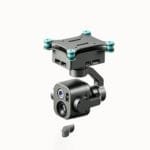
Inside the DS403: Precision Engineering Meets AI-Powered IntelligenceThe modern drone industry demands surveillance tools that balance performance with portability. The DS403 miniature electro-optical pod meets this challenge head-on, packing professional-grade imaging and tracking capabilities into an incredibly compact form factor. Unlike traditional payload systems that force operators to choose between image quality and weight, this drone AI pod integrates dual-spectrum cameras, AI-driven intelligence, and laser precision in a unit weighing less than 580 grams. For law enforcement agencies, military units, and emergency responders, the DS403 represents a significant upgrade in aerial awareness. The thermal imaging pod component provides clear heat signatures through smoke, darkness, and camouflage, while the 4K visible light camera captures cinematic detail for evidence gathering and analysis. As a complete UAV surveillance pod, it transforms ordinary drones into sophisticated observation platforms capable of autonomous target locking and real-time tracking. Engineered with a two-axis gyro stabilization system achieving ≤0.2mrad accuracy, the DS403 maintains rock-steady imagery even during aggressive drone maneuvering. Its laser rangefinder extends to 3000 meters with ±2m precision, enabling accurate distance measurements for targeting and situational assessment. The AI engine processes images at 50Hz, automatically detecting, classifying, and tracking objects of interest without manual operator input. Consequently, operators benefit from reduced cognitive load while the DS403 miniature electro-optical pod handles demanding surveillance tasks autonomously.Key Highlights of the DS403 Pod4K visible light and thermal infrared dual cameras for day and night operationsAI-powered automatic target tracking with 50Hz image recognitionLaser rangefinder with 3000m range and ±2m accuracyUltra-low power consumption at just 10W for extended missionsLightweight design under 580g, ideal for diverse drone platformsTwo-axis gyro stabilization with ≤0.2mrad precisionTechnical Specification GridWeight≤580gStabilization≤0.2mradIR Resolution640×512Visible Camera4K Ultra HDLaser Range15m–3000mPower Draw≤10WOperating Temp-20°C to +55°CAngular Velocity≥60°/sDual-Spectrum Camera System: 4K Visible and Thermal InfraredOne of the standout advantages of the DS403 miniature electro-optical pod is its integrated dual-sensor imaging array, which eliminates the need for separate payloads. The high-resolution 4K visible light camera delivers crisp, cinema-quality footage with exceptional detail retrieval, making it invaluable for evidence collection, infrastructure inspection, and threat identification. Furthermore, the lens system offers both wide and narrow field-of-view configurations, ranging from 38.4°×22.2° at 8mm to 12.7°×7.2° at 25mm, giving operators flexible viewing options without hardware swaps. On the thermal side, a 640×512 infrared sensor with a 14.6°×11.7° field of view captures precise heat signatures through complete darkness, fog, smoke, and light foliage. This dual-spectrum capability ensures that the DS403 remains fully operational around the clock. Notably, the transition between visible and thermal imaging is seamless, allowing drone pilots to adapt instantly to changing environmental conditions.For search and rescue teams working in smoke-obscured disaster zones, the thermal imaging pod component of the DS403 can mean the difference between a successful recovery and a missed opportunity. Heat signatures cut through visual obstacles that would blind standard cameras.AI-Powered Target Tracking and Precision Laser RangingAt the heart of the DS403's intelligence capability lies a sophisticated AI engine operating at a 50Hz image recognition frequency. This drone AI pod can automatically detect, classify, and lock onto moving targets, maintaining track even through temporary occlusions and rapid directional changes. As a result, human operators are freed from constant manual gimbal adjustments, allowing them to focus on higher-level mission decisions. The onboard laser rangefinder extends the pod's utility significantly, measuring distances from 15 meters up to 3000 meters for a standard 4m×6m vehicle target with ±2m accuracy. Specifically, this enables precise geolocation of objects, accurate artillery spotting, and safe standoff distances during covert operations. Moreover, the ranging frequency of up to 5Hz provides near-real-time distance updates as the target or drone moves through three-dimensional space. Together, the AI and laser systems form a powerful sensor fusion loop that dramatically simplifies complex surveillance tasks.Gyro Stabilization and Ultra-Low Power EfficiencyHigh-quality imagery demands an equally capable stabilization platform, and the DS403 delivers through its two-axis gyro system with stabilization accuracy ≤0.2mrad. Angular movement is managed effortlessly, with maximum angular velocity ≥60°/s and acceleration ≥100°/s² covering the full ±150° azimuth and -90° to +30° pitch range. Therefore, even during aggressive flight maneuvers, the footage remains silky smooth and tactically useful. In addition, the DS403 operates on a flexible 14VDC to 28VDC power input while consuming no more than 10 watts total. Consequently, smaller drones with limited battery capacity can carry this UAV surveillance pod without sacrificing flight endurance. The wide operating temperature range from -20°C to +55°C further confirms the DS403's suitability for diverse operational theaters, from arctic patrols to desert reconnaissance.Explore the DS403 Pod →Real-World Applications: Tactical Ops and Emergency ResponseThe DS403 miniature electro-optical pod proves its versatility across a broad spectrum of use cases. Military and law enforcement units rely on its long-range laser measurement and AI-driven tracking for covert perimeter surveillance and suspect monitoring. Meanwhile, firefighting agencies deploy the thermal imaging pod capabilities to locate hotspots and trapped individuals within burning structures. Similarly, border patrol and maritime security teams leverage the dual-camera system to track vessels and personnel at extended ranges. For wildlife conservation efforts, this drone AI pod assists in non-invasive animal monitoring and anti-poaching patrols, particularly in low-light conditions. Each of these scenarios benefits from the DS403's unique combination of lightweight construction, crystal-clear imaging, and intelligent automation.Related linkswebsitehttps://uavauto.comproduct-linkhttps://uavauto.com/product/ds403-miniature-electro-optical-pod/Phone+86 13602546081 (Mr. Wang)Emailkuiwong@hkdada.com
A New Benchmark in Drone Surveillance Technology When the mission demands absolute clarity, the DS30A lightweight pod delivers an unmatched combination of visible, thermal, and AI-driven sensor intelligence. Specifically engineered for professional drone operators, this multisensor pod redefines what a compact UAV surveillance pod can achieve. In fact, the DS30A lightweight pod weighs under 970 grams while seamlessly integrating a 30x optical zoom camera, high-resolution thermal imaging, and real-time AI tracking. Consequently, you gain critical situational awareness in both broad daylight and complete darkness. Moreover, the three-axis gyro stabilization ensures rock-steady footage even when the drone encounters gusty winds or rapid maneuvers. With its quick-release mounting structure, installation is effortless and downtime is drastically reduced. Additionally, the system supports 1080p 60fps video transmission and a tracking speed of ±48 pixels per frame. Therefore, the DS30A lightweight pod becomes an essential asset for law enforcement, environmental monitoring, and search and rescue operations. Notably, this drone thermal imaging and AI tracking pod brings professional-grade surveillance within immediate reach. Key Highlight: This progressive three-light pod merges visible light zoom, thermal detection, and AI-driven recognition within a single streamlined housing—reducing payload complexity while multiplying mission capability. Technical Specifications at a Glance A deep understanding of the DS30A lightweight pod begins with the hard numbers. Below, the core specifications are presented in an easy-to-digest grid format so you can immediately assess its fit for your most demanding operations. System TypeGyro Stability Weight≤970 g Visible Resolution1920×1080 @ 60 fps Visible FOV63° × 35° Thermal FOV12.5° × 10° Power Supply12–28 V Tracking Speed±48 pixels/frame @ 60 fps Operating Temp−10°C to +50°C Storage Temp−40°C to +60°C Intelligent Multi-Sensor Linkage for 24/7 Awareness The DS30A lightweight pod distinguishes itself through intelligent multi-sensor linkage. Specifically, it synchronizes visible light, thermal infrared, and AI-based recognition in real time. As a result, the UAV surveillance pod can detect, identify, and track targets regardless of environmental lighting. Furthermore, when the thermal sensor picks up a heat signature, the AI tracking pod instantly slews the visible camera to the same location. Thus, you receive correlated dual‑spectrum intelligence without manual intervention. For instance, during nighttime security patrols, the thermal module identifies human or vehicle heat while the visible zoom provides identification, and the AI algorithm locks onto the object. Consequently, the DS30A lightweight pod turns a standard drone into a fully autonomous surveillance station. Additionally, the sensor fusion architecture minimizes false alarms by cross-checking between spectral bands. Benefit in Practice: Simultaneous visible, thermal, and AI linkage eliminates blind spots and dramatically shortens the observe-orient-decide-act loop. 30x Optical Zoom and Long-Range Observation Long-range observation demands optical excellence, and the 30x zoom capability of this lightweight surveillance pod delivers exactly that. Specifically, the 63° wide field of view helps you scan vast areas quickly, while the 30x optical telephoto brings distant subjects into sharp focus. Moreover, the visible camera records at full 1080p 60fps, ensuring fluid video even when tracking fast-moving targets. In addition, the zoom mechanism maintains crisp focus across its entire range, unlike digital zooms that degrade rapidly. Therefore, operators can identify license plates, individual facial features, or equipment markings from stand-off distances. Similarly, search and rescue teams benefit by scouting remote terrain without physically entering hazardous zones. Indeed, this drone thermal imaging platform combined with powerful optics elevates situational awareness to an entirely new level. High-Resolution Thermal Imaging for Low-Visibility Missions Operating in darkness, fog, or heavy smoke exposes the limitations of visible-only sensors. However, the DS30A lightweight pod integrates a high-resolution thermal imager with a 12.5° × 10° field of view. Consequently, it detects minute temperature differences from extended distances. For example, industrial inspectors can spot overheating machinery components, while border patrols locate individuals attempting concealment. Moreover, the thermal sensor’s sensitivity ensures reliable performance even in adverse weather. Importantly, the gyro-stabilized platform maintains thermal image clarity irrespective of drone vibration. As a result, this drone thermal imaging solution becomes a reliable 24/7 guardian. Additionally, the infrared data feeds directly into the AI tracking pod, automatically classifying threats and reducing operator fatigue. Indeed, the UAV surveillance pod never sleeps. Three-Axis Stabilization and Creative 360° Shots Unstable video undermines the best sensors. Therefore, the three-axis gyro stabilization in the DS30A lightweight pod is a critical enabler of mission success. Specifically, the brushless motors compensate for pitch, roll, and yaw deviations at high frequency. As a result, the pod delivers cinematic smooth footage while the drone banks aggressively or hovers in turbulent wind. Furthermore, the stabilization system allows full 360° continuous rotation, enabling creative inspection orbits around infrastructure. For instance, you can circle a cell tower to examine every strut without reorienting the aircraft. Moreover, the stabilization loop works simultaneously across the visible and thermal channels. Thus, both video streams remain usable as the AI tracking pod continues its analysis without interruption. Indeed, the lightweight surveillance pod keeps your eyes precisely where they need to be. Pro Tip: The three-axis gyro also enhances the AI tracking accuracy by providing stable pixel-level data for motion prediction algorithms. Quick-Release Structure for Seamless Deployment Field operations demand speed. Consequently, the DS30A lightweight pod incorporates a quick-release mounting system that eliminates complex tooling. In mere seconds, you can attach or detach the pod from any compatible drone airframe. Furthermore, the lightweight design—under 970 grams—places minimal strain on the aircraft’s payload capacity. Thus, even small multirotors gain access to professional sensor fusion. Additionally, the quick-release mechanism uses a robust locking interface that prevents accidental separation during aggressive flight. For example, a security team switching drones between shifts can swap the UAV surveillance pod without recalibration. Moreover, the architecture simplifies maintenance because the pod can be removed and benched for firmware updates independently. Therefore, the DS30A lightweight pod minimizes ground time and maximizes operational readiness. Real-World Applications and Versatility The adaptive design of the DS30A lightweight pod fits countless mission profiles. For instance, law enforcement agencies employ the drone thermal imaging capability to locate fugitives hidden in foliage. Similarly, border patrols deploy the UAV surveillance pod to monitor vast stretches of open terrain around the clock. Moreover, firefighting crews use the thermal sensor to map hotspots in burning structures long before entry teams are committed. Furthermore, the AI tracking pod automatically follows vehicles of interest, freeing the pilot to focus on airspace awareness. In addition, industrial inspectors conduct visual and thermal surveys of power lines, wind turbines, and pipelines from a safe stand-off. Consequently, the lightweight surveillance pod transforms any commercial drone into a multipurpose observation platform. Indeed, whether for public safety or critical infrastructure, the DS30A lightweight pod provides the intelligence edge. Shop Now Related links website https://uavauto.com product-link https://uavauto.com/product/ds30a-three-light-lightweight-pod/ Phone +86 13602546081 (Mr. Wang) Email kuiwong@hkdada.com
Why the AI Tracking Module Is a Game-Changer for Drone PilotsThe ai tracking module is transforming drone operations by delivering precise drone target tracking in complex environments. Moreover, as a long range drone module, it supports control distances up to 20 km, making it a top choice for FPV enthusiasts. This fpv ai module uses advanced image contrast technology to automatically lock onto targets, ensuring consistent performance. Furthermore, it offers manual adjustment and multiple initial tracking box sizes to adapt to various scenarios. With automatic stabilization in ANGLE mode and compatibility with BF and INAV firmware, you can achieve stable, reliable flights. In short, this module enhances your drone’s capabilities dramatically.Key Specifications of the AI Tracking ModuleThis ai tracking module packs essential features for precise drone target tracking into a compact form factor. Its broad interface support and robust power specs make it suitable for diverse drone builds. The following table outlines the technical parameters.CategoryParameterDescriptionBasic ParametersSize38mm × 38mm × 40mmWeight55gPower Consumption≤ 6WOperating Voltage16-30V (4S-6S)InterfaceSupported InterfacesCVBS, UART, RJ45, USB, SBUS, CRSFFeaturesModeANGLE mode, automatic stabilization of drone attitudeVideo TransmissionSupports analog and digital video transmission, RTSP stream supportedMaximum Control Distance20 kmManual AdjustmentSupports manual adjustment of the tracking target positionInitial Tracking Box SelectionSupports multiple initial tracking boxes (large, medium, small)CompatibilityFlight Control FirmwareSupports BF and INAV firmwarePower SupportCan provide 12V power to the cameraInstallationInstallation OptionsEmbed in the FPV frame or install in another suitable locationOverall, the module’s dedicated drone target tracking capability ensures reliable performance in the most demanding missions.How the AI Tracking Module Elevates Your Flight ExperienceAs an essential ai tracking module for FPV drones, this device improves every flight. It eliminates the need for manual target following. Consequently, you can focus on capturing smooth footage while the module handles tracking. The fpv ai module integrates seamlessly with your existing equipment, so setup is quick. The automatic stabilization in ANGLE mode keeps the drone level, so precision shooting becomes effortless. Furthermore, as a long range drone module, it maintains control over vast distances. This makes it perfect for search and rescue or long-range cinematography. The integration with BF and INAV firmware means most pilots can start using it right away. Additionally, the multiple initial tracking boxes let you tailor the tracking area to the target’s size. In practice, drone target tracking has never been this reliable and adaptable.Related linkswebsitehttps://uavauto.comproduct-linkhttps://uavauto.com/product/drone-ai-intelligent-tracking-module/Phone+86 13602546081 (Mr. Wang)Emailkuiwong@hkdada.com
Precision Meets Integration: The DAIMU 501/701 AdvantageWhen navigating the extremes of aerospace or an autonomous UAV mission, accuracy matters down to the last centimeter. The DAIMU 501/701 delivers centimeter-level navigation with a fully integrated sensor ecosystem that eliminates external dependencies. At its core, a tactical-grade IMU works in concert with RTK positioning, a barometer, and magnetometers, fusing GPS, GNSS, and BeiDou signals for resilient global coverage. Furthermore, this all-in-one unit outputs attitude, absolute heading, and altitude in real time, without the need for extra compute modules. This seamless centimeter-level navigation integration dramatically reduces system complexity. Engineers and mission planners can rely on its tactical-grade IMU bias stability and ultra-low noise to maintain precision in high-dynamic maneuvers. As a UAV navigation IMU, the DAIMU 501/701 simplifies drone avionics by providing centimeter-level navigation and RTK positioning straight out of the box. Notably, whether flying through GPS-denied corridors or pitching on rough seas, the system keeps its lock on truth. The result: faster integration, simpler architectures, and unmatched confidence in your navigation stack. Consequently, teams can accelerate development and focus on mission success rather than sensor fusion headaches. Moreover, rigorous factory calibration ensures each DAIMU 501/701 outperforms comparable IMUs. This cements its reputation as a tactical-grade IMU for demanding missions.Key Benefit: The DAIMU 501/701's tactical-grade IMU bias stability and integrated RTK positioning deliver centimeter accuracy even in high-dynamic environments — no external modules required.How the DAIMU 501/701 Achieves Centimeter-Level NavigationThe DAIMU 501/701’s architecture is optimized for centimetre-level performance. Inside, a tactical-grade IMU array offers ultra-low noise and exceptional bias stability. This high-precision IMU underpins centimeter-level navigation and accurate attitude estimation. Meanwhile, integrated RTK positioning and multi-mode GNSS reception maintain lock even under signal multipath or partial blockage. As a UAV navigation IMU, the system provides essential absolute heading and altitude outputs without external magnetometer or barometer modules. Furthermore, the device’s high data rate supports fast control loops in high-dynamic scenarios. Therefore, engineers gain a turnkey centimeter-level navigation solution that slashes integration time. Additionally, the rugged all-in-one design withstands shock, vibration, and extreme temperatures, ensuring reliable operation in aerospace and industrial contexts. For instance, a drone using this tactical-grade IMU can autonomously navigate complex terrain with consistent positioning accuracy. Ultimately, the DAIMU 501/701 translates raw sensor data into actionable motion intelligence.Centimeter-Level NavigationIntegrated RTK + multi-mode GNSS (GPS, GLONASS, BeiDou) delivers centimeter positioning accuracyTactical-Grade AttitudeUltra-low noise gyro/accel array for roll, pitch, yaw with
Introducing the DAIMU 101 & 131: Redefining Miniature Inertial MeasurementThe modern landscape of autonomous systems demands sensors that deliver exceptional precision while occupying minimal physical space. The DAIMU 101 and 131 are the industry’s smallest ultra lightweight IMU modules, specifically designed for direct PCB embeddable IMU integration. As high-performance MEMS IMU devices, they combine a triaxial gyroscope and accelerometer within a mere 12×12×3.3mm footprint, weighing only 0.8 grams. This ultra-compact inertial measurement unit eliminates the need for bulky external sensor pods, making it ideal for drones, wearable VR/AR devices, and tight robotic assemblies. Built on advanced micro-electromechanical systems, these modules achieve gyroscope bias instability of just 4.5°/hr in the DAIMU 101 and 4.0°/hr in the DAIMU 131. Consequently, the sensor provides highly stable angular rate data essential for precise attitude and heading reference systems. Moreover, the on-board digital interfaces (SPI and IIC) simplify direct communication with STM32, GD32, and other standard C platforms, drastically reducing development time. Thanks to rigorous full-temperature compensation from -40°C to 85°C and independent turntable calibration, the DAIMU series maintains consistent accuracy across harsh industrial environments. Engineers can also access complete algorithm source code, including complementary and Kalman filter fusion, for effortless customization. Therefore, whether you are developing a nimble drone, an agile robot, or a responsive motion capture system, these compact inertial measurement units provide the reliable sensing backbone you need.Why the DAIMU 101 & 131 Excel as a PCB Embeddable IMUAt the core of the DAIMU 101 and 131 lies a meticulous integration of high-precision MEMS gyroscopes and accelerometers, each individually calibrated on a turntable across the full -40°C to 85°C range. Consequently, the resulting ultra lightweight IMU eliminates the temperature drift that plagues off-the-shelf sensors. Moreover, the modules incorporate 100% magnetic shielding and withstand 2000g shock and 10g vibration, ensuring reliable performance in demanding drone and industrial settings. In addition, the open-source algorithm library grants developers complete control over the inertial measurement unit’s fusion logic. You can choose between a simple complementary filter or a sophisticated Kalman filter (EKF/UKF) for three-axis attitude estimation. Furthermore, the board’s stamp half-hole gold-plated process allows it to be soldered directly onto any host PCB, turning the entire assembly into a seamless embeddable IMU. Thanks to an ultra-low power consumption of only 10mW and a wide input voltage range of 3.3V to 8.0V, the DAIMU modules are well-suited for battery-powered miniature devices. Beyond that, program compatibility with STM32, GD32, and standard C libraries dramatically shortens integration cycles. As a result, even small engineering teams can accelerate time to market for advanced motion-controlled products. The combination of microscopic size, robust calibration, and open software makes the DAIMU series a standout PCB embeddable IMU for next-generation compact systems.Technical Specifications and Applications of the DAIMU 101 & 131 Inertial Measurement UnitEngineers evaluating the DAIMU 101 versus 131 will notice a clear performance gradient. The DAIMU 101 provides a gyroscope bias instability of 4.5°/hr and angular random walk of 0.8°/√hr, while the DAIMU 131 refines these to 4.0°/hr and 0.6°/hr respectively. Similarly, accelerometer bias instability improves from 20mg to 10mg. Both models share a ±2000°/s gyro range and a ±32g or ±16g accelerometer range, each covering the full -40°C to 85°C temperature envelope with active compensation. The following table summarizes the key differences and capabilities.ParameterDAIMU 101DAIMU 131Gyroscope Bias Instability4.5°/hr4.0°/hrGyroscope Angular Random Walk0.8°/√hr0.6°/√hrAccelerometer Bias Instability20mg10mgAccelerometer Velocity Random Walk0.12m/s/√hr0.09m/s/√hrTemperature Range-40°C ~ 85°C (with compensation)Power Consumption10mWInput Voltage3.3V ~ 8.0VHardware InterfaceSPI / IICWeight0.8gIn practice, these specifications translate into exceptional real-world performance. For instance, drone flight controllers benefit from the rapid, drift-resistant angular rate data for stable hovering and agile maneuvers. Likewise, industrial robots use the three-axis attitude output for balance control and precise motion tracking. Additional applications include VR/AR motion capture, autonomous vehicle attitude sensing, and structural health monitoring of bridges and towers. All these scenarios demand a robust, calibration-tested inertial measurement unit that can maintain accuracy under vibration and temperature fluctuations, which the DAIMU 101 and 131 deliver consistently.Related linksWebsitehttps://uavauto.comProduct LinkView DAIMU 101 & 131 Product PagePhone+86 13602546081 (Mr. Wang)Emailkuiwong@hkdada.com
Why the DA100 Heavy Lift Drone Excels in Industrial ApplicationsThe demand for high-capacity aerial transport is accelerating, and a heavy lift drone like the DA100 is at the forefront of this transformation. As a true payload drone, it boasts a maximum lifting load of 140kg, enabling it to carry tools, equipment, and emergency supplies with ease. Designed to function as a versatile logistics drone, the DA100 streamlines supply chain operations in remote and hard-to-reach areas. Moreover, its rugged carbon fiber frame and IP68 waterproof rating make it a reliable industrial lifting drone for challenging environments. In addition to firefighting and infrastructure inspection, this heavy lift drone delivers consistent performance even under a heavy lift drone 100kg configuration, ensuring mission-critical reliability. Consequently, organizations can reduce manual labor, cut delivery times, and enhance safety by deploying the DA100 across multiple commercial sectors.Key Specifications and Capabilities of This Heavy Lift DroneEngineered for maximum dependability, the DA100 heavy lift drone incorporates a high-strength composite carbon fiber airframe that balances lightweight agility with extreme durability. Its 120,000mAh battery provides a flight time of 20–45 minutes, depending on the load, making it an efficient logistics drone for extended missions. The drone’s military-grade three-axis redundant flight control system guarantees stable hovering accuracy of 0.1m, even in winds exceeding force 6. With a maximum takeoff weight of 240kg, this payload drone comfortably handles 140kg lifts and can also operate as a heavy lift drone 100kg solution for lighter cargo. An IP68 waterproof and dustproof rating allows flight in light rain, while the 30km remote control distance ensures seamless data and image transmission. Furthermore, the intelligent electric control contraction machine supports lifting up to 320kg, expanding its utility as an industrial lifting drone. Applications: Logistics Drone, Payload Drone, and BeyondFrom emergency response to routine transport, the DA100 serves as a multi-purpose heavy lift drone that adapts to diverse operational needs. As a firefighting drone, it can deliver water or suppression equipment to elevated or inaccessible fire zones, significantly improving response times. Simultaneously, its role as a logistics drone allows companies to move goods across large distances, bypassing ground obstacles in mining, agriculture, and disaster relief. The 33x optical zoom camera and 360-degree gimbal transform this payload drone into an inspection tool for power lines, bridges, and pipelines. Additionally, the heavy lift drone 100kg configuration is perfect for frequent, moderate-load deliveries, reducing transportation costs and manpower. With the ability to function as an industrial lifting drone for construction material hoisting, the DA100 consistently demonstrates its versatility. Consequently, operators achieve faster turnarounds, lower risk, and more reliable aerial logistics in even the most demanding scenarios.Related linkswebsitehttps://uavauto.comproduct-linkhttps://uavauto.com/product/da100-large-load-logistics-lifting-and-transporting-drones/Phone+86 13602546081 (Mr. Wang)Emailkuiwong@hkdada.com
The Power of CameraLink Input and RTSP StreamingIn the demanding fields of surveillance and reconnaissance, maintaining accurate target tracking despite camera vibrations is essential. Traditional tracking algorithms often struggle when unexpected movements shift the field of view, causing frequent target loss. The Trac-DA052H video tracking board addresses these challenges by combining high-precision tracking algorithms with robust hardware. This surveillance board integrates a CameraLink Base input for high-bandwidth sensor connections, ensuring stable and detailed image capture even under turbulent conditions. Furthermore, the board provides real-time RTSP streaming, enabling remote monitoring with minimal latency. Designed for long-range missions, the Trac-DA052H video tracking board offers exceptional reliability and performance. Importantly, it leverages advanced feature representations that resist appearance changes, which are common in shaky environments. As a result, operators can track moving objects consistently without worrying about frame-to-frame instability. Below, the demonstration video highlights the board’s ability to sustain single-object tracking during intense camera shake, proving its value for mission-critical operations.Why the Trac-DA052H Video Tracking Board Excels in High-Precision TrackingThe Trac-DA052H video tracking board excels in high-precision tracking due to its advanced design and cutting-edge components. Firstly, the CameraLink input supports high-bandwidth data transfer. This preserves fine details crucial for accurate detection. Moreover, the board’s dual RS422 serial ports facilitate flexible integration with gimbal and flight control systems. This enables synchronized movements that counterbalance external vibrations. Additionally, the integrated Gigabit Ethernet interface provides reliable RTSP streaming. It delivers smooth video feeds to ground stations or command centers. The large 64GB onboard memory ensures that all recorded data remains accessible. It supports at least three hours of compressed video storage at 6 Mbps. Consequently, operators can review critical moments without data gaps. This reconnaissance board also consumes less than 10 watts, making it suitable for UAVs where power efficiency is paramount. The compact dimensions are only 77 mm × 50 mm. The bare board weighs just 42.8 g, enabling seamless installation on small drones. Ultimately, the Trac-DA052H video tracking board offers robust tracking stability that outperforms conventional solutions in real-world scenarios.Technical Specifications of the Trac-DA052H Video Tracking BoardThe Trac-DA052H video tracking board incorporates a versatile set of technical parameters that guarantee dependable operation. Additionally, the board accepts one CameraLink Base input, adaptable to various high-resolution sensors. Moreover, its output is a single RTSP network stream, which simplifies integration with existing surveillance infrastructure. Furthermore, communication is handled via two RS422 serial ports and one Gigabit Ethernet port, enabling robust command and data transfer. For storage, the device features 64 GB of internal memory. Therefore, it supports at least three hours of continuous recording at 6 Mbps. This ensures no critical event is missed. This surveillance board’s typical power consumption remains below 10 W, operating at 12 V DC ± 2 V, which aligns with standard drone power systems. Physically, the board measures 77 mm × 50 mm. It weighs just 42.8 g (bare) or 92.3 g with the optional radiator. As a result, this compact design facilitates installation even in space-constrained platforms. Consequently, this surveillance board delivers a balanced combination of performance and efficiency.Applications in Reconnaissance and SurveillanceThis surveillance board is ideally suited for long-range reconnaissance and border monitoring missions. High-resolution sensors that require CameraLink connectivity can directly pair with the Trac-DA052H. This dedicated reconnaissance board captures detailed imagery from considerable distances. For instance, in border security setups, the board's CameraLink input ensures flawless video capture. Its stable RTSP streaming allows operators to continuously observe moving targets without interruption. Similarly, in search and rescue operations, the reconnaissance board’s high-precision tracking maintains lock on fast-moving subjects despite platform vibrations. The compact and lightweight design makes it easy to integrate into various unmanned systems, including multirotor and fixed-wing drones. Moreover, the onboard recording capability ensures that all video evidence is preserved for post-mission analysis. Therefore, the Trac-DA052H video tracking board stands as a dependable reconnaissance board that enhances mission success across diverse operational environments.Related linkswebsitehttps://uavauto.comproduct-linkhttps://uavauto.com/product/trac-da052h-video-tracking-board/Phone+86 13602546081 (Mr. Wang)Emailkuiwong@hkdada.com
Why the Trac-DA034L Excels in Real-Time SurveillanceModern surveillance and defense applications demand compact, energy-efficient solutions that deliver precision when it matters most. The Trac-DA034L video tracking board answers this call by combining AI‑powered target detection with robust embedded tracking capabilities. Designed specifically for real‑time surveillance scenarios, this board processes multi‑format video inputs including SDI and CVBS, enabling rapid, reliable object recognition even in challenging conditions. Its low power consumption, typically below 4 watts, makes it an ideal choice for battery‑powered UAV pods and mobile monitoring systems where every watt counts. Furthermore, the board supports centroid, correlation, and multi‑target tracking algorithms, ensuring consistent performance when tracking small, fast‑moving objects. Because the Trac‑DA034L video tracking board leverages dedicated AI recognition, it can discriminate between relevant targets and background clutter with minimal latency. Consequently, operators gain a decisive advantage in applications ranging from perimeter defense to airborne intelligence gathering. In addition, the integrated Gigabit Ethernet interface with RTSP streaming allows seamless integration into existing network infrastructures, while onboard memory options of 8 GB or 16 GB provide ample storage for recorded footage. The compact dimensions of 60 mm × 45 mm and a weight of just 28.2 grams (±5 g) permit installation in space‑constrained environments without sacrificing performance. Overall, this video tracking board represents a fusion of advanced AI tracking, low power design, and flexible I/O that makes real‑time surveillance both practical and accessible.What Makes the Trac-DA034L Video Tracking Board Ideal for Embedded TrackingEmbedded tracking systems require hardware that can operate continuously with minimal power draw while maintaining high detection accuracy. The Trac-DA034L video tracking board achieves this through a specialized architecture that offloads AI inference to dedicated processing blocks, keeping latency low and reliability high. Its support for 3G‑SDI and HD‑SDI input ensures compatibility with professional‑grade cameras, making SDI tracking straightforward in both fixed and mobile installations. Additionally, the board’s CVBS input allows integration with legacy analog systems, offering a smooth migration path to AI‑enhanced surveillance. Because the board measures only 60 mm × 45 mm and weighs under 35 grams, it can be embedded directly into drone payloads or portable monitoring kits without adding significant bulk. Moreover, the operating voltage of 12 V DC (±2 V) aligns with common drone and vehicle power buses, simplifying system design. With RS422, RS232, and TTL serial ports available, developers can interface with external gimbals, flight controllers, or ground stations effortlessly. This level of connectivity empowers rapid prototyping and deployment of custom surveillance solutions where real‑time target detection is mission‑critical.AI Tracking and Target Detection CapabilitiesAccurate AI tracking relies on robust algorithms and high‑quality video processing. The Trac-DA034L video tracking board implements centroid and correlation tracking alongside multi‑target recognition, all augmented by onboard AI to refine detection in real time. Specifically, the board can simultaneously track multiple objects, making it well‑suited for busy scenes where several threats or points of interest must be monitored. Its AI model has been optimized for low‑power operation, so it does not compromise speed or accuracy when resources are constrained. As a result, operators benefit from stable object following even when targets are small or partially obscured. Furthermore, the board’s ability to stream RTSP video over Gigabit Ethernet enables remote operators to view AI‑annotated feeds, facilitating collaborative decision‑making. When integrated into a UAV pod for airborne surveillance, this capability dramatically reduces the workload on human operators while improving situational awareness. The combination of advanced target detection and low latency processing makes the Trac-DA034L a go‑to component for modern real‑time surveillance systems.Low Power, Compact Design for UAV and Mobile DeploymentsPower efficiency is a cornerstone of the Trac-DA034L video tracking board. Consuming less than 4 watts during typical operation, it can run for extended periods on a single battery, making it perfect for drones, portable surveillance kits, and remote sensor nodes. Its 12 V input range further simplifies power management by matching standard UAV power distribution boards. Despite its low energy footprint, the board delivers full‑featured AI tracking and SDI tracking without noticeable performance degradation. In addition, the lightweight construction (28.2 g ± 5 g) allows multiple boards to be deployed within a single platform, enabling redundancy or parallel processing. These attributes position the Trac-DA034L as an exceptional embedded tracking solution for field operations where size, weight, and power (SWaP) constraints are non‑negotiable. Whether mounted in a telescoping mast for perimeter defense or inside a compact drone pod, this video tracking board consistently delivers the real‑time target detection needed to stay ahead of evolving threats.Related linkswebsitehttps://uavauto.comproduct-linkhttps://uavauto.com/product/trac-da034l-video-tracking-board/Phone+86 13602546081 (Mr. Wang)Emailkuiwong@hkdada.com
Why the FalconLock DS240 & DS120 Redefines UAV Visual GuidanceWhen milliseconds decide mission success, conventional CPU/GPU‑based vision processing becomes a dangerous bottleneck with latencies exceeding 100 ms. The FalconLock DS240 & DS120 Ultra‑Low Latency UAV Visual Guidance System eliminates that delay through FPGA hardware acceleration. Unlike traditional setups, this sophisticated UAV guidance module performs video capture, image pre‑processing, encoding, and transmission inside parallel pipelines, achieving near‑zero imaging delay. Moreover, the target locking response is held below 4 ms, enabling instant real‑time tracking of fast‑moving threats. Consequently, even high‑speed targets traveling at up to 400 km/h are seamlessly tracked—a feat that makes this visual guidance system uniquely suited to FPV drones, compound‑wing UAVs, and multi‑platform unmanned aircraft. In addition, the integration of an Unscented Kalman Filter and proportional navigation algorithm allows the system to predict target motion and adjust the flight vector in real time, delivering a circular error probable (CEP) of ≤0.15 m. Therefore, the FalconLock DS240 & DS120 represents a landmark UAV visual guidance system that fuses extreme speed, accuracy, and autonomous guidance intelligence into one compact module.Real‑Time Tracking Enabled by FPGA AccelerationAt the heart of the FalconLock DS240 & DS120 lies a powerful FPGA parallel pipeline architecture that concurrently processes video data streams. As a result, the visual guidance system delivers an imaging delay of approximately 0 ms—effectively eliminating the visual feedback lag that plagues CPU/GPU‑based solutions. Furthermore, the target locking response stays at or below 4 ms, which means the UAV guidance module can initiate real‑time tracking almost instantly after a threat is detected. Specifically, the hardware acceleration reduces end‑to‑end vision processing latency by up to 96% when compared to conventional systems with 100 ms+ delays. For instance, in a dynamic drone interception scenario, the module’s Unscented Kalman Filter continuously refines the target’s trajectory prediction, and the proportional navigation algorithm adjusts the flight vector accordingly. Consequently, the system maintains a CEP of ≤0.15 m under supported operating conditions—an accuracy level that transforms a standard UAV visual guidance system into a precision engagement tool. These capabilities are critical for mission profiles where every fraction of a second counts, and they make the FalconLock module a go‑to FPGA acceleration platform for modern autonomous guidance.High‑Speed Target Tracking for Demanding Mission ProfilesOne of the most impressive attributes of this UAV visual guidance system is its ability to track targets moving at speeds of up to 400 km/h. This extreme performance is supported by both the DS240 (1280×1024 @ 240 Hz) and the DS120 (1920×1080 @ 120 Hz) models, each optimized for different operational scenarios. Notably, the DS240’s ultra‑high frame rate is ideal for ground‑to‑air visual guidance, where rapid motion and small target silhouettes demand minimal motion blur. Meanwhile, the DS120’s full‑HD resolution excels in surface‑to‑air and air‑to‑air engagements, providing detailed imagery without sacrificing the low‑latency tracking pipeline. In both configurations, FPGA acceleration ensures that high‑frequency image data is processed without introducing the cumulative delays that would degrade tracking accuracy. As a result, operators can rely on the FalconLock module for real‑time target locking even when confronting fast aerial threats. Moreover, the integrated guidance algorithms handle the trajectory prediction autonomously, freeing the pilot to focus on mission‑level decisions. This robust high‑speed tracking therefore elevates both FPV drone guidance and compound‑wing UAV operations to a new level of reliability.Dual‑Model Flexibility and Seamless Flight‑Controller IntegrationFlexibility is a cornerstone of the FalconLock DS240 & DS120 design. The dual‑model configuration allows users to select either the high‑resolution DS120 for air‑to‑air tracking or the high‑speed DS240 for ground‑to‑air missions, all while benefiting from the same low‑latency FPGA acceleration core. In addition, the system is engineered as a universal UAV guidance module, making it compatible with a broad range of mainstream flight‑control ecosystems. Specifically, it supports MAVLink‑based platforms, as well as ArduPilot, PX4, INAV, BetaFlight, QGroundControl, and Mission Planner. Consequently, the module can be rapidly integrated into existing FPV drone setups, compound‑wing UAVs, and other unmanned aircraft without extensive custom firmware development. This plug‑and‑play simplicity, combined with the module’s superior target locking and real‑time tracking performance, makes it an attractive option for users seeking to upgrade their UAV visual guidance system without overhauling their entire hardware stack. Furthermore, the consistent reporting interface ensures that ground‑control software receives real‑time telemetry and tracking data, preserving situational awareness across the mission.Elevating FPV Drone Guidance with Autonomous CapabilityFor operators focused on FPV drone guidance, the FalconLock DS240 & DS120 delivers a decisive advantage. The near‑zero imaging delay and 4 ms target locking allow the pilot to see and respond to threats almost as they happen, while the module’s autonomous algorithms quietly handle the trajectory prediction and flight‑vector corrections. Therefore, the system can support both manual first‑person control and fully autonomous terminal guidance modes. In addition, the high‑speed tracking capability up to 400 km/h ensures that even the fastest aerial targets are kept within the engagement envelope. Because the platform integrates with common flight controllers like BetaFlight and ArduPilot, integrating this UAV visual guidance system into existing FPV rigs is straightforward. As a result, developers and end‑users gain a field‑proven visual guidance module that dramatically cuts latency, enhances accuracy, and opens the door to autonomous interception missions that were previously impossible with standard CPU‑based processing.Related linkswebsitehttps://uavauto.comproduct-linkhttps://uavauto.com/product/falconlock-ds240-ds120-ultra-low-latency-uav-visual-guidance-system/Phone+86 13602546081 (Mr. Wang)Emailkuiwong@hkdada.com