
DA60N Mini Infrared UAV Pod: 200g Thermal Camera Payload for Catapult Drones
A Palm-Sized Thermal Eye for Small Drone Platforms
Small UAV platforms have long faced a stubborn trade-off: capable sensors are heavy, while lightweight payloads give up capability. The DA60N mini infrared UAV pod was engineered to end that compromise. Weighing roughly 200 g, this compact turret pairs a 640×512 uncooled uav thermal camera with a high-speed tracking module. As a result, even airframes that can barely lift a smartphone gain professional-grade night surveillance ability. Moreover, the pod carries a ≥400 g launch impact rating. That rating lets it survive the violent acceleration of catapult-launched drone systems, which would knock ordinary gimbals out of alignment. Such toughness, combined with a compact Ø70 mm metal enclosure, makes the pod a natural fit for demanding assignments. Public security patrol, law enforcement pursuit, and airborne inspection are all fair game. Inside the dome, the UAV gimbal delivers 0.1 mrad stabilization accuracy and ≤0.3° angular position accuracy. Consequently, thermal imagery stays crisp through aggressive maneuvers instead of smearing into noise. The pod is equally frugal to operate. It draws only ≤6 W on average from a 12–28 V DC supply. In addition, it streams H.264/H.265 video over Ethernet, so integration stays refreshingly simple. This overview walks through the details behind those numbers. Specifically, we will examine how the thermal imaging camera performs after dark. We will also look at how the drone target tracking module behaves at ≥40°/s. Finally, we will explain why the 200 g catapult drone payload design matters for mission planners who count every gram.
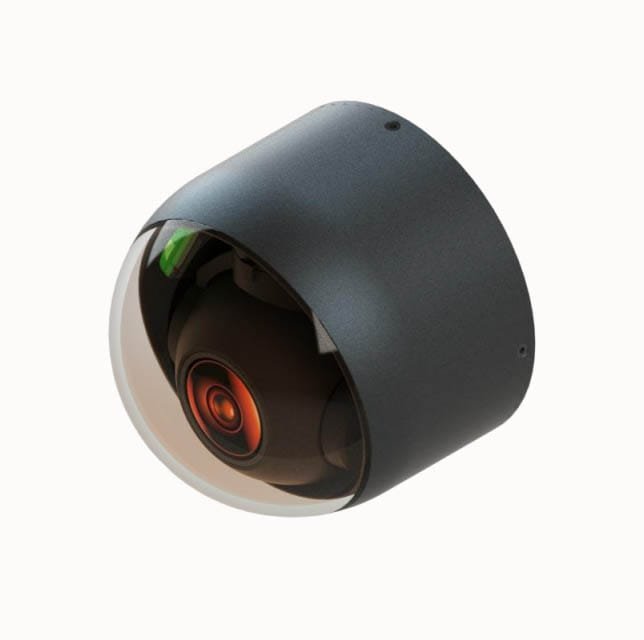
Inside the DA60N Mini Infrared UAV Pod: Thermal Imaging Performance
At the core of this mini infrared UAV pod sits an uncooled 640×512 sensor that streams full-resolution thermal video at 50 fps. Consequently, operators enjoy smooth, low-latency imagery even when the aircraft banks hard. The 19 mm infrared lens yields a 22.9° × 18.4° field of view. That envelope keeps situational awareness wide while still resolving heat sources at distance. For instance, demo footage shows highway traffic rendered in White Hot, Black Hot, and Iron Red palettes. Individual vehicles remain easy to distinguish. In total, the uav thermal camera offers six to fifteen palettes depending on the connected infrared module. Rainbow and Fusion options join the classics, and an adjustable temperature bar overlay aids interpretation. When a heat source needs closer study, digital zoom steps up to 3.0×. Meanwhile, picture-in-picture display keeps the zoomed infrared window on screen without sacrificing the wider scene. A rich OSD layer rounds things out. It overlays camera status, target information, and platform telemetry directly onto the feed, which simplifies evidence logging during night surveillance missions. Because thermal imaging camera preferences differ by task, this flexibility matters. White Hot suits general patrol work, whereas Iron Red highlights the subtle temperature gradients that forest fire monitoring demands. In short, the DA60N mini infrared UAV pod adapts to the mission instead of forcing operators to adapt to it.
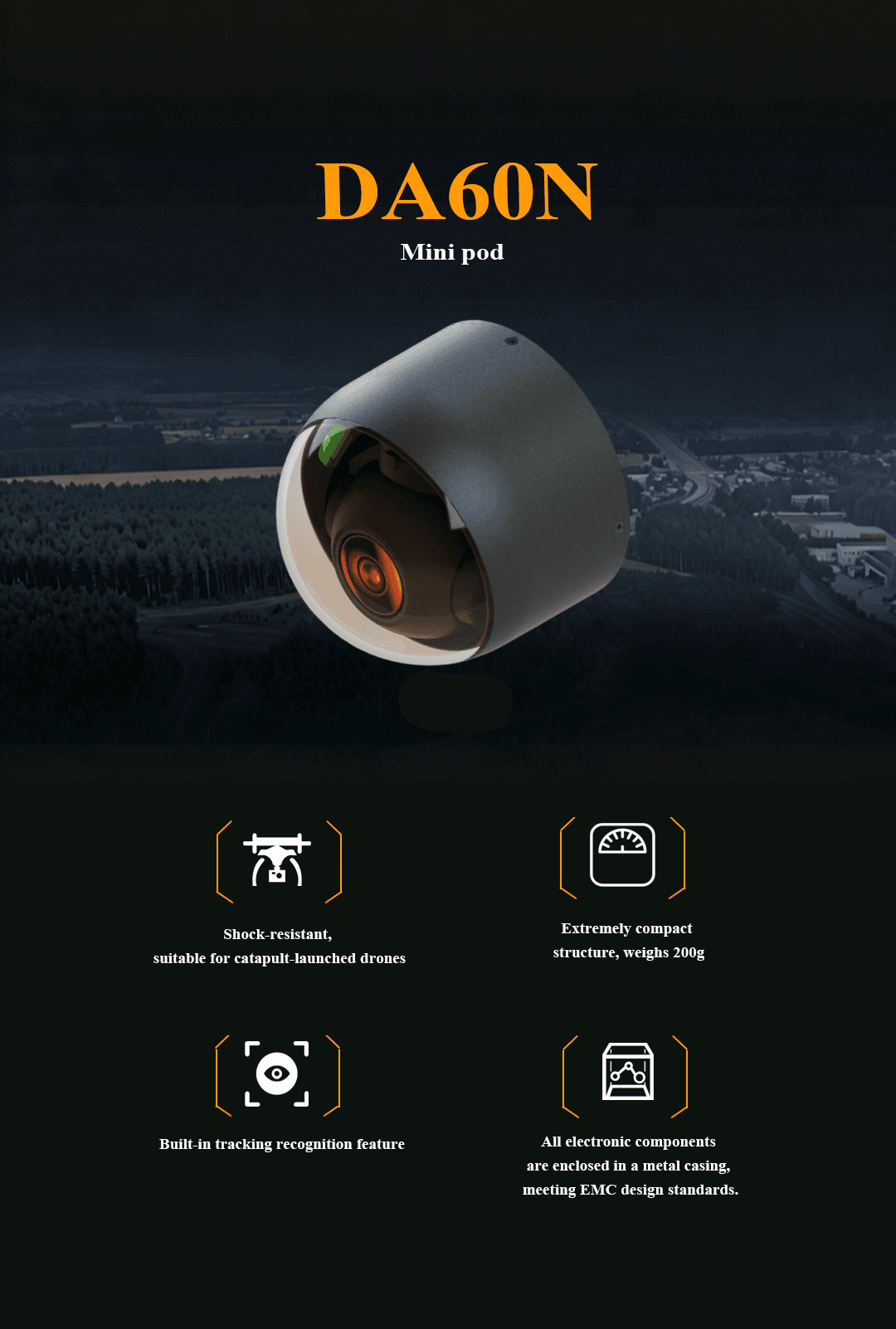
High-Speed Drone Target Tracking and Catapult-Ready Durability
Tracking is where many lightweight pods fall short, yet the DA60N refuses to cut corners. Its module locks onto vehicles and people automatically and sustains drone target tracking at ≥40°/s. That speed is fast enough to follow a car through tight turns without losing the lock. Operators can switch between selectable recognition modes, and the system holds targets steadily even during rapid platform maneuvers. For drone target tracking over highways, the automatic vehicle mode is a genuine time-saver. Furthermore, the gimbal pans ±45° in yaw and tilts from −75° to +45° in pitch, rotating at up to ≥100°/s. Stabilization accuracy of 0.1 mrad keeps the thermal picture steady while the airframe vibrates or dives. Durability is just as impressive. The pod shrugs off ≥400 g launch impact. Catapult-launched drone teams can therefore fire the aircraft skyward without worrying about the sensor. As a catapult drone payload, it tolerates −20°C to +55°C conditions. Protection comes from a metal housing built to EMC design standards, which also shields against interference and dissipates heat. Mechanically, the Ø70 mm body mounts on a standard 42 × 42 mm pattern with four M2.5 holes. For catapult drone payload bays, the 67.9 mm overall length tucks neatly under compact fuselages. Control runs through TTL, RS232, or S.BUS with TCP/UDP networking, while video records to MP4 for post-mission review. In conclusion, this 200 g mini infrared UAV pod pairs a sharp uav thermal camera with confident drone target tracking. For teams seeking a proven catapult drone payload, few alternatives come close.
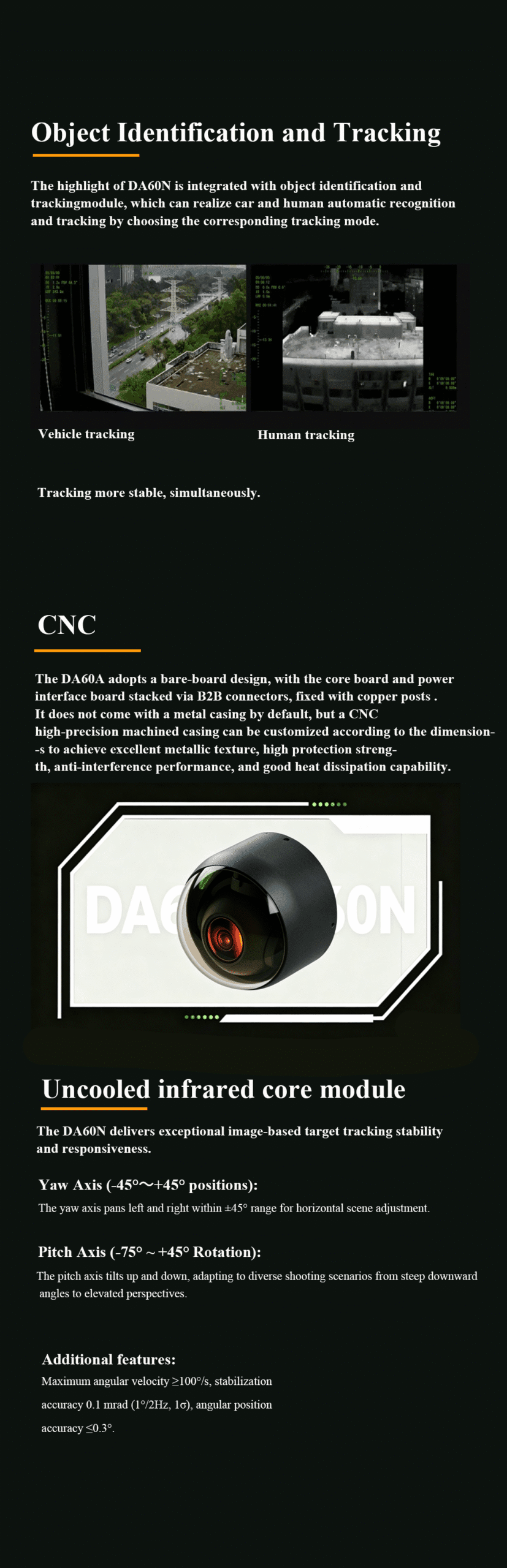
Key Specifications at a Glance
| Specification | Detail |
|---|---|
| Product type | Mini infrared UAV pod |
| Weight | Approx. 200 g |
| Thermal core | 640×512 uncooled uav thermal camera at 50 fps |
| Lens / FOV | 19 mm; 22.9° × 18.4° |
| Tracking | ≥40°/s; vehicle and human recognition |
| Gimbal range | Yaw ±45°; pitch −75° to +45° |
| Stabilization | 0.1 mrad; position accuracy ≤0.3° |
| Launch impact | ≥400 g (catapult drone payload rated) |
| Dimensions / mounting | Ø70 mm × 67.9 mm; 42 × 42 mm pattern, 4 × M2.5 |
| Power | 12–28 V DC; ≤6 W avg, ≤15 W max |
| Interfaces | Ethernet video (H.264/H.265, MP4); TTL/RS232/S.BUS control |
| Temperature | −20°C to +55°C operating and storage |
Related links
website
Product
https://uavauto.com/product/da60n-mini-infrared-uav-pod-overview/
Phone
Related Posts
-
DT30DL Multi-Sensor Dual-Field EO/IR Laser Rangefinder Gimbal for Drone Surveillance
-
DS30E EO/IR Gimbal: Triple-Sensor Thermal Drone Camera with Laser Rangefinder & AI Tracking
-
DD360Pro Micro Gimbal Pod: Professional Triple-Mode EO/IR Payload for UAVs
-
DA100 Heavy Lift Drone: 140kg Payload for Industrial Logistics and Transport