HI640S Uncooled Infrared Thermal Imaging Module for OEM Integration
Camera Systems · Product guide
The HI640S is a compact uncooled microbolometer thermal imaging module for OEM integrators building handheld, UAV or fixed thermal cameras. It pairs a 640×480 17 µm or 640×512 12 µm detector with lens options, selectable video outputs and sub-1.5 W power draw, so system designers can size a thermal payload around a 28 mm cube and a 4–12 V supply.
Verified specifications
| Detector type | Uncooled infrared microbolometer with micro-shutter, no thermoelectric cooler |
|---|---|
| Resolution and pixel pitch | 640 × 480 at 17 µm or 640 × 512 at 12 µm |
| NETD | ≤25 mK (12 µm) or ≤40 mK (17 µm) at 300 K, f/1.0 |
| Spectral band | 8–14 µm long-wave infrared |
| Frame and output timing | 50 Hz detection; PAL display output at 25 Hz, 768 × 576 |
| Power input and consumption | DC +4 V to +12 V input, less than 1.5 W consumption, with reverse polarity and under/over-voltage protection |
| Dimensions and weight | 28 mm × 28 mm × 30 mm PCB footprint, 40 g excluding lens |
| Video and communication ports | BT.656, HDMI or RJ45 digital video; PAL (CVBS) analog output; RS-232, RS-485, TTL and Peclo-D communication; 5-key keypad control |
| Operating temperature | -20 °C to +60 °C commercial, -40 °C to +60 °C special application version |
| Start-up time | Less than 7 s |
Detector options and sensitivity
Two detector builds share the same module footprint. The 640×512 12 µm version is specified at ≤25 mK NETD, while the 640×480 17 µm version reaches ≤40 mK, both measured at 300 K with an f/1.0 optic. The finer 12 µm pitch favours spatial detail, which matters when small targets such as hot components or people at distance must stay resolvable in the frame.
The 8–14 µm long-wave band sits near the thermal emission peak of most ambient-temperature objects, which is why modules in this class support building inspection, electrical fault-finding and outdoor surveillance. Adaptive non-uniformity correction and digital detail enhancement are listed as module features, so the host processor mainly handles video routing and application-level display.
Lenses and imaging controls
Lens selection sets the field of view for the whole system. Optional focal lengths include 12 mm, 19 mm, 25 mm, 35 mm and 50 mm, so a designer can trade scene coverage against target magnification without changing the camera body. Note that the quoted 40 g mass and 28 × 28 × 30 mm board dimensions both exclude the lens, so both need rechecking for the final assembly.
On-board controls cover black hot, white hot and pseudo colour polarity, 1× to 8× digital zoom in 0.1 steps, automatic plus manual brightness, horizontal and vertical flip, and one or more crosshair reticles. These are useful in vehicle or pole-mounted installations where the module is sealed inside a housing and the operator cannot reach it directly.
Interfaces, power and integration checks
The HI640S is configured rather than fixed. Video output can be digital (BT.656, HDMI or RJ45) or analog PAL CVBS, and command links cover RS-232, RS-485, TTL and Peclo-D. Because the port set, lens and interface choices are listed as customisation options, confirm the exact configuration of the build you are ordering before committing a carrier board layout or host software.
Power integration is deliberately simple: the module accepts a DC +4 V to +12 V input and consumes under 1.5 W, with reverse polarity and under- and over-voltage protection. That ceiling makes the module workable in battery-operated handhelds and UAV payloads, where endurance is set by every milliamp the payload adds.
- Confirm whether your build carries BT.656, HDMI or RJ45 digital video, or PAL CVBS analog output
- Match the control link (RS-232, RS-485, TTL or Peclo-D) to available host serial resources
- Budget a 4–12 V DC source and allow for under 1.5 W consumption at the system level
- Verify lens, reticle and interface selections at order time, since they are configurable options
Civilian uses and selection tradeoffs
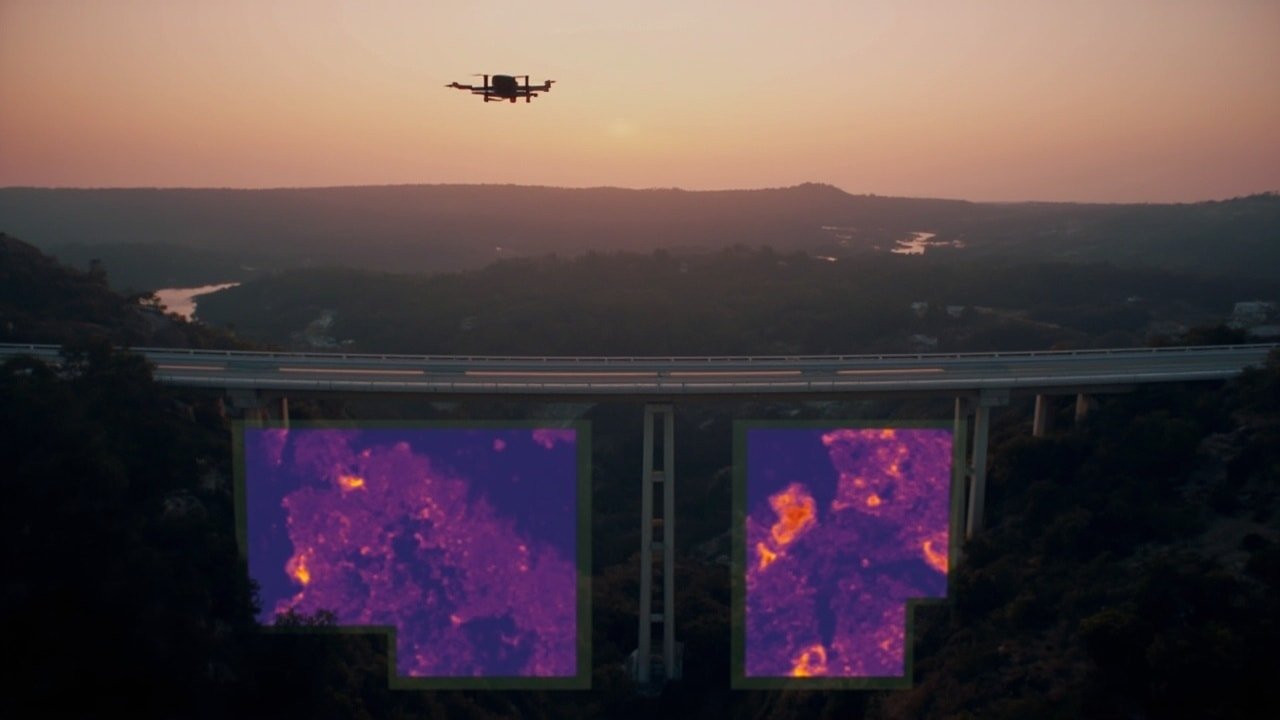
Documented civilian applications include fixed and mobile perimeter surveillance, border monitoring, predictive maintenance on electrical cabinets, bearings and rotating equipment, aerial thermography for agriculture and infrastructure inspection, search and rescue, handheld diagnostic tools for inspectors and firefighters, and automotive night-vision assistance. The 40 g weight and low power draw are the decisive numbers for airborne and handheld platforms.
The main tradeoffs are sensitivity against pixel density, lens focal length against physical size, and port count against board space. Commercial builds are rated -20 °C to +60 °C with a special application version extending to -40 °C, while vibration and shock are stated against GJB 150 and temperature shock to -5 °C/min over -40 °C to +60 °C. Confirm the environmental grade your installation actually requires.
Frequently asked questions
Which detector version should I choose?
Both share the 28 × 28 × 30 mm footprint and 50 Hz rate. Pick 640×512 at 12 µm for finer spatial detail at ≤25 mK NETD, or 640×480 at 17 µm for the larger-pixel option at ≤40 mK. Sensitivity figures are specified at 300 K with an f/1.0 lens, so a slower optic can reduce practical thermal contrast.
What power supply and start-up time does it need?
The module accepts DC +4 V to +12 V and consumes under 1.5 W, with reverse polarity and under- and over-voltage protection included. Start-up time is quoted below 7 s, short enough for handheld and UAV use where the operator powers the camera immediately before a survey. A 5-key keypad is also listed for external control.
Which video and communication interfaces are available?
Digital video ports include BT.656, HDMI and RJ45, and analog PAL (CVBS) output provides 768 × 576 display at 25 Hz. Communication options cover RS-232, RS-485, TTL and Peclo-D. These are configuration choices, so verify which ports are populated on your ordered build rather than assuming all are fitted.
Does the module need cooling?
No. The detector is an uncooled microbolometer with no thermoelectric cooler, and a micro-shutter supports consistent operation across scenes. That removes cooler power and bulk, keeping the module under 1.5 W and 40 g, but it also means sensitivity depends on the stated NETD figures and on using an optic close to f/1.0.