D-C8110UV Drone Camera Module Buying and Integration Guide
Camera Systems · Product guide
The D-C8110UV is an 8MP IP camera module designed for UAVs and other compact imaging systems. It combines 3840×2160 output, 10x optical zoom, low-light color and monochrome capture, and infrared operation with H.265, H.264, and MJPEG encoding. Drone integrators, industrial inspection teams, and surveillance system developers can use these verified capabilities when planning payload, network, storage, and lens performance.
Verified specifications
| Image sensor | 1/2.8-inch progressive-scan CMOS |
|---|---|
| Maximum video output | 3840×2160 at 30fps; additional main-stream resolutions include 1280×960 and 1280×720 |
| Optical zoom | 10x, with a 4.8–48mm focal-length range and 62–7.6° horizontal field of view |
| Low-light performance | 0.001 lux at F1.7 in color, 0.0005 lux at F1.6 in black and white, and 0 lux with infrared |
| Video compression | H.265, H.264, and MJPEG; adjustable bit rate from 32 Kbps to 16 Mbps |
| Interfaces and storage | ONVIF, RTSP, and IPv6 support; Micro SD/SDHC/SDXC storage up to 256GB |
| Power consumption | 2.5W for IRC and up to 4W maximum |
| Mechanical dimensions and weight | 61.5×55×42.4mm; 101g |
Imaging and Zoom Performance
The module uses a 1/2.8-inch progressive-scan CMOS sensor and supports 3840×2160 video at up to 30fps. Its 10x optical zoom covers a 4.8–48mm focal-length range, allowing operators to switch between broad views and more detailed framing without relying entirely on digital magnification. The stated horizontal field of view narrows from 62° to 7.6° across that zoom range.
Low-light operation is supported at 0.001 lux in color and 0.0005 lux in monochrome, with infrared operation extending the stated minimum illumination to 0 lux. Backlight compensation, 3D noise reduction, an electronic shutter, and a shutter range of 1/25 to 1/100,000 second provide additional controls for changing operating conditions.
Encoding and Event Features
H.265, H.264, and MJPEG compression are available, with adjustable bit rates from 32 Kbps to 16 Mbps. The module supports multiple profiles and adjustable resolution and frame-rate settings, giving integrators options for balancing output detail against bandwidth and storage requirements. Three-stream technology provides separate configuration choices for multi-stream deployments.
For event-driven imaging, the product data lists motion detection, support for 255 presets, and eight patrol patterns. These are documented module features, but their behavior in a finished system still depends on configuration and the connected recording or monitoring platform.
- Confirm which codec the ground station accepts
- Review stream count and frame-rate settings
- Configure presets, patrols, and motion detection together
Civilian and Industrial Uses
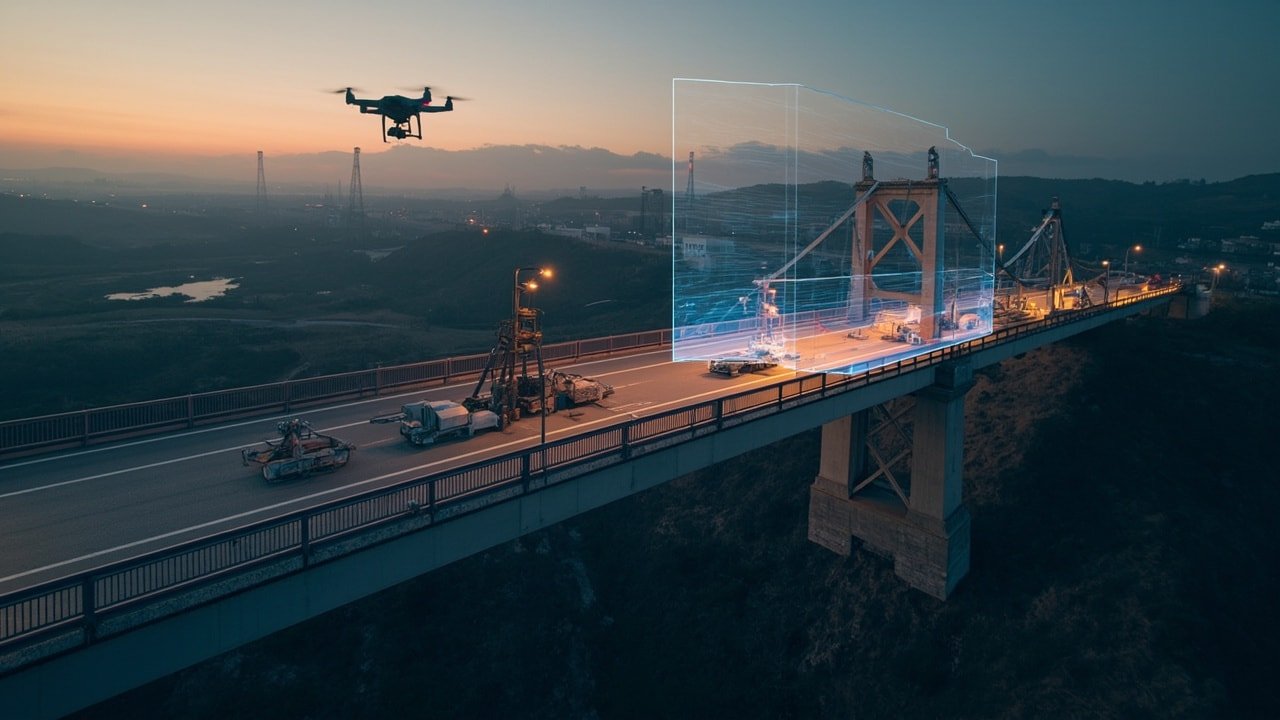
The stated applications include UAV aerial photography, industrial equipment and infrastructure inspection, perimeter surveillance, and smart-city monitoring. The zoom range can be useful when an airborne or fixed camera needs both situational context and a closer view of a distant subject.
The module is also presented as a component for small dome or bullet cameras and other custom camera solutions. This makes it relevant to developers embedding remote imaging rather than installers seeking a complete, preassembled surveillance camera.
Payload and Integration Checks
At 101g and 61.5×55×42.4mm, the unit is intended for installations where payload and enclosure space are constrained. Its stated power consumption is 2.5W with IRC and 4W maximum. These figures should be checked against the aircraft’s available power, connector requirements, cooling conditions, and flight-time limits before installation.
Network operation is supported through ONVIF, RTSP, TCP/IP, HTTP, IPv6, and other listed protocols, while storage can be provided through a Micro SD/SDHC/SDXC card up to 256GB. Protocol support is not proof of compatibility with every recorder or control system, so integrators should validate the target platform, stream settings, authentication, and recording workflow directly.
- Measure payload clearance and verify connector clearance
- Budget for the maximum 4W operating requirement
- Test RTSP or ONVIF behavior with the intended platform
- Confirm card capacity, format, and recording access
Frequently asked questions
What resolution and frame rate does the D-C8110UV support?
The maximum documented output is 3840×2160 at 30fps. The main stream also supports 1280×960 and 1280×720. H.265, H.264, and MJPEG compression are available, with adjustable resolution, frame rate, and bit rate for integration planning.
Does the camera use optical or digital zoom?
It provides both. The optical system delivers 10x magnification over a 4.8–48mm focal-length range, while a separate 16x digital zoom is listed. Digital magnification may narrow the captured view further without adding the same optical detail.
Can the module operate in low-light conditions?
Yes. The published minimum illumination is 0.001 lux at F1.7 in color and 0.0005 lux at F1.6 in black and white. Infrared operation is also listed at 0 lux, making the module suitable for night-oriented imaging when suitable infrared illumination is available.
What should be checked before installing the module?
Confirm payload allowance, enclosure clearance, power availability, cooling, connectors, and the chosen recording platform. ONVIF and RTSP are supported, but documented protocol support does not guarantee successful operation with every system without an integration test.