DA MicroPro: Compact Thermal Imaging for OEM Integration
Camera Systems · Product guide
The DA MicroPro is an uncooled infrared thermal imaging module for OEM developers building compact thermal cameras, UAV payloads, surveillance devices and portable instruments. It is offered in 384×288 and 640×512 configurations, with a 13.6 × 13.6 × 11.2 mm housing weighing 4.1 g before the lens. HDMI, BT656 and MIPI options support different embedded display architectures.
Verified specifications
| Detector | Uncooled amorphous silicon infrared microbolometer |
|---|---|
| Resolution | 384 × 288 or 640 × 512 pixels |
| Pixel pitch | 12 μm |
| Spectral band | 8–14 μm long-wave infrared |
| Sensitivity | ≤50 mK at 300 K, f/1.0 for the 384 model; ≤40 mK at 300 K, f/1.0 for the 640 model |
| Power consumption | Less than 0.5 W for the 384 model; less than 0.8 W for the 640 model |
| Operating voltage | 2.5–5.5 V DC, typical 3.7 V |
| Dimensions and weight | 13.6 × 13.6 × 11.2 mm and 4.1 g, excluding lens |
Detector Choices for Integration
The DA MicroPro family provides two detector configurations. The 384 × 288 model offers a lower-power option with sensitivity of ≤50 mK, while the 640 × 512 model provides more pixels and sensitivity of ≤40 mK under the stated 300 K, f/1.0 conditions. Both use a 12 μm pixel pitch and an uncooled amorphous silicon microbolometer, avoiding a thermoelectric cooler.
The detector operates in the 8–14 μm long-wave infrared band at 50 Hz. Output presentation is specified separately at 25 Hz for the display frame rate, which should be considered when designing timing, recording and downstream processing workflows.

Outputs for Embedded Systems
Digital video options include HDMI, BT656 and MIPI, allowing integrators to align the module with different processor and display architectures. PAL/CVBS analog video and RS-232 communication are also listed. The module provides HDMI 1080P output, while the specified PAL display resolution is 768 × 576.
Image controls include automatic and manual brightness and contrast, black-hot, white-hot and pseudo-color polarity, horizontal or vertical flipping, multiple cursor options and digital detail enhancement. Zoom is available up to 4× on the 384 model and 8× on the 640 model, with specified increments of 0.05× and 0.1× respectively.
Power, Startup and Protection
Power requirements are a central consideration for battery-powered equipment. Typical consumption is less than 0.5 W for the 384 configuration and less than 0.8 W for the 640 configuration. The stated input range is 2.5–5.5 V DC, with 3.7 V identified as typical, allowing the module to be paired with suitably designed low-voltage power systems.
Startup time is specified at less than three seconds from power-on to image. Reverse-polarity and under/over-voltage protection are built in. Adaptive non-uniformity correction operates without a mechanical shutter, reducing the need to integrate a separate shutter mechanism into the host product.
Mechanical and Environmental Planning
The lens-free module measures 13.6 × 13.6 × 11.2 mm and weighs 4.1 g, making the stated dimensions and mass useful starting points when planning an OEM enclosure. Lenses with various focal lengths are available upon request, but the final optical configuration, field of view and assembled size must be confirmed for the intended system.
Commercial operation is specified from −20°C to +60°C, with a special application range of −40°C to +60°C. Storage range is −45°C to +65°C, and operating humidity is 5–95% without condensation. The product data cites GJB 150 vibration and shock testing, including a 1000 g, 6 ms shock condition.
Civilian Applications and Selection
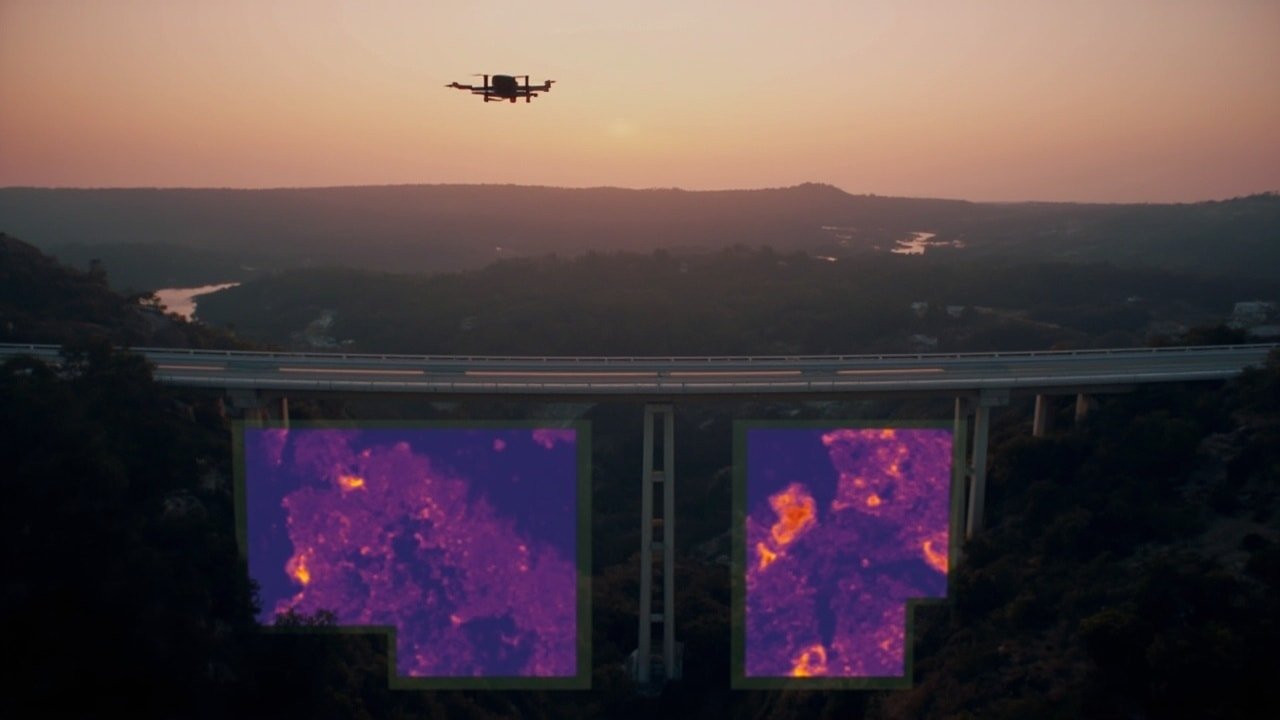
Documented civilian uses include vehicle vision systems, fixed and mobile surveillance, telescopes, UAV thermal payloads, hand-held cameras and field inspection tools. The 384 option may suit integrations where lower power draw and a smaller digital zoom range are sufficient; the 640 option adds pixels, a higher sensitivity specification and a larger zoom range.
Before selecting a configuration, integrators should verify lens requirements, interface availability, host voltage, thermal conditions and the intended output format. Mechanical mounting, optical alignment and environmental requirements should also be reviewed against the final assembly rather than inferred from the module dimensions alone.
- Confirm whether HDMI, BT656 or MIPI matches the host processor
- Check voltage, startup and protection requirements
- Select a lens for the required field of view
- Validate the final assembly against temperature and shock needs
Frequently asked questions
Does the DA MicroPro require a thermoelectric cooler?
No. It uses an uncooled amorphous silicon infrared microbolometer with a 12 μm pixel pitch. This removes the need for a TEC in the module, while the available 384 × 288 and 640 × 512 configurations retain different resolution, sensitivity and power characteristics.
Which digital interface should an OEM choose?
The module is listed with HDMI, BT656 and MIPI options, so the appropriate choice depends on the host processor, display path and available connector space. PAL/CVBS analog output and RS-232 communication are also specified. Interface availability and the required output format should be confirmed before ordering.
Is the quoted 4.1 g weight the complete thermal camera weight?
No. The stated 4.1 g weight excludes the lens, as do the 13.6 × 13.6 × 11.2 mm dimensions. A complete product will also include the selected optics and any housing, electronics and connectors, so the final installed size and mass require separate mechanical planning.
How do the two detector configurations differ?
The 384 × 288 model has a listed NETD of ≤50 mK and typical power consumption below 0.5 W. The 640 × 512 model provides a listed NETD of ≤40 mK, consumes less than 0.8 W typically and supports digital zoom up to 8× rather than 4×.