DC2 Thermal Gimbal Camera for Micro UAV Integration
Camera Systems · Product guide
The DC2 is a lightweight three-axis micro UAV gimbal camera built around a single infrared sensor. It provides 256×192 thermal imaging at 50 fps, stabilized viewing across yaw, pitch, and roll, multiple display palettes, and temperature overlays. RS232/net control plus UDP/RTSP output make it suitable for developers and operators integrating thermal observation into UAV, robot, or mobile surveillance systems.
Verified specifications
| Sensor and resolution | Single IR camera, 256×192 at 50 fps |
|---|---|
| Lens and field of view | 7 mm focal length, 24.8 deg x 18.7 deg field of view |
| Weight | 69 g |
| Stabilization | Three-axis gyro stabilization; 0.1 mrad stability accuracy specified at 1 deg/2 Hz, 1 sigma |
| Rotation ranges | Yaw +/-150 deg; pitch -90 deg to +30 deg; roll -45 deg to +45 deg |
| Video output and encoding | UDP/RTSP output with H264/H265 encoding; MP4 storage format |
| Control interfaces | RS232 and net control |
| Power input and consumption | 12-28 V DC; average consumption <=15 W, maximum <=30 W |
Thermal Imaging and Stabilization
The DC2 uses one infrared camera rather than a combined visible-light and thermal sensor arrangement. Its 256×192, 50 fps thermal stream covers a 24.8 by 18.7 degree field of view with a 7 mm lens. The gimbal stabilizes yaw, pitch, and roll, while the stated 0.1 mrad stability specification provides a useful reference when comparing integration requirements.
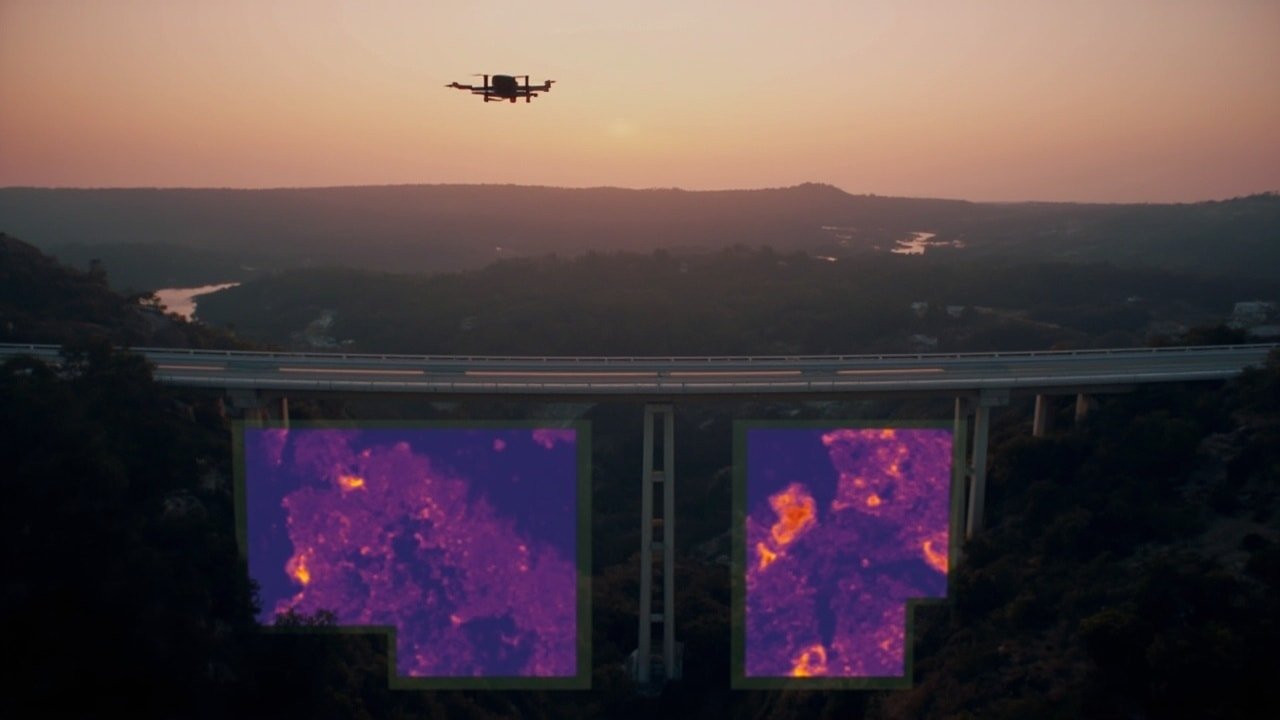
Several thermal palettes are available, including White hot, Black hot, Iron red, Rainbow, and Fusion, depending on the infrared module configuration. A temperature bar overlay and visibility control can support interpretation of the displayed thermal image, while rich OSD can present camera, target, and robot information.
- Confirm the selected IR module supports the required palette
- Allow for the stated rotation envelope of 39 mm around the single lens
- Verify the thermal stream format and overlay requirements during integration
Civilian Observation Applications
The DC2 is intended for compact thermal observation from UAV, robot, or mobile platforms. Public security and law-enforcement workflows can use the thermal image and target-tracking functions for day-and-night surveillance, patrol support, and response operations. The control interfaces and network video output are relevant when an operator needs a stabilized payload connected to another system.
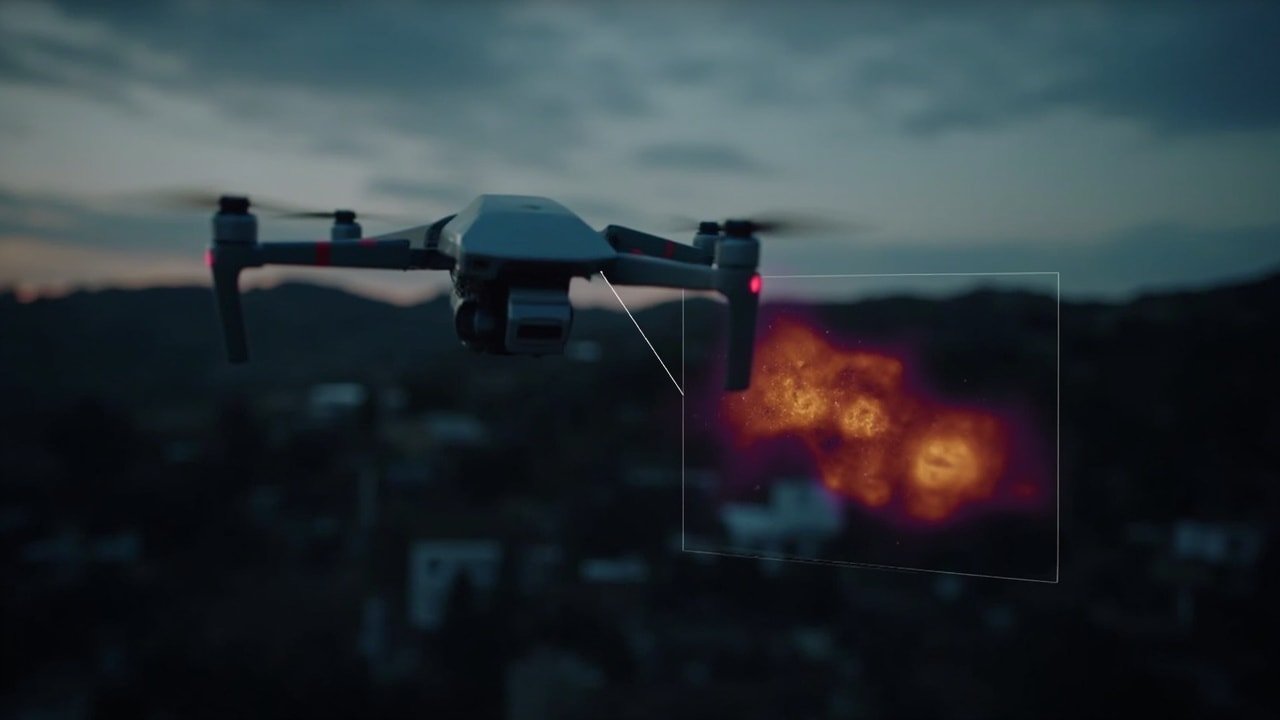
Environmental projects can use the camera to observe outdoor areas, while forest-fire monitoring teams can review heat-related imagery using available palettes. These are supported application scenarios for the product; actual detection range, identification performance, and environmental effectiveness depend on the complete system, scene conditions, sensor configuration, and operator workflow.
- Public security and patrol observation
- Environmental and outdoor area monitoring
- Forest-fire heat-signature monitoring
Selection Tradeoffs
The principal tradeoff is between compact integration and thermal imaging detail. The 69 g weight and three-axis gimbal design suit payload-constrained micro UAV work, but the 256×192 resolution is a fixed consideration for operators deciding whether that image format meets their monitoring requirements. The 7 mm lens and 24.8 by 18.7 degree field of view determine the intended scene coverage.
Power requirements also affect platform design. The specified 12-28 V DC input and maximum consumption of 30 W require an appropriate supply and wiring plan, while RS232/net control and UDP/RTSP output determine how the camera can be incorporated into a control and video architecture. The stated operating range is -20 to +55 degrees Celsius.
- Compare 256×192 resolution with your required thermal detail
- Budget for a 12-28 V DC supply and up to 30 W peak draw
- Check field of view against the intended operating distance
Integration and Mechanical Checks
Mechanical attachment uses four M2 x 7 interfaces, and the stated rotation envelope around the single infrared lens is 39 mm. These dimensions should be checked against the airframe or mobile-platform mounting point before installation. The available yaw, pitch, and roll limits should also be considered when positioning the camera relative to the host vehicle.
The camera supports UDP/RTSP video output and RS232/net control. Those interfaces support integration, but they do not by themselves confirm compatibility with a particular autopilot, flight controller, robot controller, or software stack. The installer should verify command support, video reception, power wiring, thermal configuration, and storage requirements with the actual system being assembled.
- Verify four M2 x 7 mounting points and the 39 mm lens rotation envelope
- Validate RS232 or net control commands with the host controller
- Test UDP/RTSP reception before field deployment
- Confirm the chosen thermal palette and OSD settings are available
Frequently asked questions
What sensor does the DC2 use?
The DC2 uses a single infrared thermal camera. Its stated output is 256×192 at 50 fps, with a 7 mm focal length and a 24.8 by 18.7 degree field of view. The product is designed for thermal observation rather than a combined visible-light and thermal sensor setup.
How does the DC2 connect to a platform?
Control is available through RS232 and net interfaces, while video is delivered through UDP/RTSP output. H264 and H265 encoding are supported, and MP4 is listed as the storage format. Exact command and software compatibility should be confirmed with the target UAV, robot, or mobile platform.
Is the DC2 suitable for a micro UAV?
Its listed weight is 69 g, and it uses a compact three-axis micro-gimbal design with four M2 x 7 mechanical interfaces. These specifications make it relevant for micro UAV payload planning, although mounting clearance, power delivery, thermal configuration, and control compatibility still require verification.