DX3 EO/IR Gimbal for UAV Surveillance
Gimbal Pod · Product guide
The DX3 is a 280 g three-axis micro-pod for UAV operators, public security teams and environmental monitoring crews that need stabilized visible-light, thermal and distance data. It combines dual 4K EO sensors, 640×512 thermal imaging, a 1200 m laser rangefinder, vehicle and human tracking, Ethernet video and configurable control interfaces in an integrated metal housing.
Verified specifications
| Product type | Three-axis micro-pod |
|---|---|
| Weight | 280 g |
| Sensor combination | Dual visible-light EO sensors, IR thermal imaging and laser rangefinder |
| EO resolution and frame rate | 3840×2160 at 30 fps |
| EO fields of view | 83° x 53° with 3.2 mm optics; 20° x 11° with 16 mm optics |
| IR resolution and frame rate | 640×512 at 30 fps |
| Laser ranging | 1200 m measuring distance with ±1 m measuring accuracy |
| Gimbal rotation | Yaw ±140°, pitch -90° to +30°, roll ±45° |
| Video and storage | Ethernet RTSP output, H264/H265 encoding and MP4 storage; picture-in-picture and rich OSD supported |
| Power | 12–24 V DC input; average power consumption ≤15 W |
Dual EO and thermal imaging
Two 4K visible-light CMOS sensors record at 3840×2160 and 30 fps. The optical options cover an 83° x 53° wide field of view with a 3.2 mm lens and a 20° x 11° narrow field of view with a 16 mm lens, allowing operators to balance scene coverage against tighter observation.
A separate thermal channel records 640×512 at 30 fps through a 19 mm lens with a 22.9° x 18.4° field of view. Picture-in-picture presentation combines visible and thermal information in one view, while rich OSD can display camera, target and robot information.
- Wide EO: 83° x 53° at 3.2 mm
- Narrow EO: 20° x 11° at 16 mm
- Thermal: 640×512 at 30 fps
Stabilized three-axis operation
The gimbal moves through ±140° of yaw, -90° to +30° of pitch and ±45° of roll. Its stated stabilization accuracy is 0.1 mrad under a 1°/2 Hz condition, while angular position accuracy is listed at no more than 0.3°. Maximum angular velocity is specified at 60°/s or greater.
These figures describe the manufacturer’s stated operating specifications rather than results from an independent flight test. Actual stability also depends on the installation, platform behavior, control configuration and flight conditions, which should be assessed during integration.
Tracking, ranging and recording
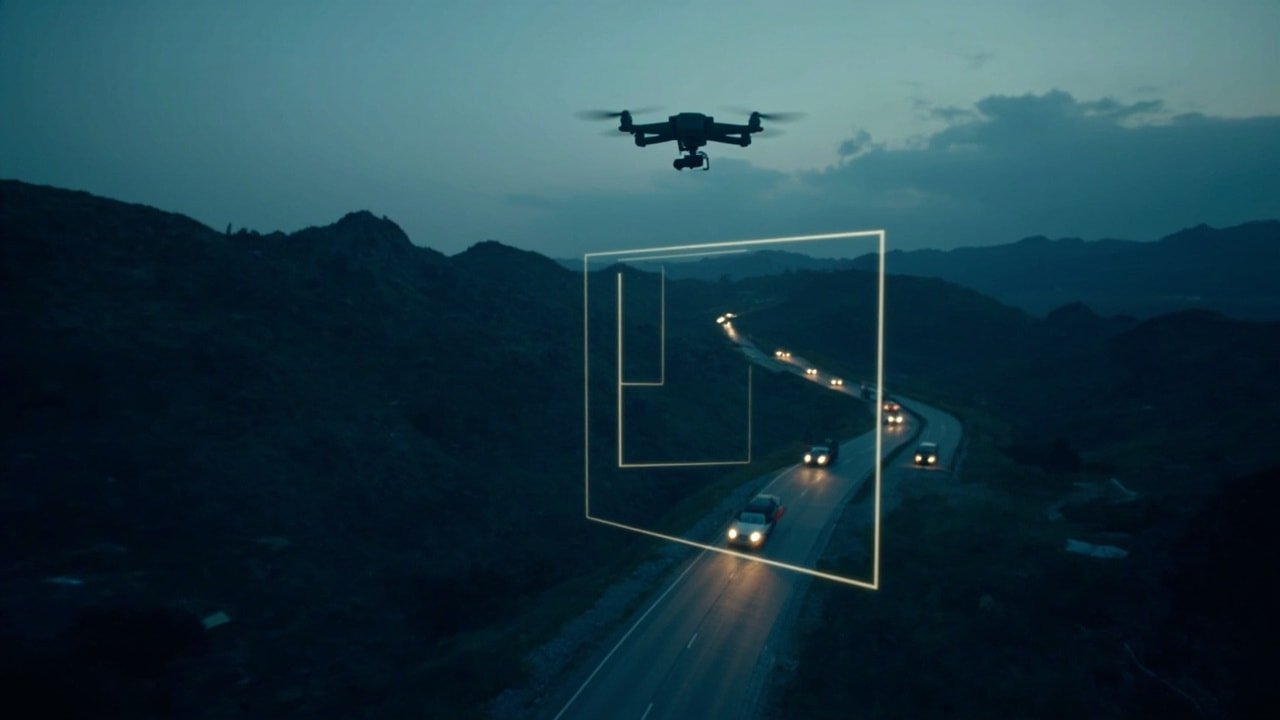
Built-in object identification and tracking support vehicle and human tracking workflows. The integrated laser rangefinder provides a stated measuring distance of 1200 m with ±1 m accuracy, adding distance information to surveillance tasks that require target position or scale.
For integration, the DX3 supports Ethernet RTSP video with H264 or H265 encoding and MP4 storage. These are documented output capabilities, but the application must still be checked for protocol compatibility, stream configuration, storage behavior and the availability of the required target data.
- Vehicle and human tracking
- 1200 m stated laser measuring distance
- RTSP output with H264/H265 encoding
Power and interface checks
The DX3 accepts 12–24 V DC power and has an average power consumption of no more than 15 W. Its documented control options include 3.3 V TTL over UART, RS232 and optional SBUS, while network video is delivered through the external Ethernet connection.
Before installation, confirm that the aircraft or other platform can supply the specified voltage and current, that the chosen control protocol matches the flight system, and that the video destination accepts the configured RTSP stream. Optional SBUS should be treated as an available option requiring confirmation rather than a standard feature in every configuration.
- Verify 12–24 V DC power availability
- Match TTL, RS232 or optional SBUS control
- Test RTSP acceptance with the video system
- Confirm the 280 g payload allowance
Choosing operational applications
The documented use cases include public security surveillance, law enforcement, forest patrol and fire-risk observation, environmental monitoring, and day-and-night observation from UAV or robotic platforms. The wide EO view can suit broader scene awareness, while the narrow option supports tighter framing.
Thermal imaging adds a separate low-light observation channel, and tracking supports workflows centered on vehicles or people. Selection should follow the required field of view, environmental conditions, payload allowance and control architecture. The listed operating and storage temperature range is -20°C to +60°C.
Frequently asked questions
What imaging sensors are integrated into the DX3?
The DX3 combines two visible-light EO cameras, a thermal sensor and a laser rangefinder. The EO channels output 3840×2160 at 30 fps with wide and narrow lens options, while the thermal channel records 640×512 at 30 fps.
Which control interfaces are available?
Documented control options include 3.3 V TTL over UART and RS232, with SBUS available as an optional configuration. The product also provides Ethernet RTSP video output. Confirm protocol and connector requirements with the intended aircraft, control station or robotic platform before installation.
How does the DX3 support target tracking?
The product documentation lists built-in object identification and tracking for vehicles and humans. This capability can support surveillance workflows that require stabilized imagery and target information, but operators still need suitable views, lighting conditions and compatible system integration.
What power and payload should be planned for?
The DX3 weighs 280 g, accepts 12–24 V DC and has an average power consumption of no more than 15 W. Check the platform’s payload allowance, available power and installation requirements. These are product specifications, not confirmation that every aircraft is mechanically or electrically compatible.