DS072 Ultra-Light AI Video Tracking Board
AI Intelligent Module · Product guide
The DS072 is an embedded AI video processing board for developers building UAV payloads, intelligent gimbals, and compact vision systems. It processes visible-light or infrared feeds, detects and recognizes selected target classes, locks onto targets, tracks up to 64 objects, and streams RTSP video. Camera, lens, flight-controller, and mechanical fit must be validated for each integration.
Verified specifications
| Tracking performance | 120 Hz frame rate; tracking accuracy ≤1 pixel; tracking speed ≥64 pixels per frame |
|---|---|
| Recognition performance | 25 Hz recognition frame rate; 20×20 pixel minimum recognition target; 0.569 mAP@0.5 on the VisDrone2019-DET-test-dev dataset |
| Tracking capacity | Up to 64 tracked targets; minimum 4×4 pixel centroid target and 10×10 pixel correlation target |
| Video inputs | Two-channel MIPI custom adaptation or one-channel DVP custom adaptation; visible-light and infrared configurations |
| Video and data interfaces | One-channel CVBS output, RS422, UART, USB 2.0, and 100M Ethernet with default RTSP streaming |
| Power | 9–36 V operating voltage; power consumption below 4 W |
| Dimensions and weight | 45 mm × 45 mm including connectors; 13.5 ± 2 g bare-board weight without heatsink |
| Operating temperature | -20°C to +60°C |
High-Speed Vision Processing
The DS072 separates tracking from recognition performance, offering 120 Hz tracking and 25 Hz recognition. It supports centroid, form-center, correlation filter, multi-target, and intelligent tracking algorithms. This range lets integrators choose an appropriate tracking method for different target sizes and scenes rather than relying on one fixed operating mode.
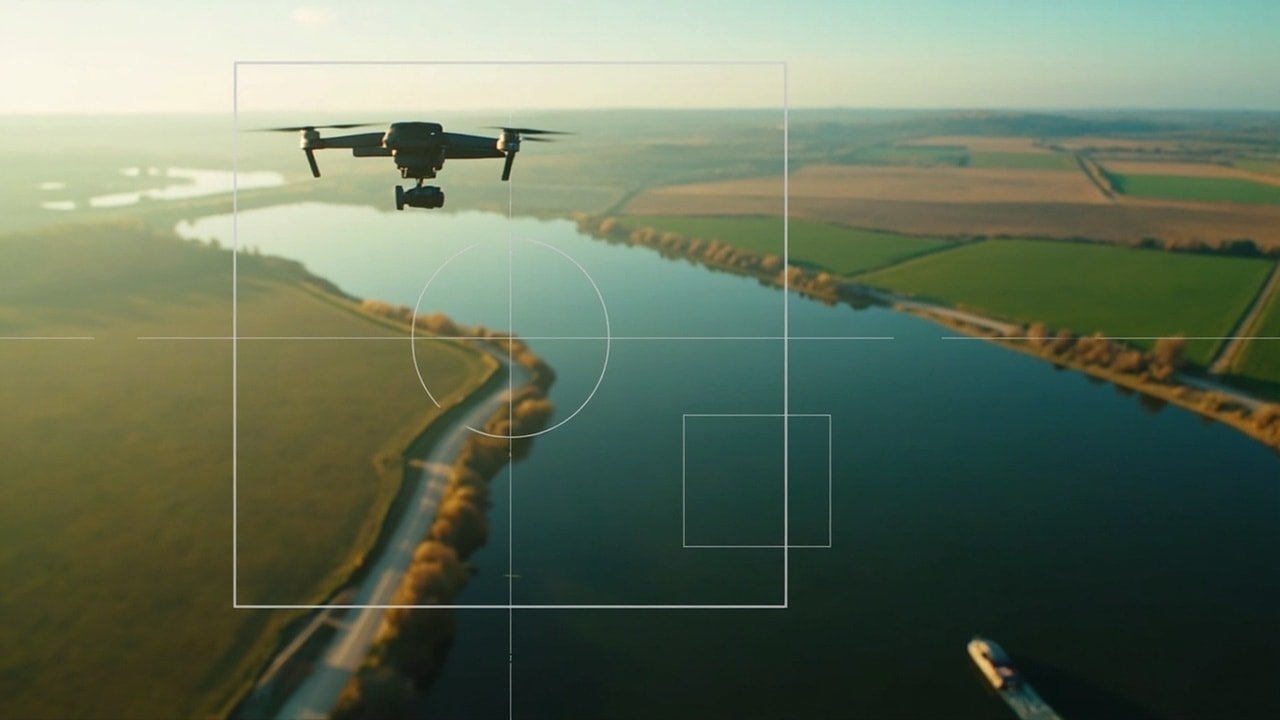
Target acquisition includes point and box selection, image-center and crosshair-center locking, target ID locking, automatic search, and automatic lock-on. The module also reports target miss distance relative to image center, giving a host system position information that can be used in a guided or gimbal-control workflow.

Outputs, Controls, and Network
Video output is available through CVBS, while RS422, UART, and USB 2.0 provide documented connection options for system integration. The 100M Ethernet port supports a default RTSP stream for remote viewing or downstream processing. Available OSD fields include target boxes, crosshairs, scale, compass, position, yaw, pitch, time, date, and version information.
The board includes electronic zoom up to 16 times with 0.1 minimum precision, onboard photo and video recording, and FTP-based file access. Configuration and maintenance functions include network-based firmware and model upgrades, running-log queries, interface configuration, factory reset, and functional checks through test software.
Civilian Vision Applications
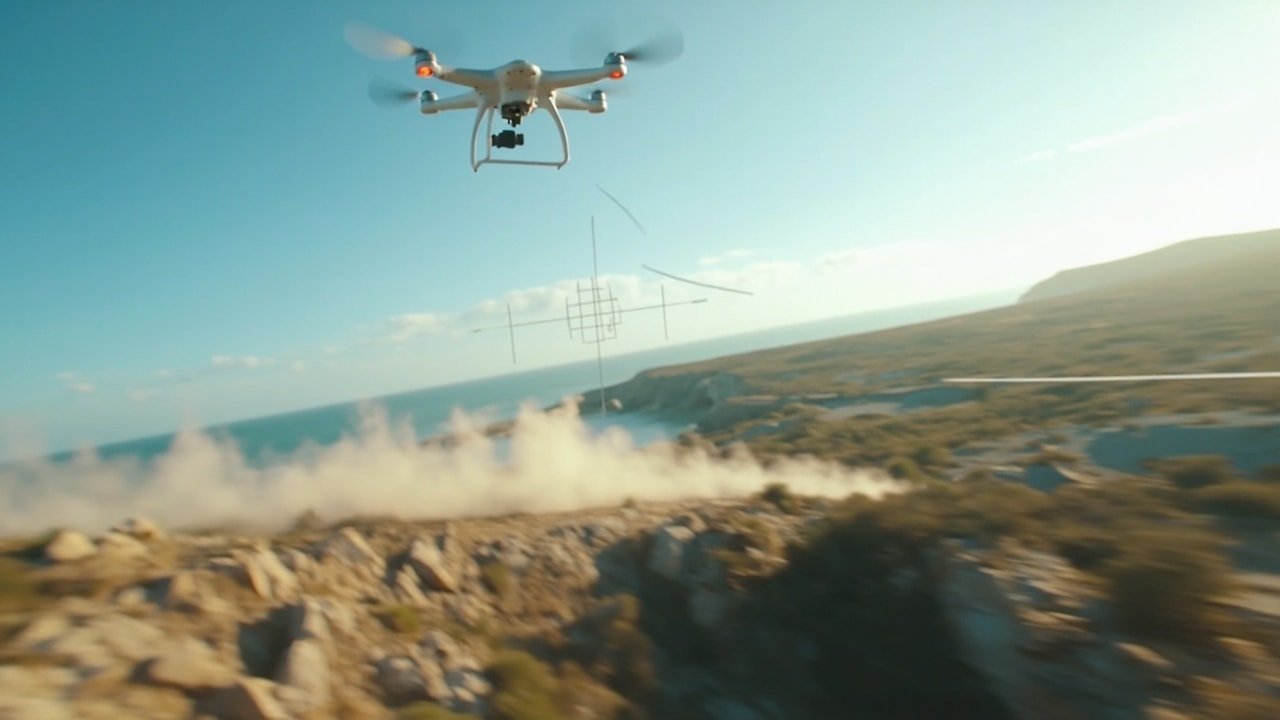
For UAV payloads, the DS072 provides a compact processing path for detecting, locking, and tracking people, vehicles, boats, aircraft, and drones. Its supported target classes make it relevant to airborne observation, aerial target monitoring, and systems that require a target miss-distance signal relative to the camera image.
The module can also support EO/IR gimbal payloads, patrol and surveillance equipment, vehicle and vessel tracking, and embedded infrared vision systems. Project-specific recognition models can be trained with a custom dataset and deployed through the SpeedDP AI development platform when the application requires classes beyond the documented set.
Selection and Integration Checks
The listed camera configurations provide a useful starting point, but they do not guarantee compatibility with every module. A listed visible-light camera is a 1080P global-shutter monochrome unit with MIPI and 120 or 60 Hz operation. The recommended infrared example is a 640×512 thermal module running at 50 Hz, while standard USB UVC infrared cameras are also listed as supported.
Before selecting the board, confirm the complete signal chain and mechanical envelope. The lens uses an M12 interface and may be replaced according to project requirements, but lens performance, field of view, operating distance, and image quality depend on the chosen camera and scene.
- Match camera output, frame rate, resolution, and MIPI or DVP arrangement
- Verify visible-light or infrared input requirements for the deployment
- Check the 9–36 V supply and the host system’s thermal budget
- Confirm RS422 or UART control signals, RTSP networking, and recording storage
- Validate lens, connector clearance, cooling, and flight-controller integration
Frequently asked questions
Does the DS072 work with any visible or infrared camera?
No automatic compatibility should be assumed. The documented examples include a 1080P global-shutter monochrome MIPI camera, 640×512 thermal modules using MIPI or DVP, and standard USB UVC infrared cameras. Confirm the camera’s resolution, frame rate, electrical interface, connector arrangement, and timing requirements before integration.
How many targets can the DS072 track at once?
The documented maximum is 64 tracked targets. Tracking is specified at 120 Hz with accuracy of 1 pixel or better and a minimum tracking speed of 64 pixels per frame. Recognition operates separately at 25 Hz, with a minimum recognition target size of 20×20 pixels.
What should a host system provide for DS072 integration?
The board requires a suitable 9–36 V supply, a compatible camera and lens arrangement, and the appropriate control or communications connection. Depending on the design, the host may use RS422, UART, USB 2.0, or 100M Ethernet. RTSP is the documented default network stream, and integration checks should also cover storage and thermal management.
Can the DS072 recognize project-specific target types?
Yes, custom AI model deployment is documented through the SpeedDP development platform, using a custom dataset and one-click deployment workflow. The base product data lists people, vehicles, boats, aircraft, drones, and other specified targets as supported classes. Custom recognition quality must still be assessed for the intended dataset and operating conditions.