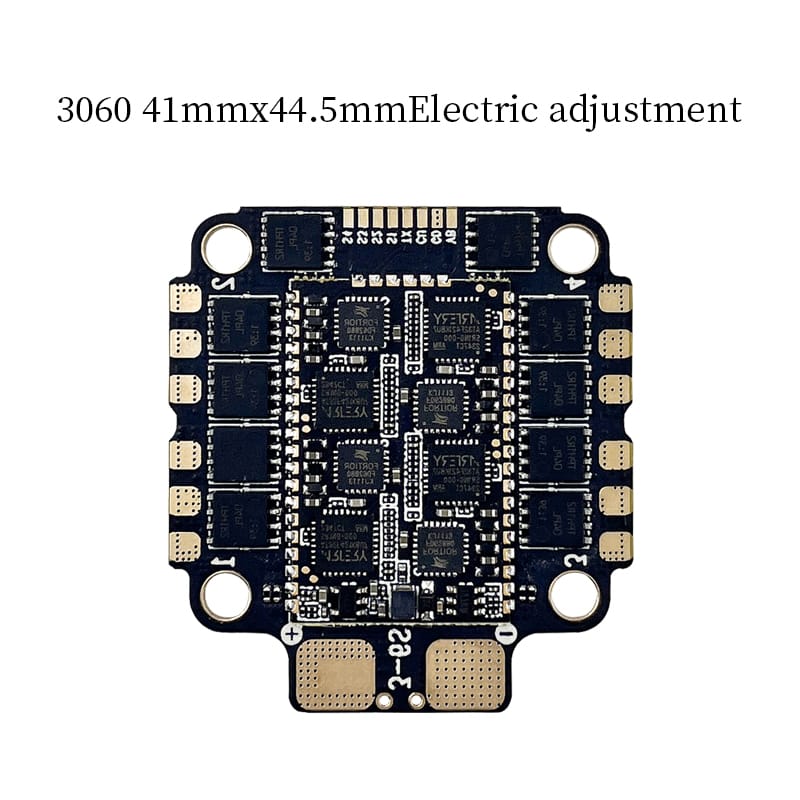
D-RC 3060S 60A 6S ESC Review for Racing Drones
A Closer Look at This High-Current FPV ESC
A compact electronic speed controller built for demanding racing drone power systems.
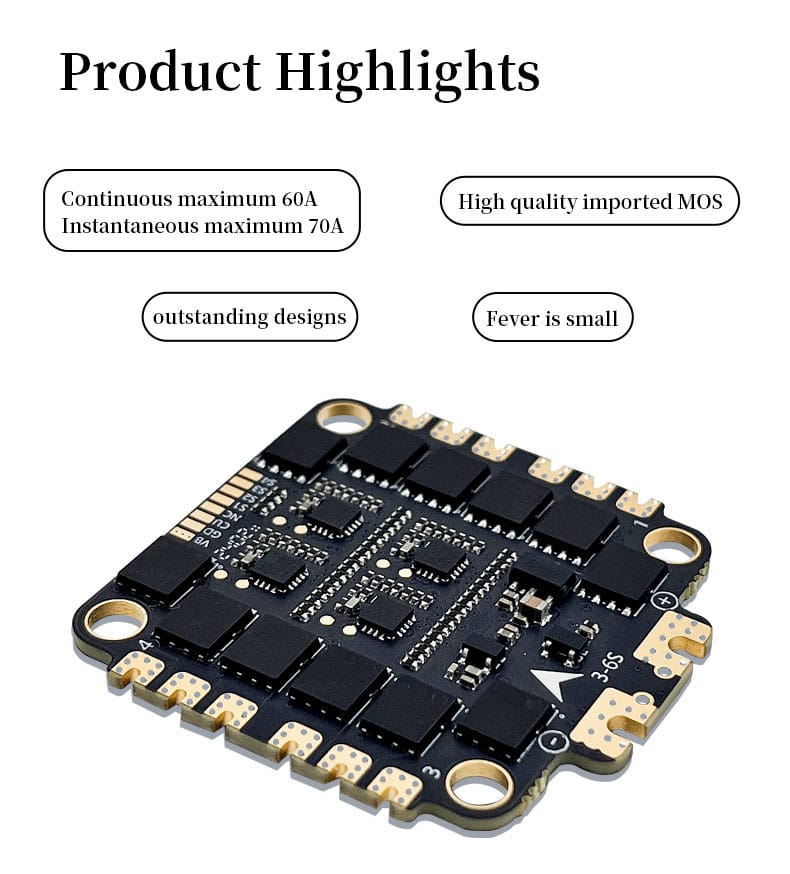
The D-RC 3060S 60A 6S ESC gives racing drone builders a compact way to manage high-current power delivery. It supports 3S to 6S LiPo batteries and provides 60A continuous current per channel, with 70A instantaneous current per channel. Therefore, it suits FPV pilots who need a capable racing drone ESC without adding unnecessary weight. The unit weighs 10.4g and measures 40 x 40.7mm, so it can fit neatly into compact builds. In addition, its M3 30.5 x 30.5mm installation pattern works with many standard racing frames. The Blheli-S and Blue-J configuration also supports several common control protocols. These include 150, 300, 600, and 1200, along with MultiShot, OneShot, Proshot, and PWM. Furthermore, the onboard ammeter can help pilots monitor current information without using a separate external sensor. The H-H50 firmware completes the specification and provides the controller’s stated operating platform. However, electric control rotation is not supported, so builders should check their flight-controller requirements before installation. Overall, the D-RC 3060S 60A 6S ESC focuses on the practical needs of high-performance FPV builds: strong current capacity, broad voltage support, a lightweight footprint, and flexible signal compatibility. It is especially relevant for pilots upgrading an existing quad or planning a frame around a 30.5mm mounting layout. Consequently, this ESC offers a focused solution for racing drone projects that prioritize power handling and efficient packaging.
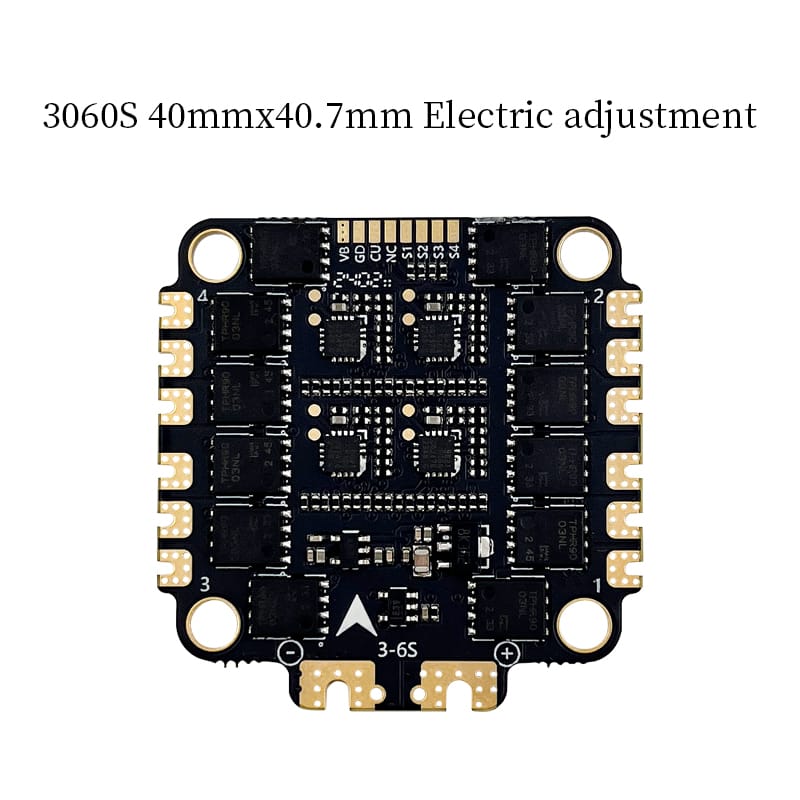
The D-RC 3060S uses a compact layout suited to racing drone installations.
Specifications at a Glance
First, review the core specifications before choosing this racing drone ESC for a new or existing build. The values below come from the product information.
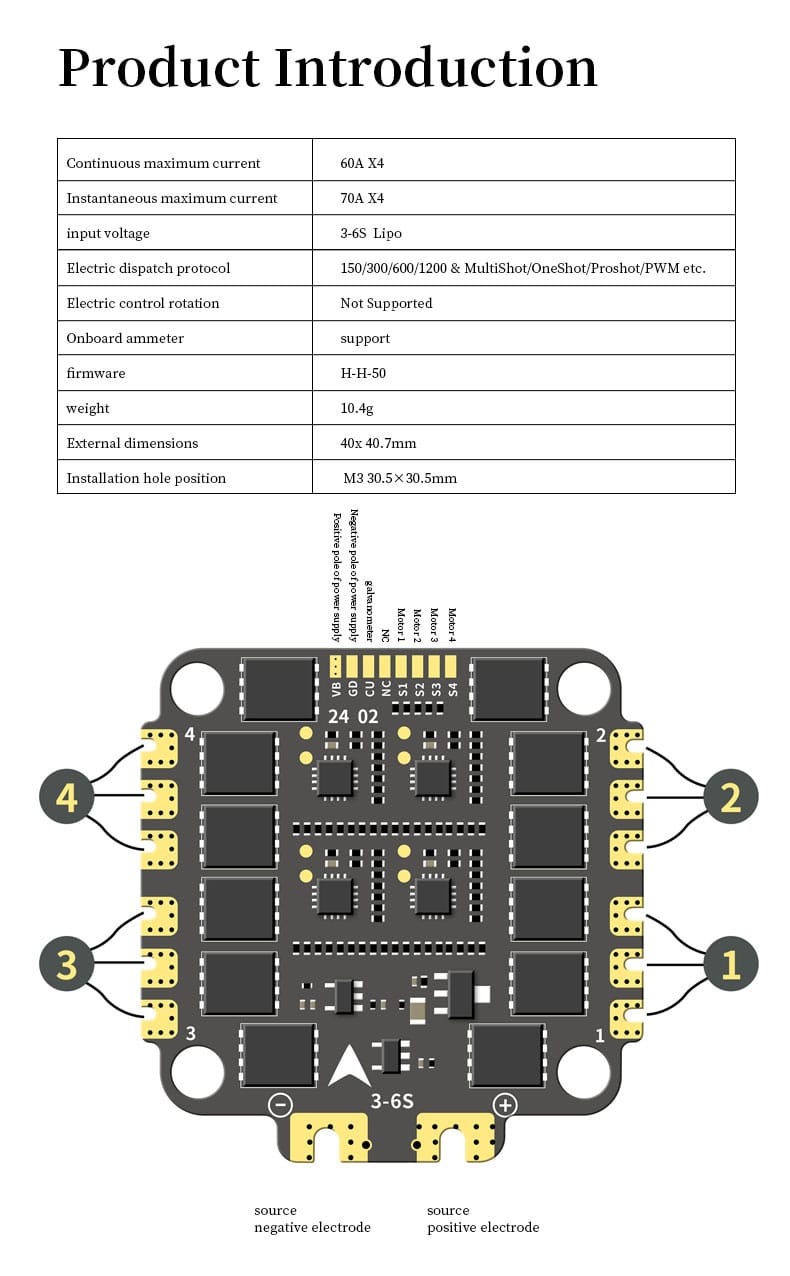
| Continuous maximum current | 60A x4 |
| Instantaneous maximum current | 70A x4 |
| Input voltage | 3-6S LiPo |
| Electric dispatch protocol | 150/300/600/1200, MultiShot, OneShot, Proshot, PWM, and others |
| Electric control rotation | Not supported |
| Onboard ammeter | Supported |
| Firmware | H-H50 |
| Weight | 10.4g |
| External dimensions | 40 x 40.7mm |
| Installation hole position | M3, 30.5 x 30.5mm |
Power Handling for 3S to 6S LiPo Builds
The D-RC 3060S supports 3S through 6S LiPo input. As a result, it can serve both moderate and higher-voltage racing drone setups. Its listed 60A continuous rating applies across four channels, while the instantaneous maximum is listed as 70A x4.
Moreover, the onboard ammeter adds useful monitoring support. It can simplify a build because the product does not require a separate external current-sensing component for this function. Nevertheless, pilots should match the ESC with suitable motors, wiring, connectors, cooling, and battery specifications.
Protocol Support and H-H50 Firmware
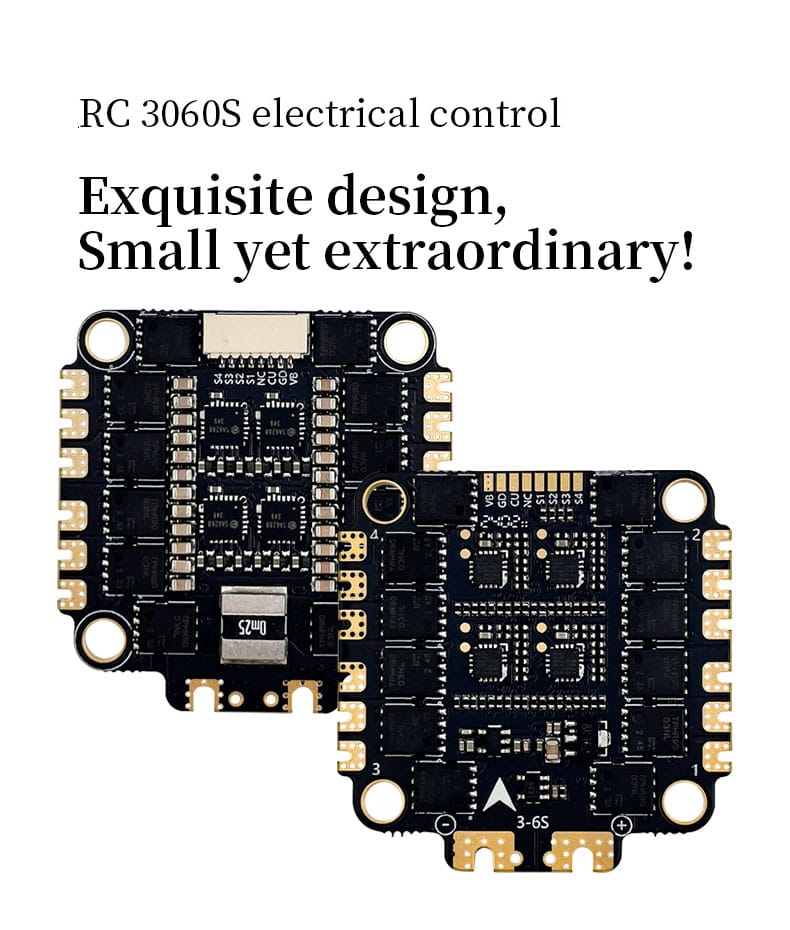
Compatibility matters when an ESC meets a flight controller. Fortunately, this model lists support for 150, 300, 600, and 1200 signal rates. It also supports MultiShot, OneShot, Proshot, and PWM modes. Therefore, builders have several integration options when planning their electronics stack.
The specified H-H50 firmware is part of the D-RC 3060S configuration. In practice, users should confirm wiring, signal settings, and firmware requirements before powering a completed aircraft. Additionally, the product data states that electric control rotation is not supported. That detail is important for pilots whose build depends on software-based motor-direction changes.
Compact Installation for FPV Racing Frames
At 10.4g, the ESC keeps its contribution to overall aircraft weight low. Meanwhile, the 40 x 40.7mm external dimensions provide a compact footprint for tight electronics layouts. The M3 30.5 x 30.5mm hole pattern is another practical advantage because it matches a common mounting arrangement.
Before installation, measure the available frame space and check clearance around the mounting hardware. Also, route high-current wiring carefully and protect the electronics from vibration or accidental contact. Consequently, a little planning can make the lightweight ESC easier to integrate into a clean racing drone build.
- Confirm the frame uses the listed M3 30.5 x 30.5mm mounting pattern.
- Verify that the battery falls within the supported 3S-6S LiPo range.
- Check flight-controller protocol compatibility before final wiring.
- Remember that electric control rotation is not supported.
Is This Racing Drone ESC Right for You?
The D-RC 3060S is a strong match for builders who want high current capacity in a small package. It combines 3S-6S LiPo support, multiple protocols, H-H50 firmware, and an onboard ammeter. In addition, its low 10.4g weight can help preserve the balance of a lightweight FPV aircraft.
However, it is not the right choice for every project. Buyers should avoid assuming support for features that the specification does not list. Specifically, electric control rotation is unavailable. Therefore, compare the ESC’s requirements with your flight controller, motor system, frame, and intended battery before ordering.
Ready to Upgrade Your Racing Drone?
Review the specifications and choose the D-RC 3060S for your next compatible FPV build.
Get in Touch
For product information, visit the website or contact the supplier directly.