D-H760 Racing Drone ESC Stack: H7DUAL FC and AM32 60A ESC
Why This Racing Stack Stands Out
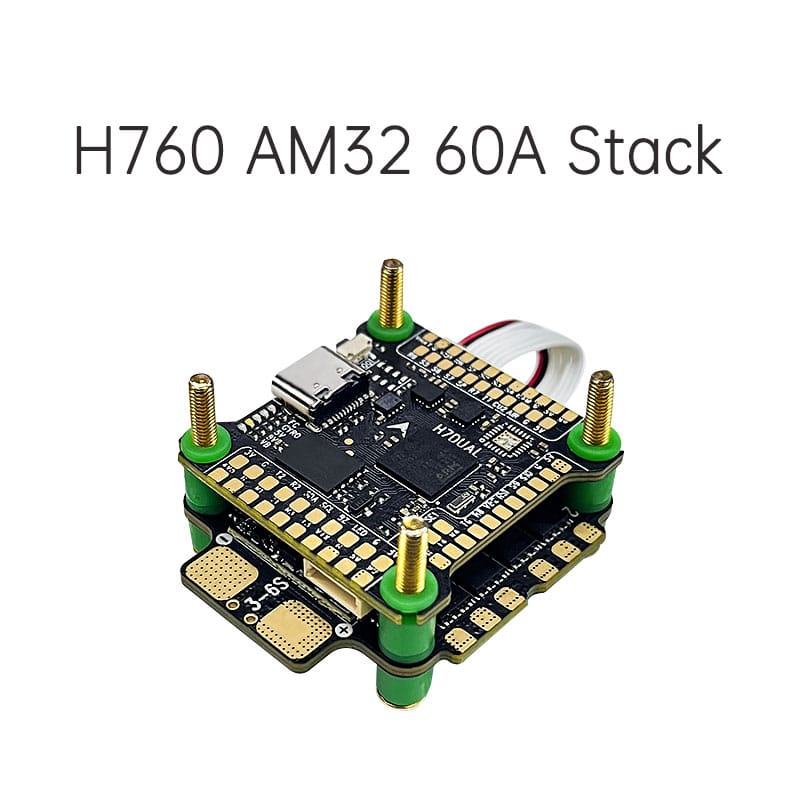
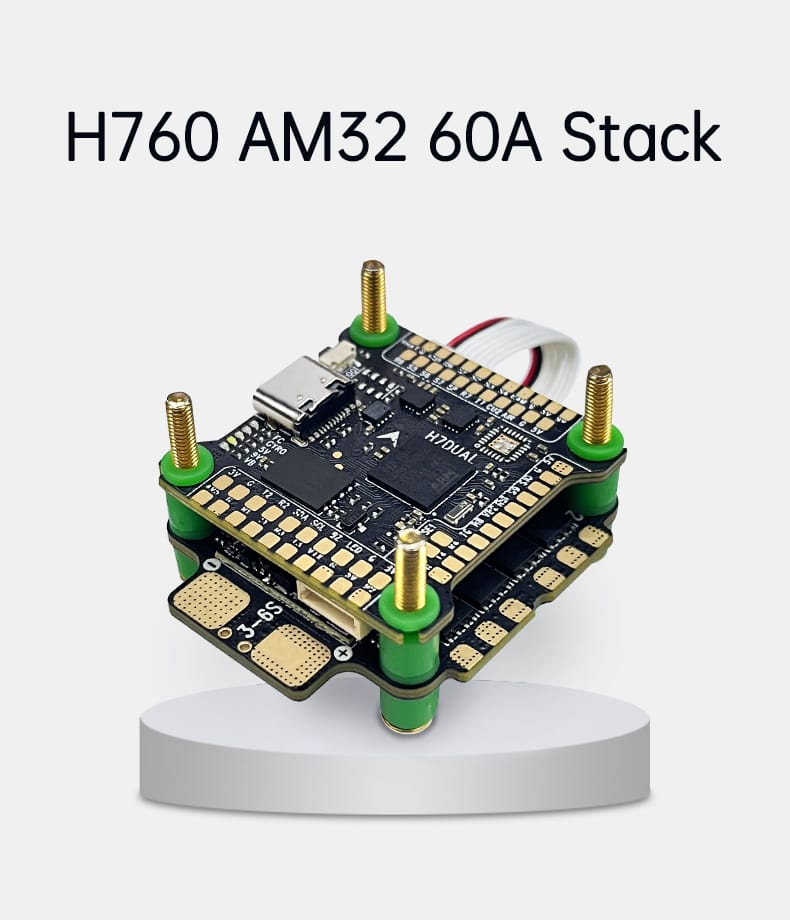
The D-H760 racing drone ESC stack combines the H7DUAL flight controller with a 3060 V1 ESC for demanding FPV builds. As a result, pilots get a coordinated control system instead of two unrelated boards. The H7DUAL FC uses an STM32H743VIH6 processor and dual BMI270 gyroscopes with MPU6000 support. Therefore, it is prepared for responsive flight control during fast racing maneuvers. Meanwhile, the AM32-powered ESC delivers 60A continuous current and 70A burst current across four motor channels. The stack supports Dshot300, Dshot600, PWM, and bi-directional Dshot signals. In addition, it accepts 3–6S LiPo input and provides current-meter and telemetry support. This makes the D-H760 racing drone ESC stack a practical choice for racing drones, FPV multirotors, and custom builds that need broad peripheral support. The wiring diagrams show connections for a receiver, camera, GPS, buzzer, LED strip, and video transmitter equipment. Furthermore, compatibility is shown for BetaFlight, INAV, EmuFlight, and ArduPilot. With its 30.5mm mounting pattern, included cabling, and mounting hardware, the stack also helps simplify installation. It is designed for builders who want strong electrical capacity, flexible connectivity, and a compact integrated layout.
D-H760 Racing Drone ESC Stack Specifications
| Component | Specification |
|---|---|
| H7DUAL FC processor | STM32H743VIH6 |
| Gyroscope | BMI270 X2 / MPU6000 |
| FC power input | 3–6S LiPo |
| FC connectivity | 8 UART channels, 2 servo outputs, 10 motor outputs |
| FC BEC output | 5V/2.5A and 9V/3A |
| FC size and weight | 37mm × 37mm; 8.8g |
| ESC current | 60A continuous ×4; 70A burst ×4 |
| ESC protocols | Dshot300, Dshot600, PWM, bi-directional Dshot |
| ESC firmware | AM32_AT421A |
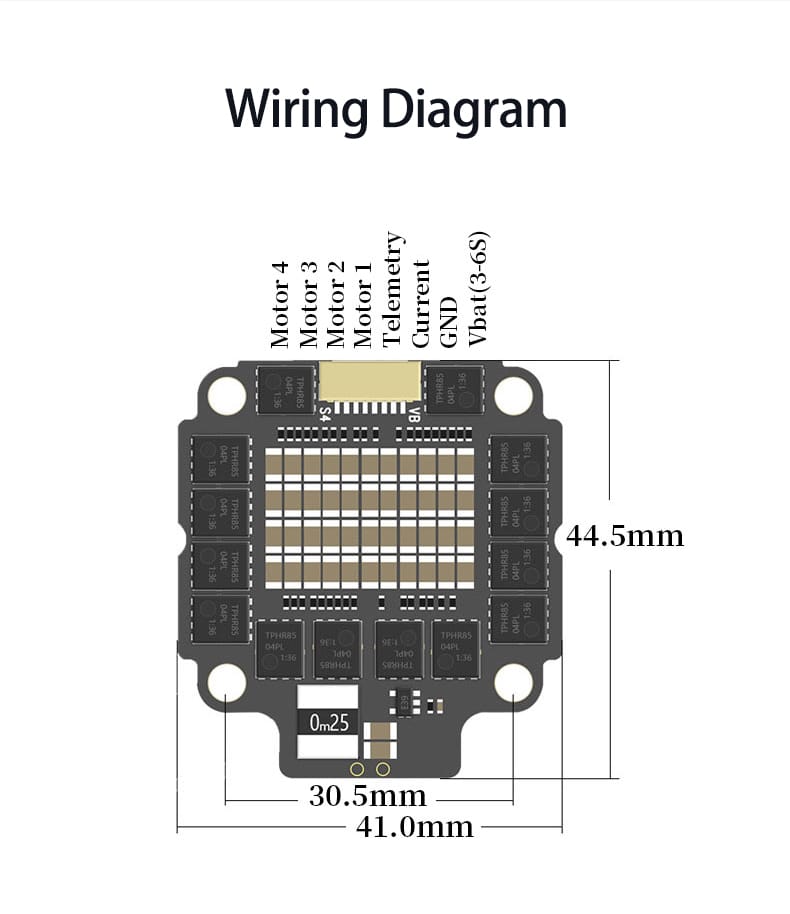
| ESC size and weight | 41mm × 44.5mm; 13.9g |
| Mounting pattern | M3, 30.5mm × 30.5mm |
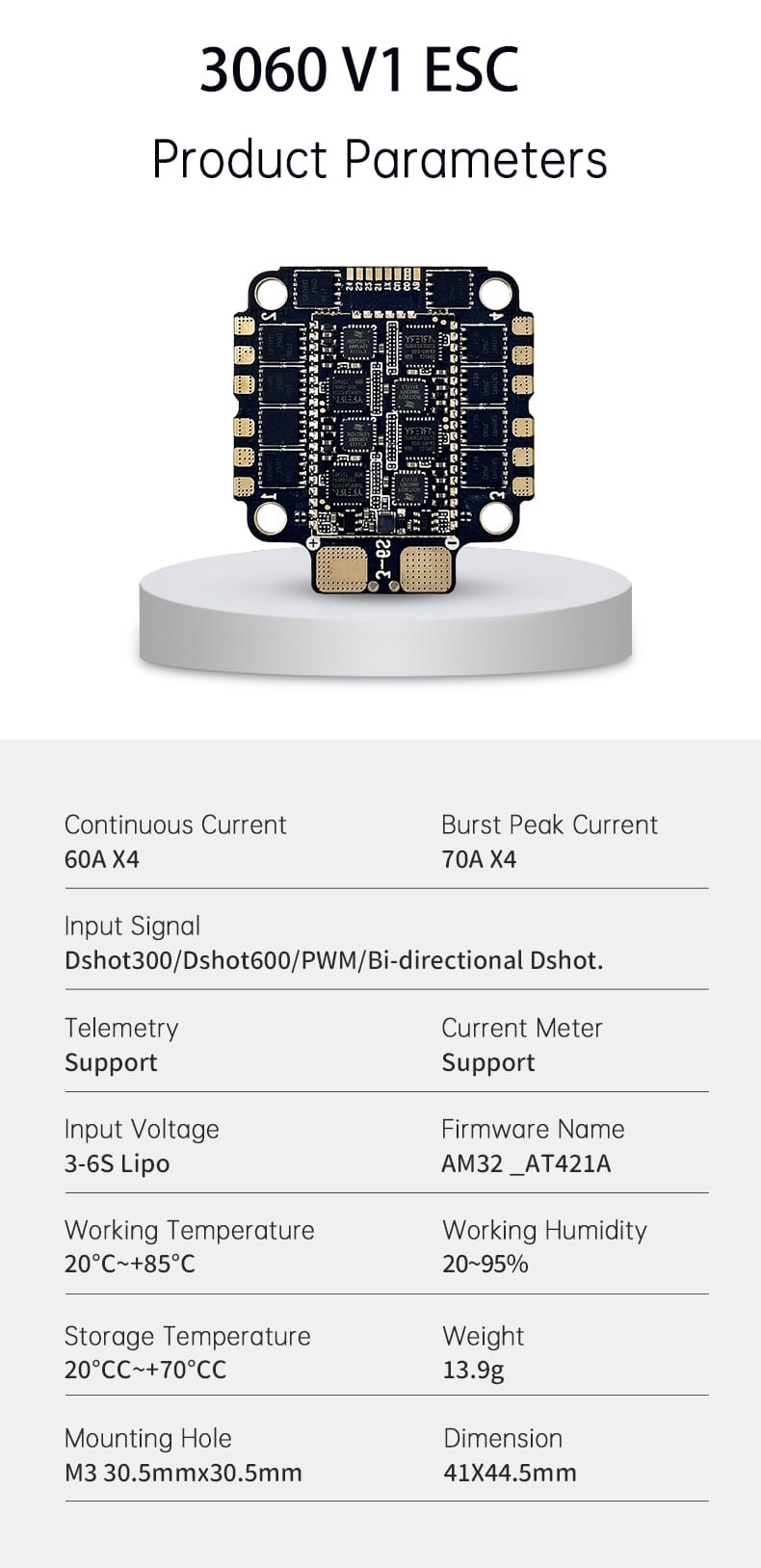
The 3060 V1 ESC supports four motor outputs, telemetry, and a current meter. It operates from 20°C to +85°C with 20% to 95% working humidity. Storage temperature is listed as 20°C to +70°C. Consequently, builders can check the power and environmental requirements before installation.
Power Delivery for Competitive FPV Builds
The ESC is built around four dedicated motor channels. Each channel is rated for 60A continuous current and 70A burst peak current. Therefore, the board can support demanding throttle changes when paired with suitable motors, wiring, and batteries. In addition, Dshot300 and Dshot600 provide digital signal options, while PWM supports compatible configurations. Bi-directional Dshot adds another option for modern flight-controller setups.
AM32_AT421A firmware identifies the ESC platform. Moreover, the current-meter connection and telemetry support help pilots monitor electrical performance. This information can assist with battery planning and post-flight checks. However, builders should still confirm their motor, propeller, battery, and wiring choices before high-current operation.
Connectivity and Installation Flexibility
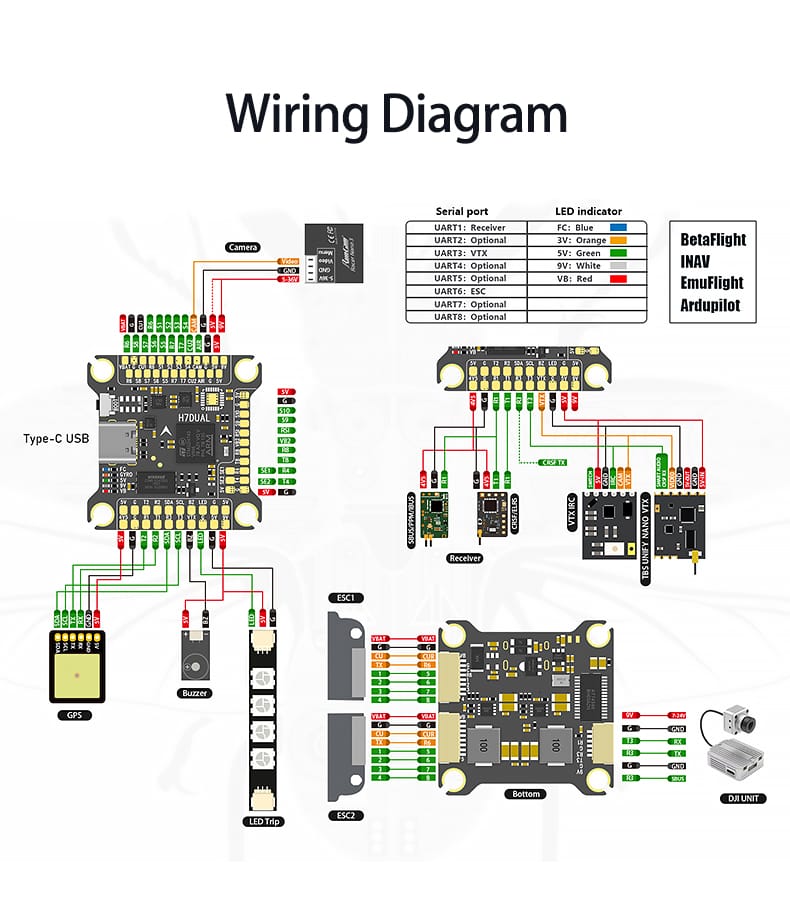
The H7DUAL FC provides eight UART channels and two servo outputs. As a result, it offers room for receivers, GPS modules, video transmitters, and other accessories. The wiring allocation identifies UART1 for the receiver, UART3 for the VTX, and UART6 for ESC communication. Other UART ports remain available for optional equipment.
The included 8-pin SH1.0 cables connect the FC and ESC. Additionally, the package includes an XT60 power lead, M3 vibration-damping balls, nuts, metal screws, and a 35V 1000uF solid-state capacitor. The diagrams also show a Type-C USB connector and connections for a camera, GPS, buzzer, and LED strip. Therefore, the stack can suit both straightforward racing builds and more feature-rich FPV multirotors.
- Confirm a 30.5mm mounting pattern on the frame.
- Use a compatible 3–6S LiPo power system.
- Plan UART assignments for the receiver, VTX, and ESC.
- Select flight-control software from the supported ecosystems.
A Compact Stack for Racing Drone Builders
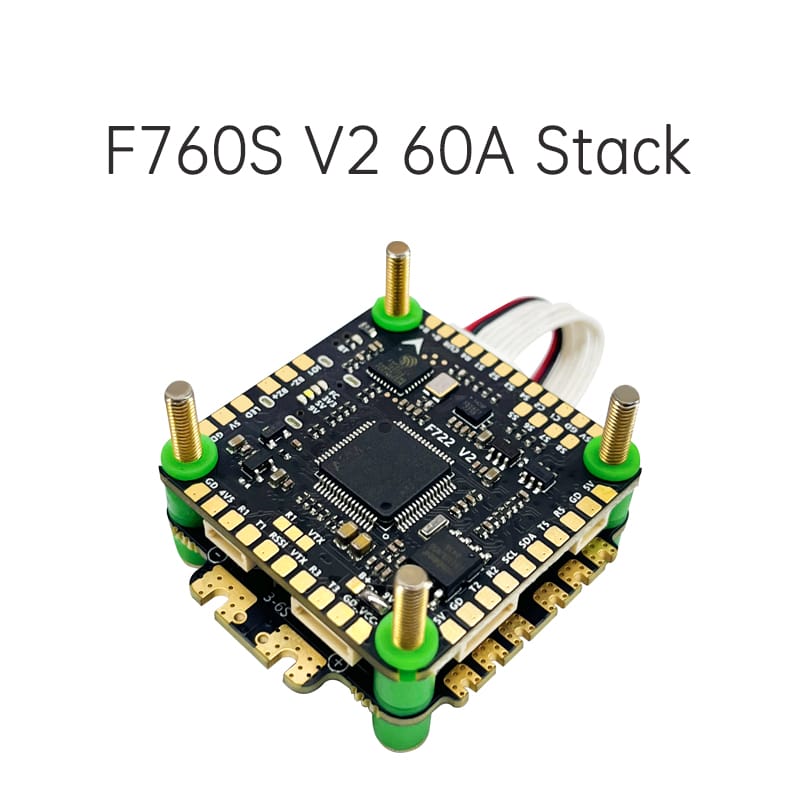
Visually, the stack uses black circuit boards with gold-colored solder pads and mounting hardware. Green vibration-damping balls separate the boards, while a white ribbon-style cable links the assembly. The H7DUAL marking appears on the flight-controller PCB. Meanwhile, the compact ESC places motor and power connections around its perimeter for practical wiring access.
The FC measures 37mm × 37mm and weighs 8.8g. The ESC weighs 13.9g and measures 41mm × 44.5mm. Together, these dimensions provide a capable integrated platform without requiring separate flight-control and ESC selections. In conclusion, the D-H760 racing drone ESC stack is well suited to pilots and builders who value high-current motor support, flexible signaling, detailed telemetry, and broad accessory connectivity.