
D-C680/D-C690 Thermal Imaging Telescope: Long-Range Field Guide
Professional Thermal Vision for Challenging Field Conditions
The D-C680/D-C690 thermal imaging telescope combines long-range detection with a rugged binocular design for demanding field observation. This thermal binocular uses a VOx detector to reveal heat signatures without relying on visible light. Therefore, operators can observe people, vehicles, wildlife, and other warm targets in darkness. The D-C680 provides a 384×288 infrared resolution, while the D-C690 increases it to 640×512. Moreover, both versions use a 50 mm lens and a clear 1024×768 OLED display. Users can select white-hot, black-hot, rainbow, iron-red, or cold-color palettes to suit each scene. In addition, infrared, low-light, fusion, and picture-in-picture modes offer several ways to interpret the surroundings. Unlike standard night vision equipment, this infrared telescope detects thermal energy rather than amplifying ambient light. Consequently, it can remain effective in complete darkness and some partially obscured conditions. Its electric focus, digital magnification, image controls, and wireless transmission also simplify field use. Meanwhile, the aluminum-alloy body provides a sturdy platform with dual eyepieces and accessible physical controls. These capabilities make the device relevant to security patrols, wildlife observation, site monitoring, and search operations.
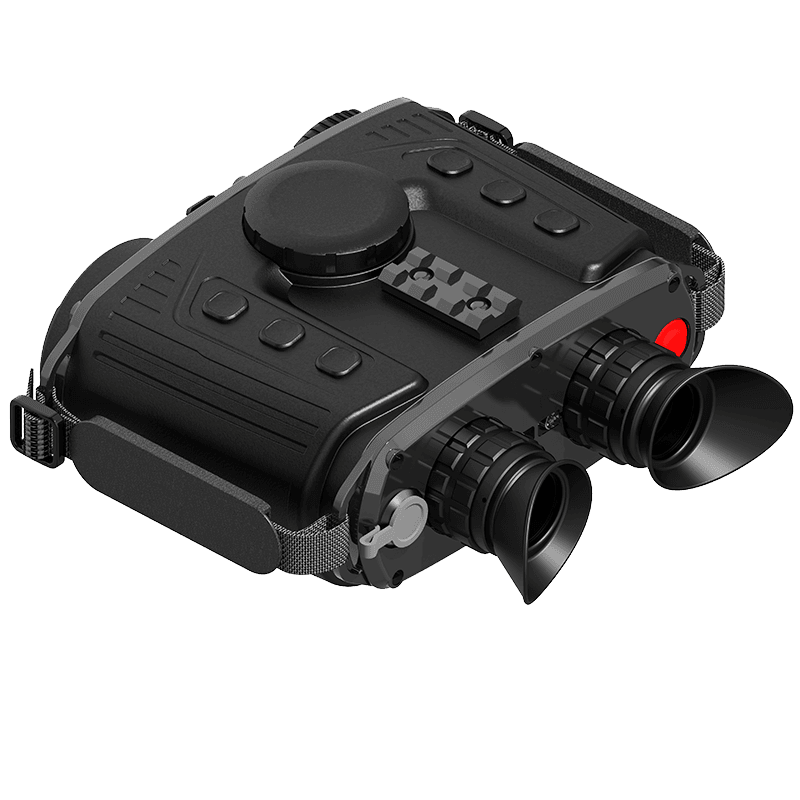
D-C680/D-C690 Thermal Imaging Telescope Performance
A 50 mm focal-length lens supports detailed observation across long distances. Specifically, the system can detect a human-sized target at up to 2,361 meters. Vehicle detection can reach 6,250 meters under suitable conditions. Moreover, identification distances extend to 590 meters for people and 1,563 meters for vehicles. These figures help operators assess distant activity while maintaining a practical standoff distance. However, actual results will vary with weather, target size, terrain, and atmospheric conditions.
The VOx detector has a listed NETD of ≤50 mK at 25°C with an F/1.0 aperture. Consequently, the thermal binocular can distinguish relatively small temperature differences within a scene. A frame rate of up to 50 Hz also supports smoother motion during target tracking. In addition, users can select 1×, 2×, or 4× magnification for scanning and closer inspection. The 8–14 µm wavelength range supports passive thermal observation across varied professional applications.
| Specification | D-C680 | D-C690 |
|---|---|---|
| Detector type | VOx | VOx |
| Infrared resolution | 384×288 | 640×512 |
| Field angle | 5.3°×4° | 8.8°×7° |
| Pixel spacing | 12 µm | 12 µm |
| Display | 0.39-inch OLED, 1024×768 | 0.39-inch OLED, 1024×768 |
| Focus | Electric focus | Electric focus |
Four Display Modes for Faster Scene Interpretation
The display system provides four principal viewing options. Firstly, IR Mode presents a full-frame thermal image using the selected color palette. Secondly, LL or Twilight Mode shows a low-light-style visible image. Meanwhile, MIX Mode overlays thermal information onto the visible scene. Finally, PIP Mode places a thermal region within a wider visible-light view. As a result, operators can choose a presentation that matches the target and surrounding environment.
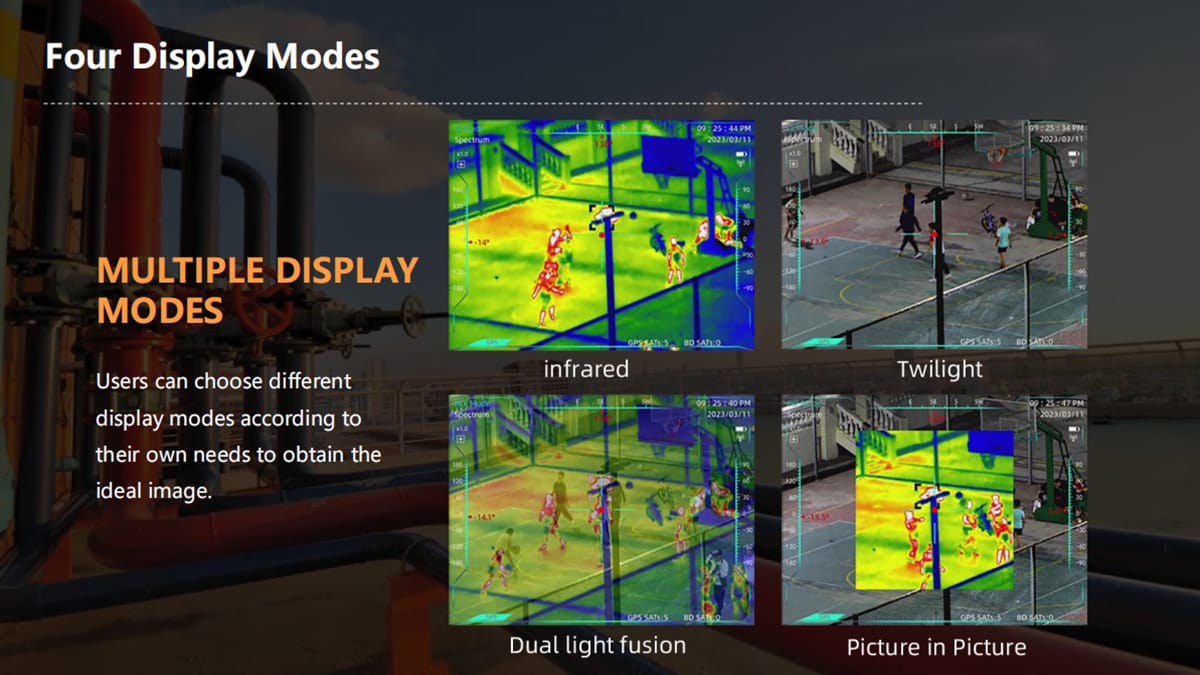
The 0.39-inch OLED display has a resolution of 1024×768. Therefore, thermal details remain clear during real-time viewing. White-hot and black-hot palettes provide familiar contrast for general scanning. In contrast, rainbow and iron-red modes emphasize temperature variations with color. Cold-color mode provides another alternative for specific viewing preferences.
On-screen controls include Gallery, Capture, Record, Refresh, Focal, Blend, Palette, and Setting functions. Additionally, operators can adjust image blending through a dedicated control. Palette selection is also available directly from the imaging interface. Consequently, common adjustments can be completed without leaving the observation workflow.
Ergonomic Controls and Wireless Field Operation
The D-C680/D-C690 thermal imaging telescope has two rubber eyecups with individual focusing rings. Therefore, each eyepiece can be adjusted for comfortable viewing. The rugged body also includes physical controls for source selection, focusing, photography, menu access, mode switching, and digital amplification. Moreover, an aviation jack sits near the upper control area. A removable battery-compartment cover provides access to the power system.
Electric focusing allows rapid adjustments when the target distance changes. Similarly, 2.4 GHz Wi-Fi image transmission supports remote viewing and convenient image sharing. These features reduce the need to interrupt an active observation session. As a result, the infrared telescope can adapt quickly when operators move between wide-area scanning and detailed inspection.
Aluminum-Alloy Housing for Outdoor Deployment
The black binocular-style body uses a substantial aluminum-alloy housing with ribbed side panels. Notably, this material combines strength with manageable field weight. The casing is designed to help protect internal parts from mechanical shock, vibration, and environmental impact. Furthermore, aluminum conducts heat efficiently and can help dissipate warmth from internal electronics.
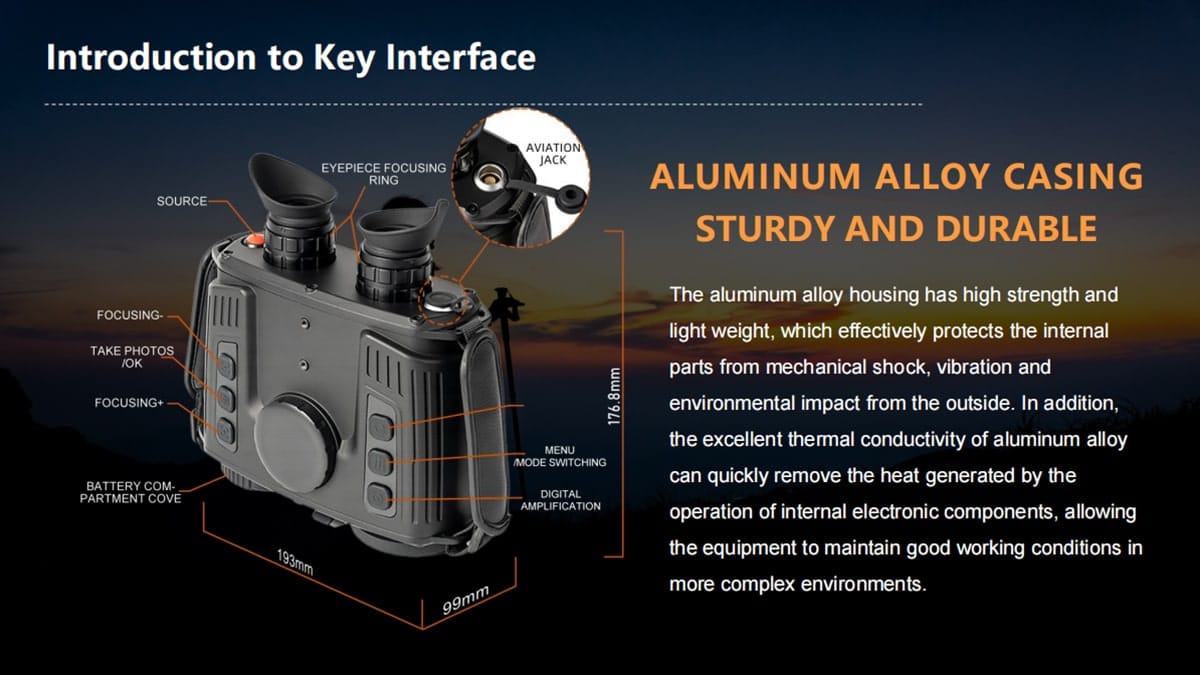
The dimensions shown in the product imagery are approximately 193×99×176.8 mm. Meanwhile, the listed product weight is 1.65 kilograms. A large circular front lens cover helps protect the optical assembly during transport. In addition, a visible carrying strap supports handling in the field. The IP67 rating provides further protection for demanding outdoor assignments.
The specified operating range extends from -20°C to +50°C. Likewise, the storage range extends from -30°C to +70°C. Therefore, the thermal binocular is designed for use across varied seasonal and field conditions. Nevertheless, operators should follow recommended storage, charging, and lens-care practices.
Detachable Battery Power for Extended Observation
A detachable rechargeable 18650 battery system supplies field power. According to the product imagery, maximum battery life can exceed six hours. Therefore, the system can support longer observation sessions from early morning into the evening. Actual endurance will still depend on temperature, wireless use, display settings, and recording activity.
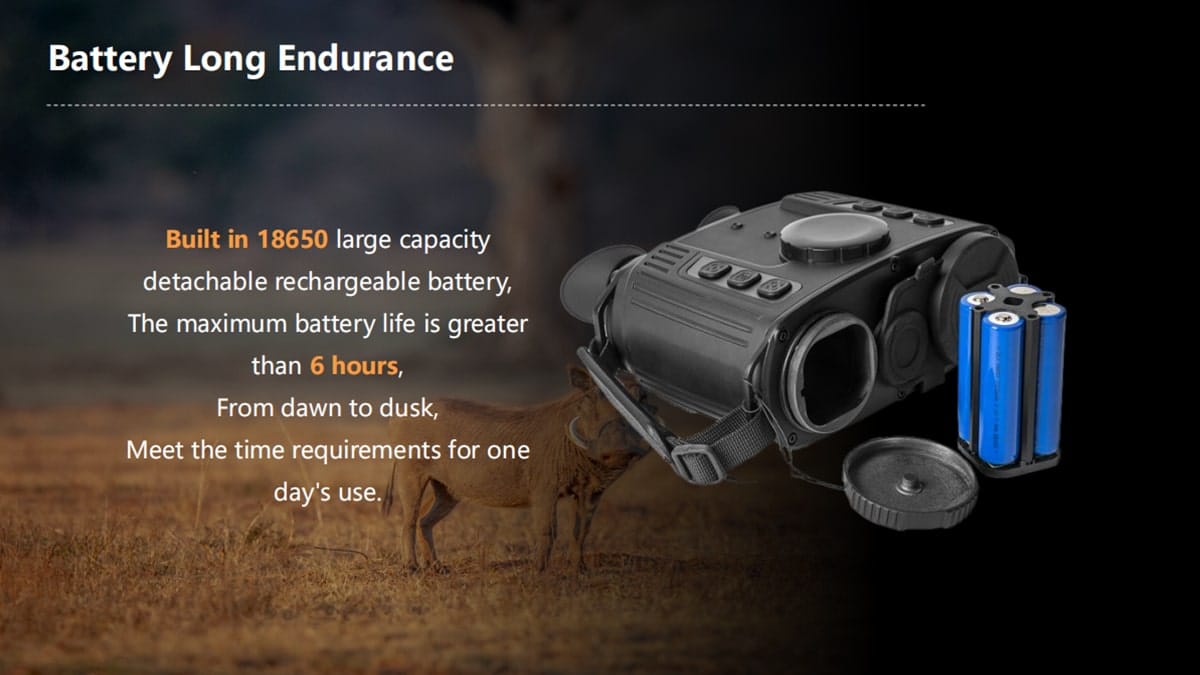
The removable arrangement also makes battery handling more practical away from fixed power sources. Moreover, operators can plan charging around patrols, surveys, or observation schedules. For best results, batteries should be inspected before deployment and stored within the recommended temperature range.
Applications in Security, Wildlife, and Search Operations
The D-C680/D-C690 thermal imaging telescope suits situations where visible-light cameras may struggle. For example, wildlife observers can locate heat signatures without depending on a spotlight. Security personnel can also scan property boundaries, open areas, and access routes after dark. Similarly, search teams can look for human heat signatures across difficult terrain.
The display examples show people being observed on an outdoor sports court. In addition, the interface demonstrates false-color thermal viewing of buildings and construction cranes. These scenes illustrate how fusion and picture-in-picture modes can preserve environmental context. Consequently, users can assess both the target and its position within a broader scene.
Unlike conventional night vision binoculars, the infrared telescope does not require ambient light. Therefore, it remains useful in total darkness. Thermal sensing may also offer an advantage in light fog, smoke, or partially obscuring vegetation. However, dense barriers cannot be seen through, and adverse weather can reduce usable range.
Finally, contact the technical team for configuration guidance, purchasing assistance, and bulk pricing information.
Related Links
Website
Product Link
https://uavauto.com/product/d-c680-d-c690-binocular-thermal-imaging-telescope/
Phone
Related Posts
-
D-H8 Handheld Thermal Imager for Accurate Field Inspections
-
D-C8 Outdoor Thermal Imaging Binoculars for Clear Nighttime Observation
-
D-C18L/D-C19L Outdoor Thermographic Telescope: Long-Range Thermal Clarity
-
D-C600/D-C640 Binocular Thermal Imaging Telescope: Professional Long-Range Thermal Observation