
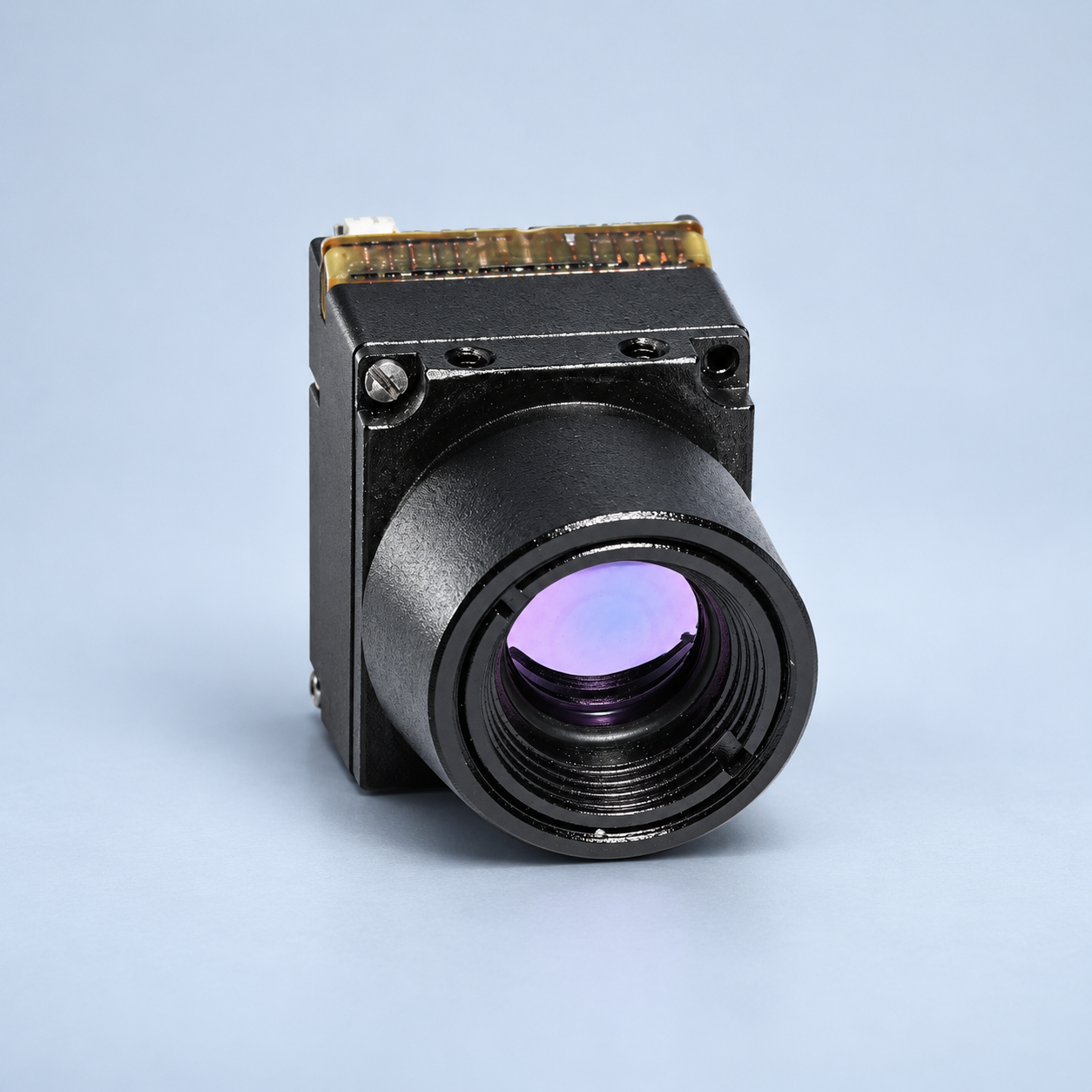
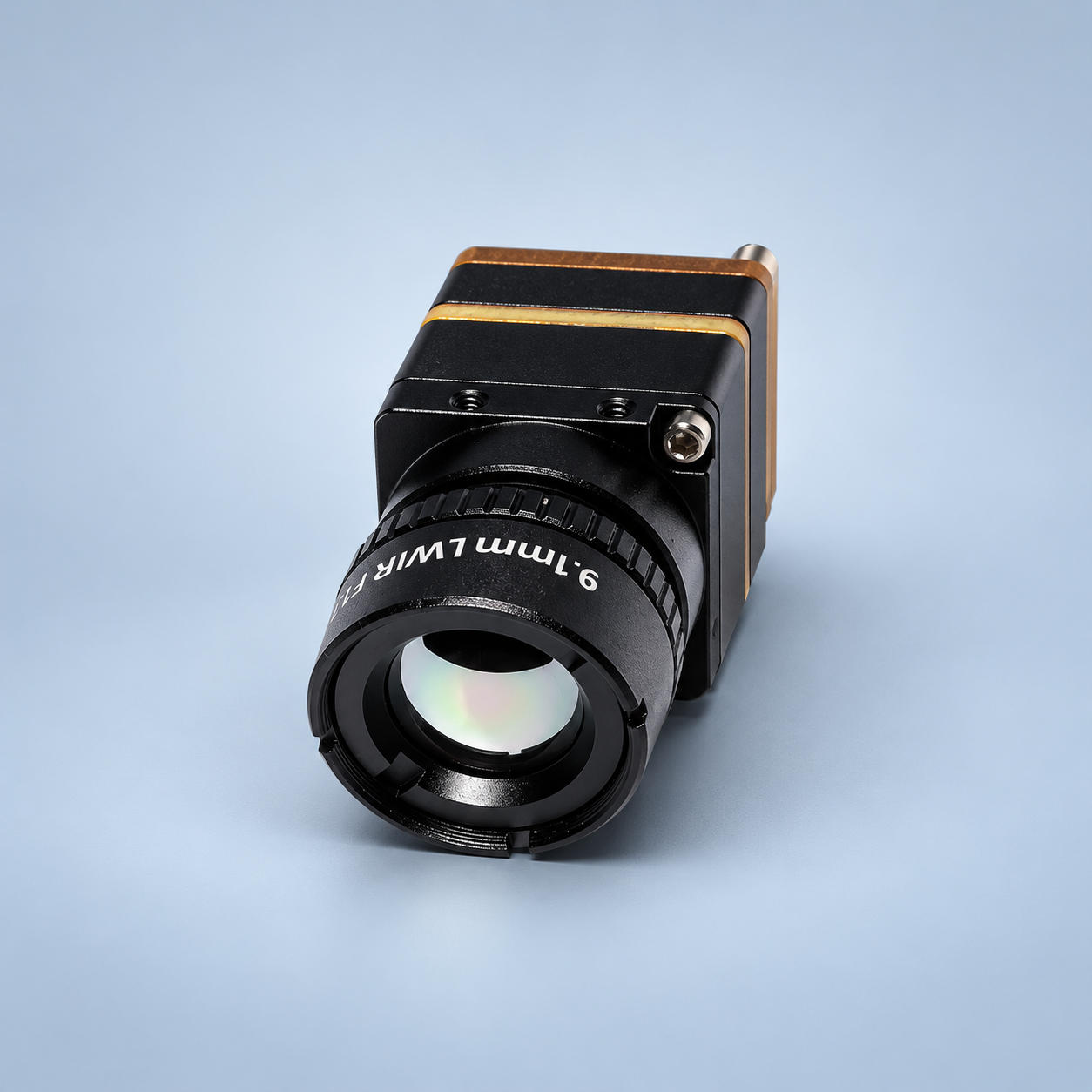
DAI384G Shutterless Thermal Core | 384×288 LWIR, 28 mm PCB
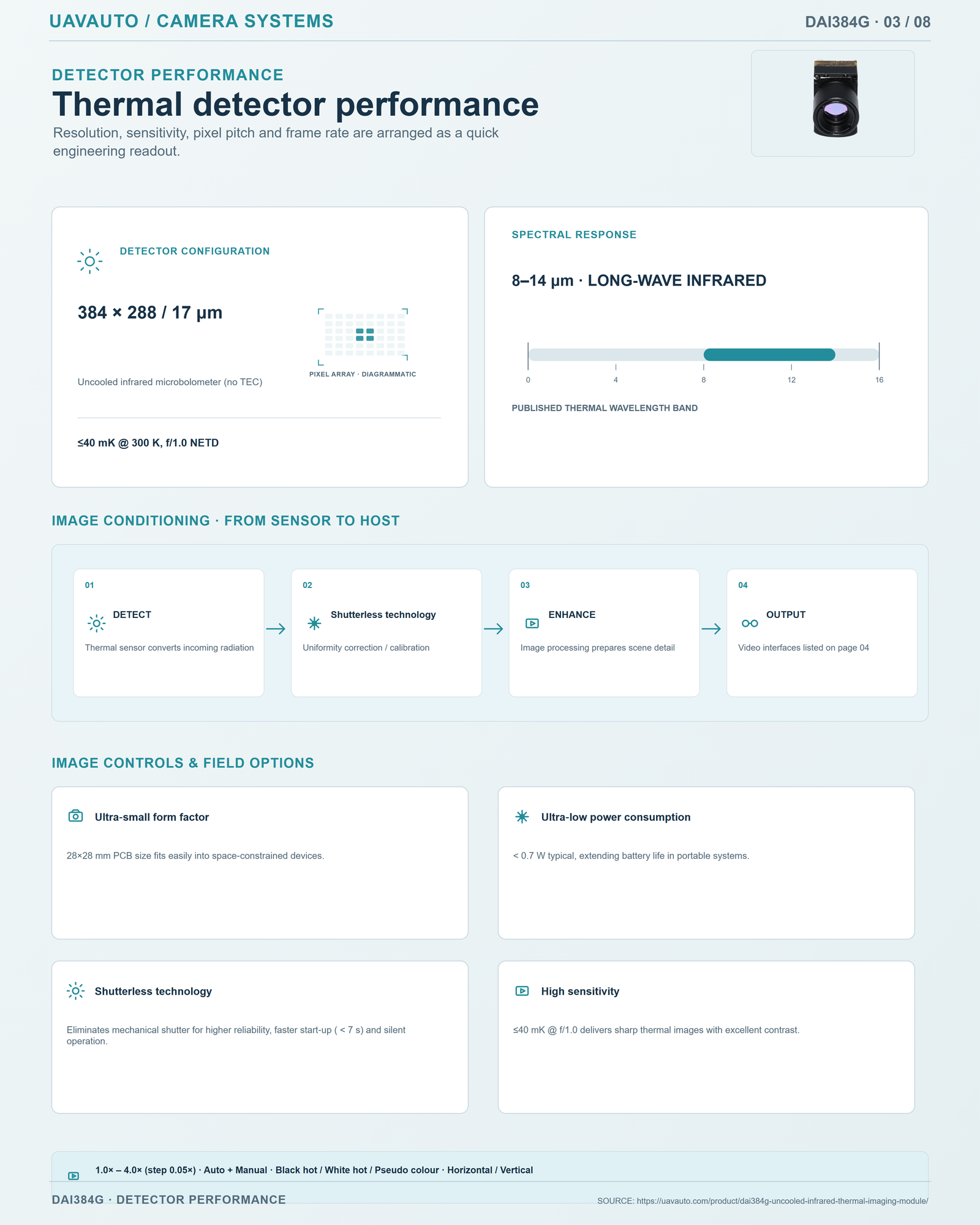
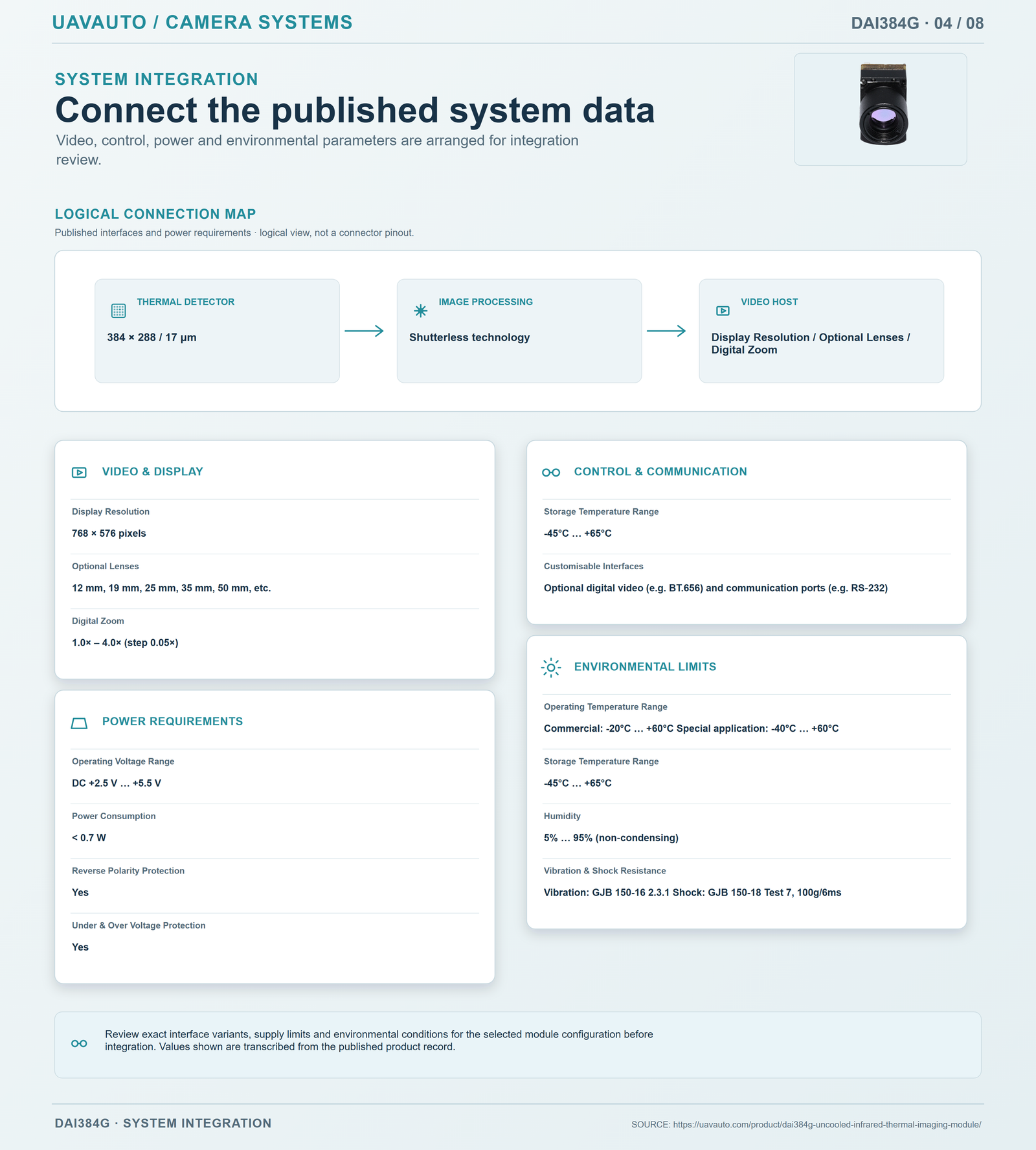
DAI384G uses a 384×288 uncooled LWIR detector with 17 μm pixels and 50 Hz imaging. It uses shutterless correction; published NETD is ≤40 mK at 300 K, f/1.0. The 28×28 mm PCB runs on 2.5–5.5 V DC at <0.7 W. Digital detail enhancement, 1–4× zoom, selectable palettes and optional lenses support compact thermal products; BT.656 and RS-232 interfaces can be configured for system integration.
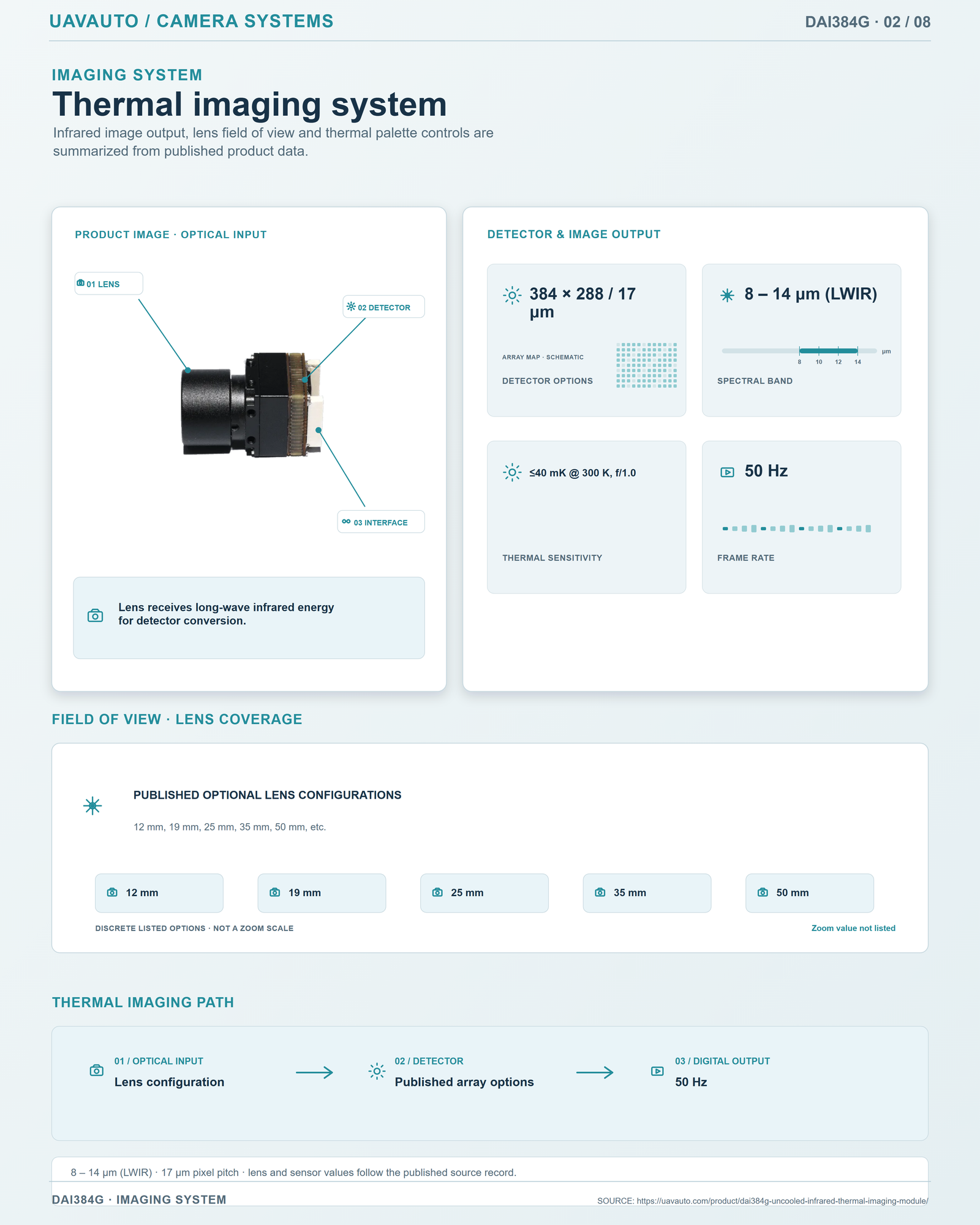
- 50 Hz
- 768 × 576 pixels
- 25 Hz (PAL format)
- 12 mm, 19 mm, 25 mm, 35 mm, 50 mm, etc.
- 1.0× – 4.0× (step 0.05×)
- < 0.7 W
- -45°C … +65°C
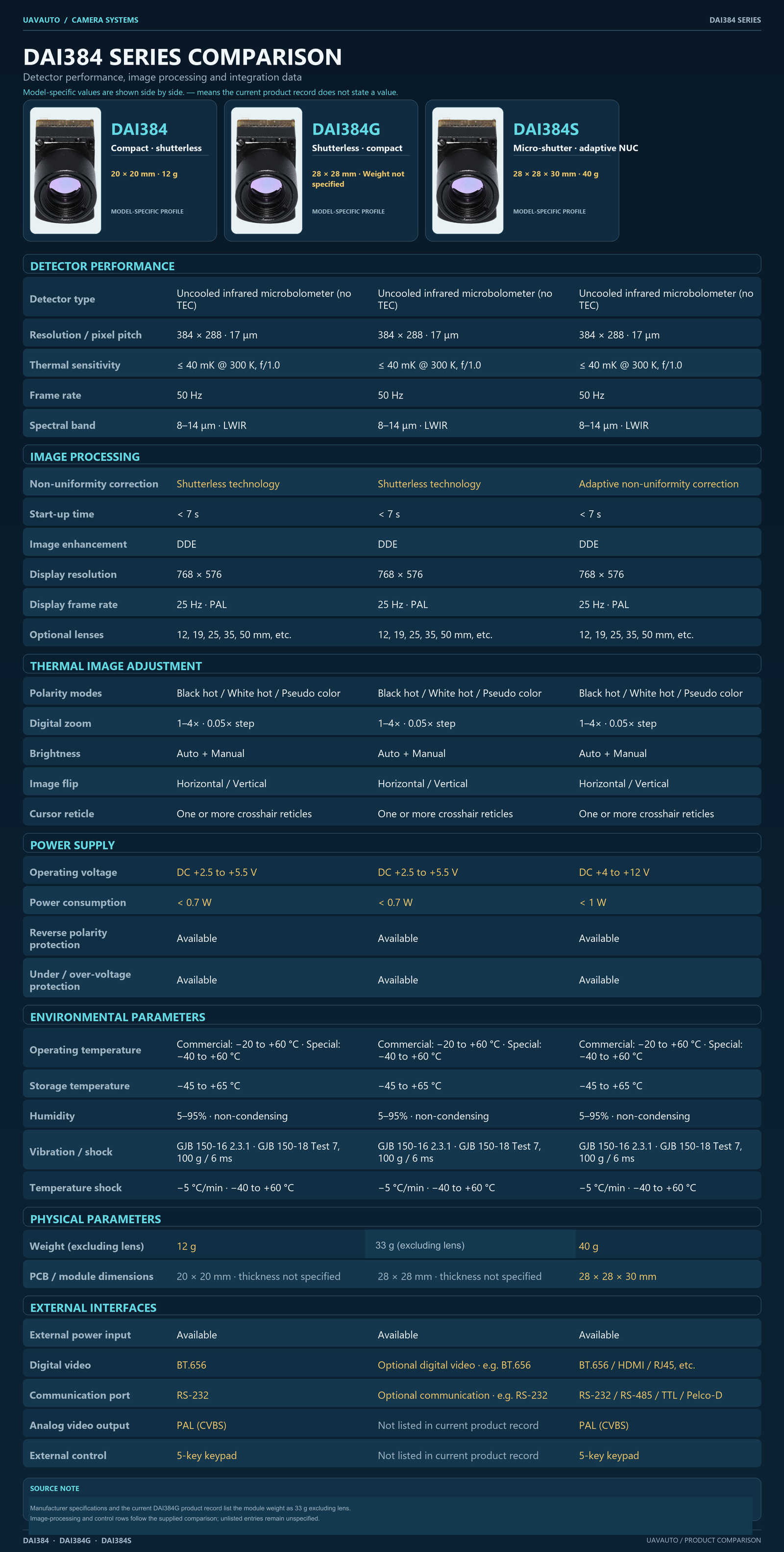
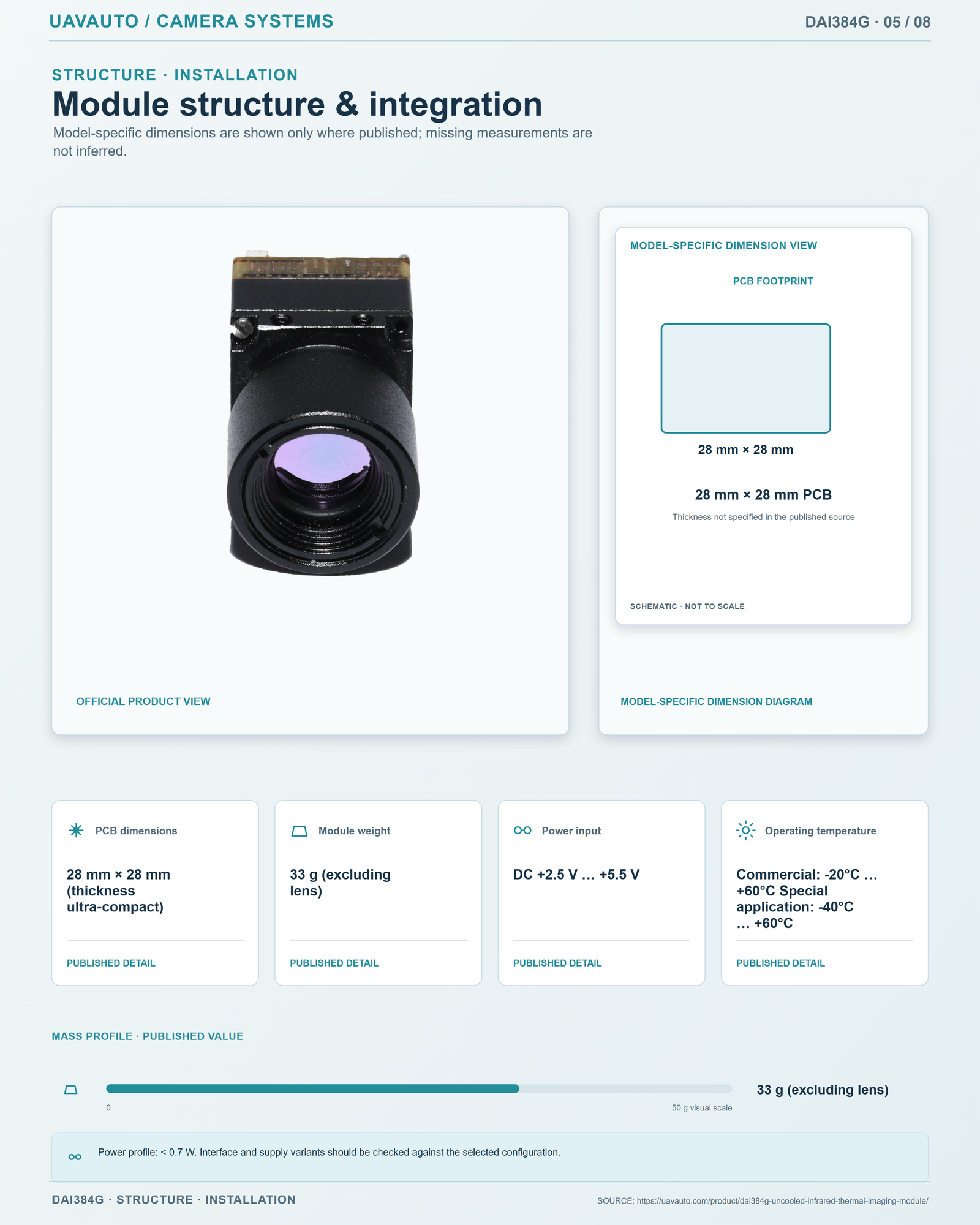
- 28 mm × 28 mm (thickness ultra‑compact)
- 33 g (excluding lens)
- 384 × 288 / 17 μm
- ≤40 mK @ 300 K, f/1.0
- DC +2.5 V … +5.5 V
Plan your product inquiry.
Add this product to your quote list or contact our team to discuss product selection and integration.
Core specifications

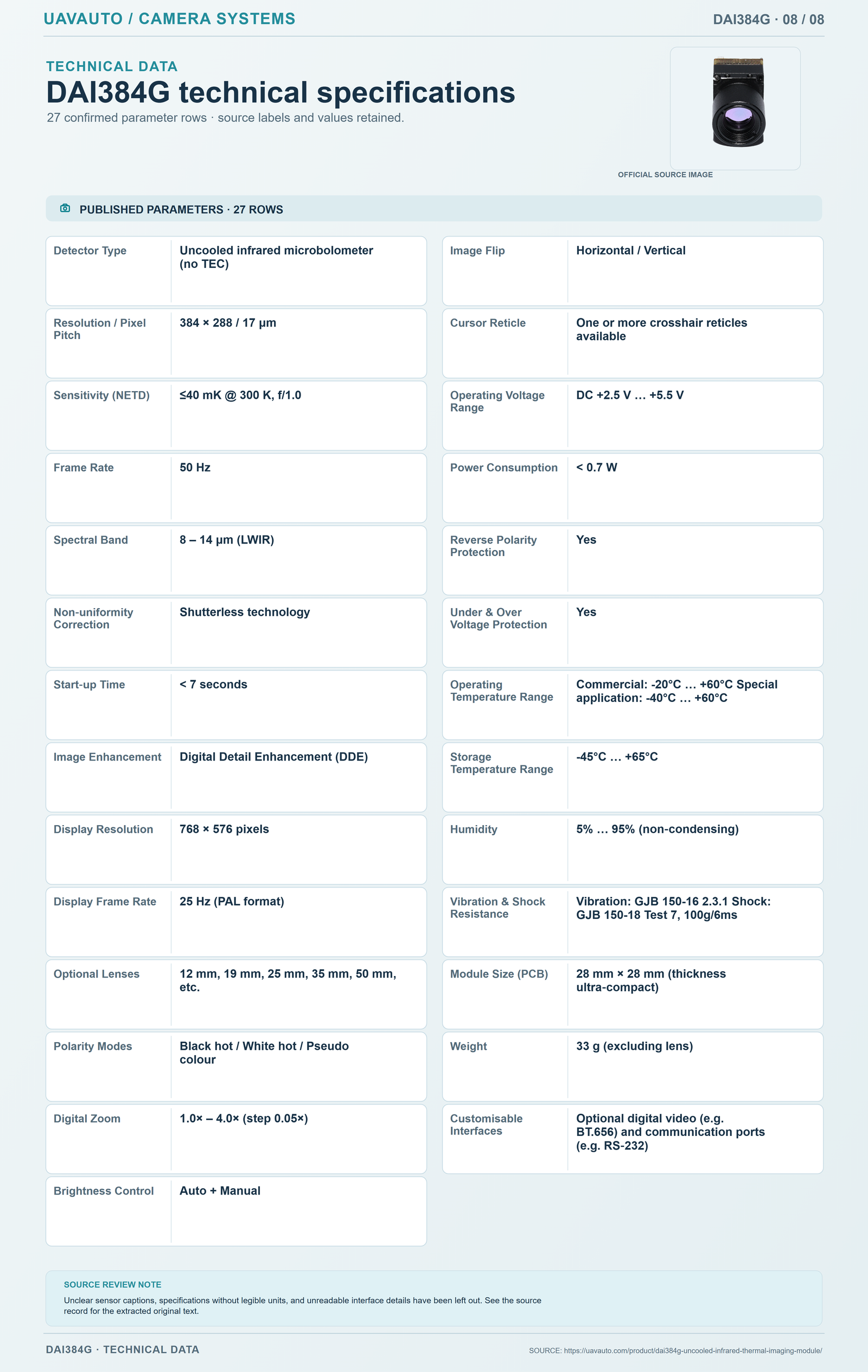
Technical data
| Parameter | Specification |
|---|---|
| Detector Type | Uncooled infrared microbolometer (no TEC) |
| Resolution / Pixel Pitch | 384 × 288 / 17 μm |
| Sensitivity (NETD) | ≤40 mK @ 300 K, f/1.0 |
| Frame Rate | 50 Hz |
| Spectral Band | 8 – 14 μm (LWIR) |
| Non‑uniformity Correction | Shutterless technology |
| Start‑up Time | < 7 seconds |
| Image Enhancement | Digital Detail Enhancement (DDE) |
| Display Resolution | 768 × 576 pixels |
| Display Frame Rate | 25 Hz (PAL format) |
| Optional Lenses | 12 mm, 19 mm, 25 mm, 35 mm, 50 mm, etc. |
| Polarity Modes | Black hot / White hot / Pseudo colour |
| Digital Zoom | 1.0× – 4.0× (step 0.05×) |
| Brightness Control | Auto + Manual |
| Image Flip | Horizontal / Vertical |
| Cursor Reticle | One or more crosshair reticles available |
| Operating Voltage Range | DC +2.5 V … +5.5 V |
| Power Consumption | < 0.7 W |
| Reverse Polarity Protection | Yes |
| Under & Over Voltage Protection | Yes |
| Operating Temperature Range | Commercial: -20°C … +60°C Special application: -40°C … +60°C |
| Storage Temperature Range | -45°C … +65°C |
| Humidity | 5% … 95% (non‑condensing) |
| Vibration & Shock Resistance | Vibration: GJB 150-16 2.3.1 Shock: GJB 150-18 Test 7, 100g/6ms |
| Module Size (PCB) | 28 mm × 28 mm (thickness ultra‑compact) |
| Weight | 33 g (excluding lens) |
| Customisable Interfaces | Optional digital video (e.g. BT.656) and communication ports (e.g. RS‑232) |
1. Features & applications
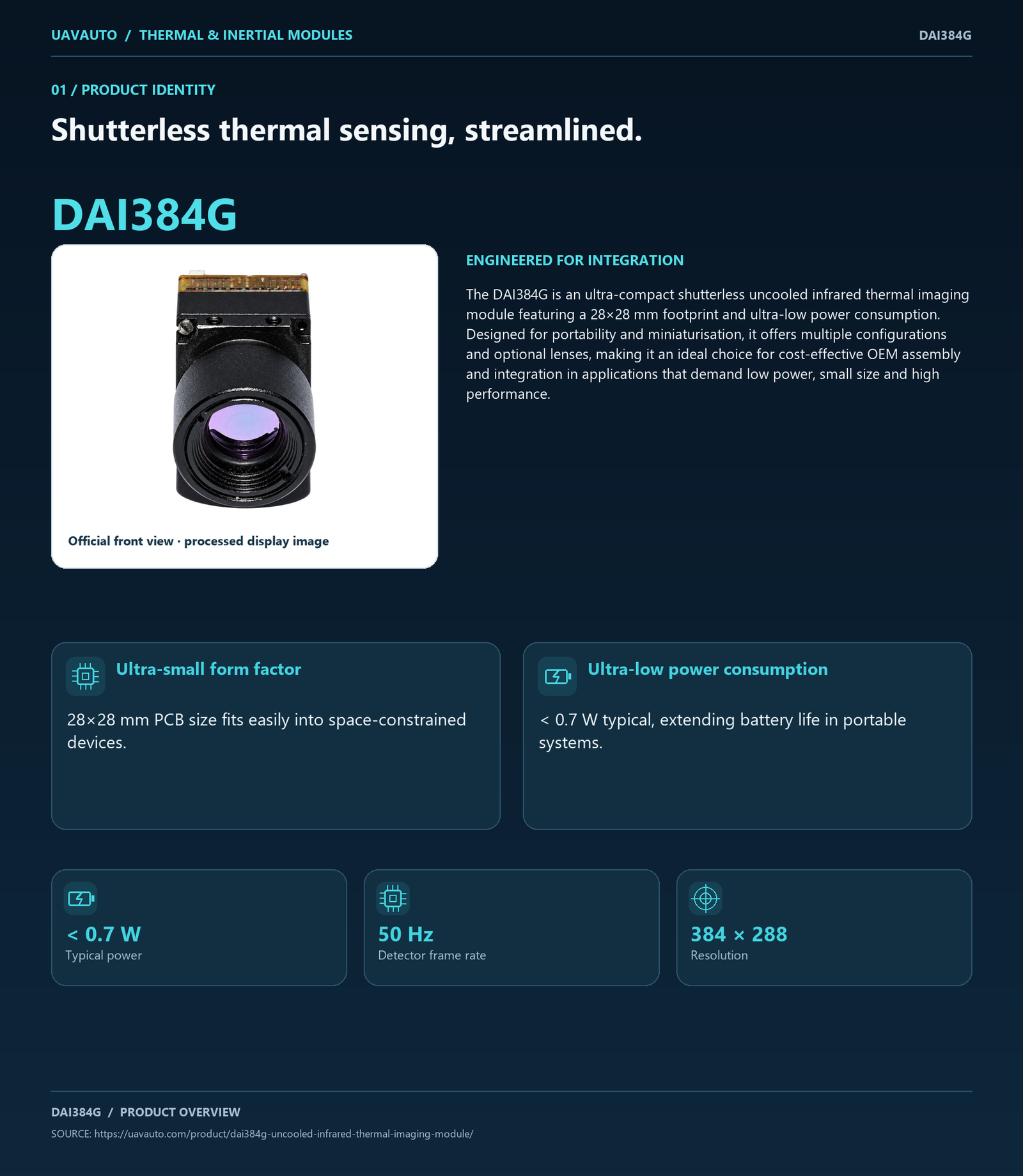
The DAI384G is an ultra‑compact shutterless uncooled infrared thermal imaging module featuring a 28×28 mm footprint and ultra‑low power consumption. Designed for portability and miniaturisation, it offers multiple configurations and optional lenses, making it an ideal choice for cost‑effective OEM assembly and integration in applications that demand low power, small size and high performance.
2. Product Features
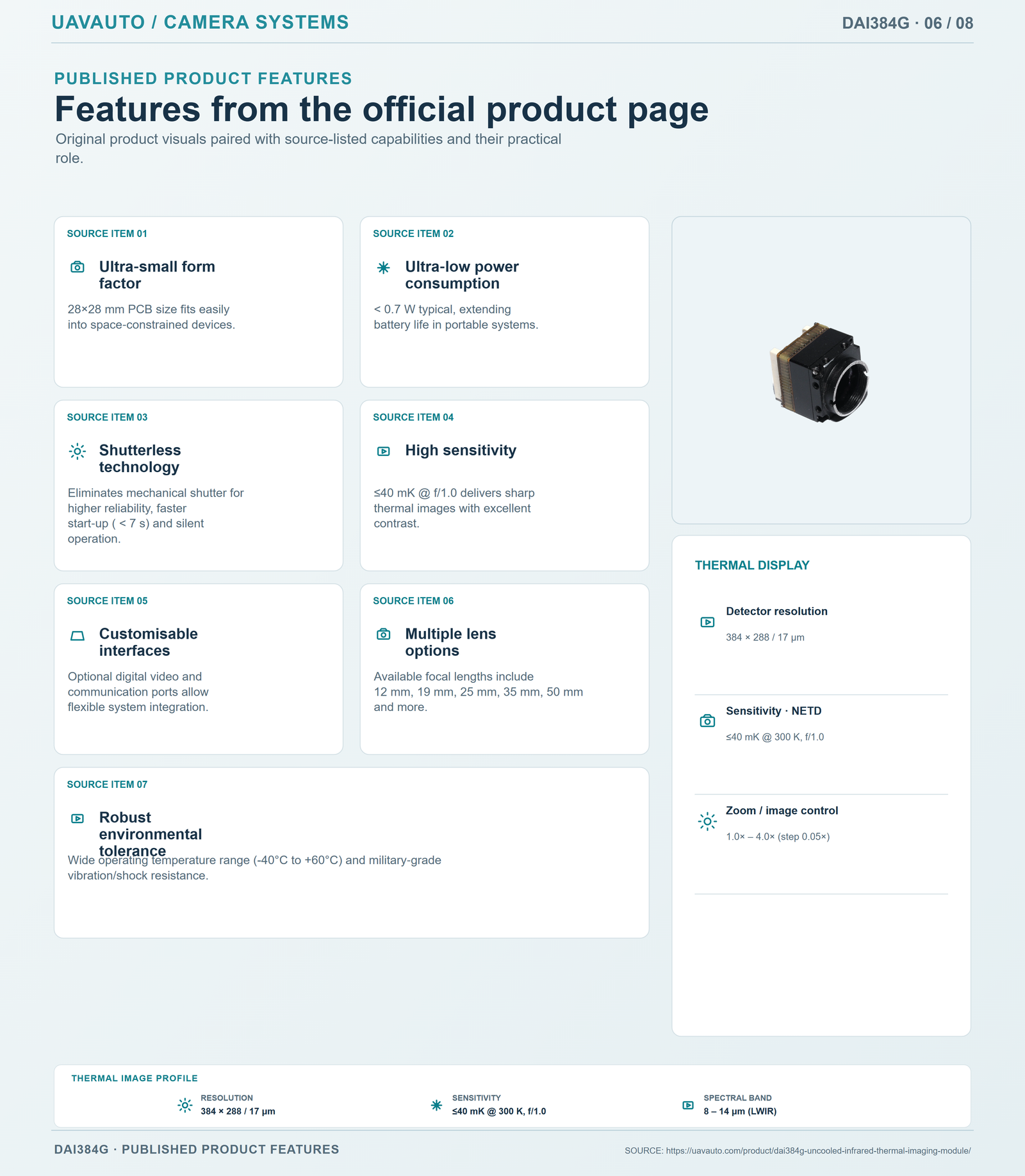
- Ultra‑small form factor: 28×28 mm PCB size fits easily into space‑constrained devices.
- Ultra‑low power consumption: < 0.7 W typical, extending battery life in portable systems.
- Shutterless technology: Eliminates mechanical shutter for higher reliability, faster start‑up (<7 s) and silent operation.
- High sensitivity: ≤40 mK @ f/1.0 delivers sharp thermal images with excellent contrast.
- Customisable interfaces: Optional digital video and communication ports allow flexible system integration.
- Multiple lens options: Available focal lengths include 12 mm, 19 mm, 25 mm, 35 mm, 50 mm and more.
- Robust environmental tolerance: Wide operating temperature range (-40°C to +60°C) and military‑grade vibration/shock resistance.
3. Application Scenarios
- Security & surveillance: Ideal for covert monitoring, perimeter protection and night vision systems where small size and low power are critical.
- Industrial inspection: Enables non‑destructive testing, electrical equipment monitoring and predictive maintenance in tight spaces.
- Handheld devices: Easily integrated into portable thermal cameras, PDAs and smartphones for field service, firefighting or building diagnostics.
- UAV / drone payloads: Lightweight construction makes it perfect for aerial thermal imaging, search & rescue, and agriculture surveys.
- Automotive night vision: Enhances driver assistance systems with reliable thermal sensing in a compact form factor.
Related Products
-
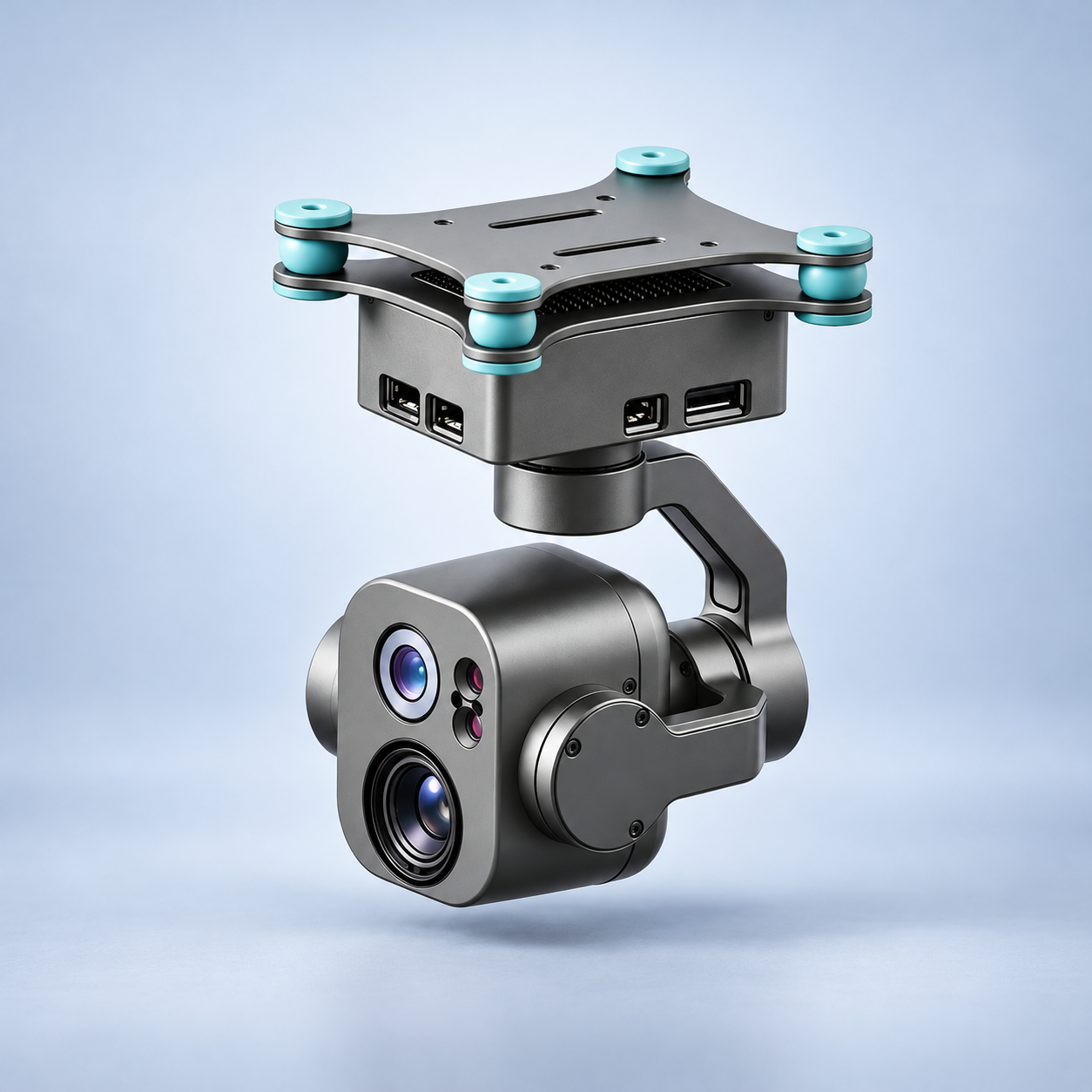 DA531
DA531 Three-Axis EO/IR Gimbal Overview
Cameras -
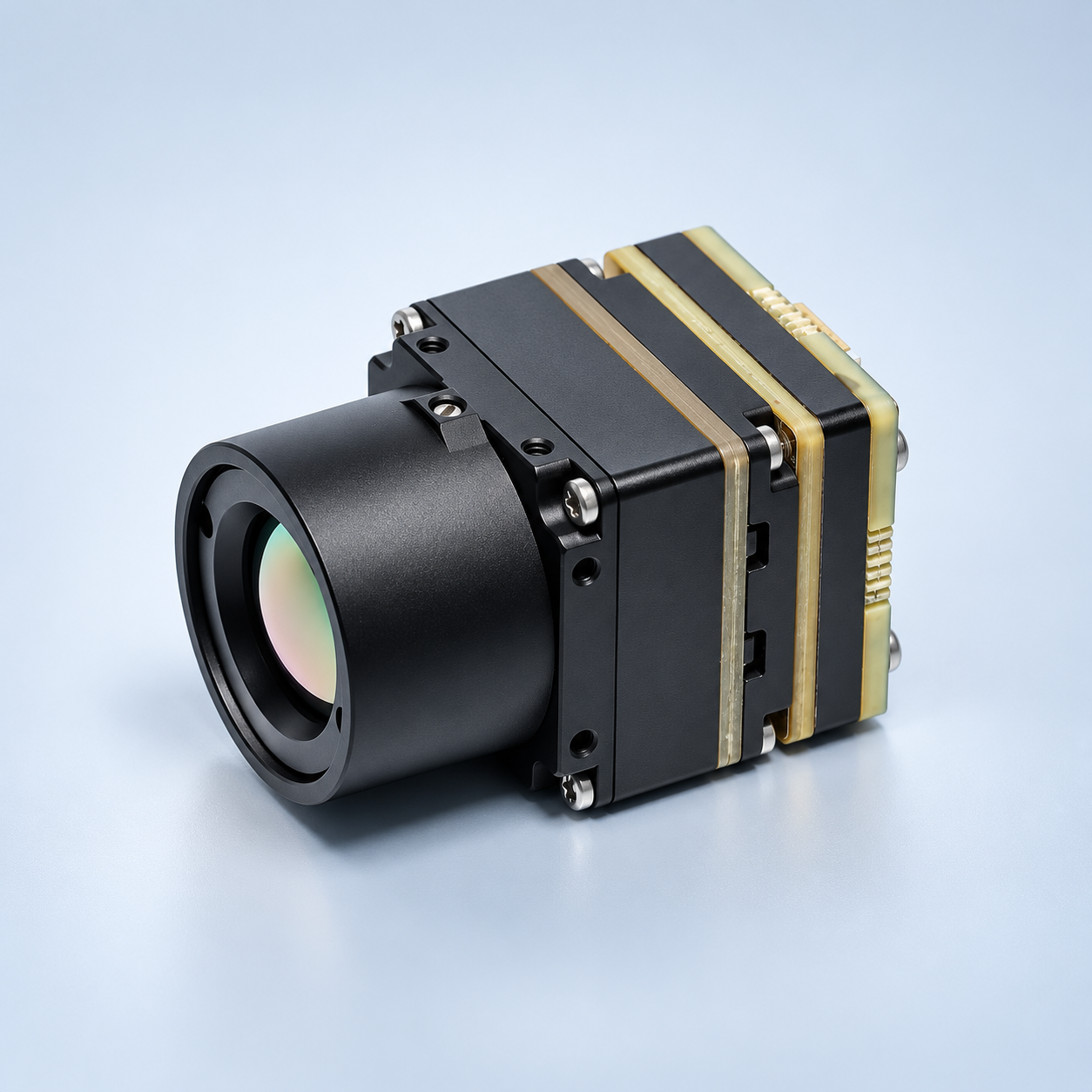 DSQ09
Aurora Mini DSQ09 Infrared Core Module
Cameras -
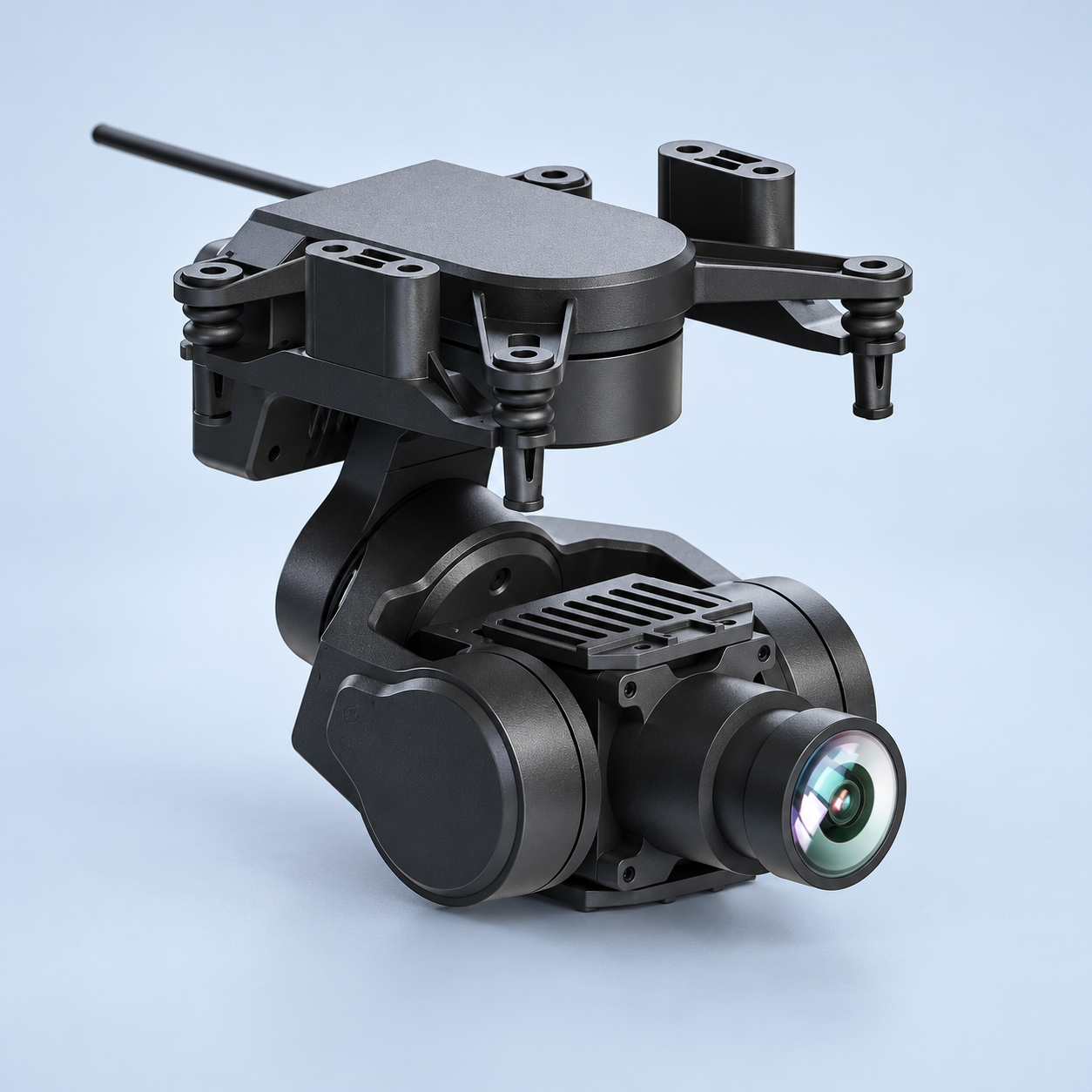 DC3
DC3 FHD EO Camera 3-Axis Micro UAV Gimbal for Target Tracking
Cameras -
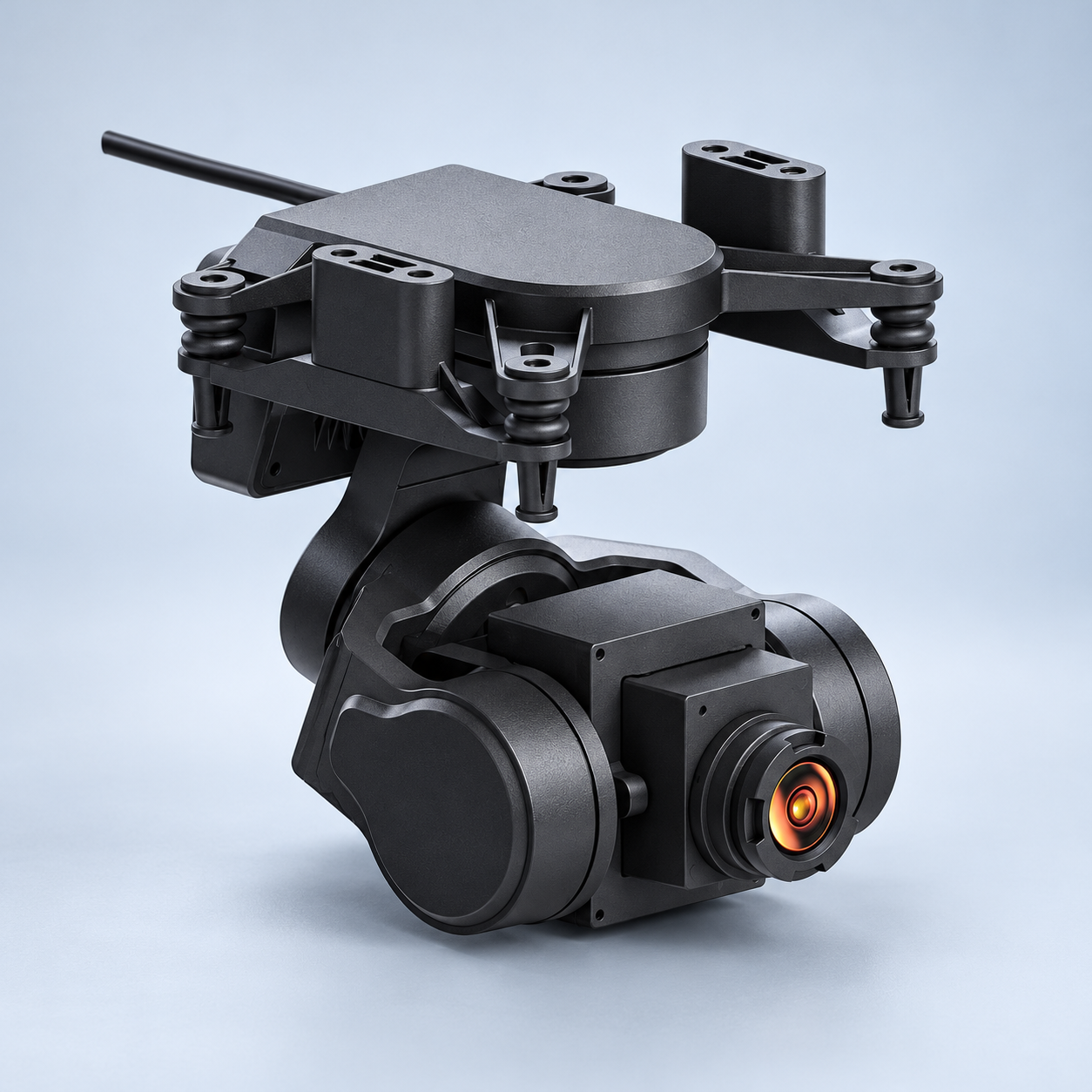 DC2
DC2 3-Axis IR Thermal Imaging Target Tracking Micro UAV Gimbal Camera
Cameras -
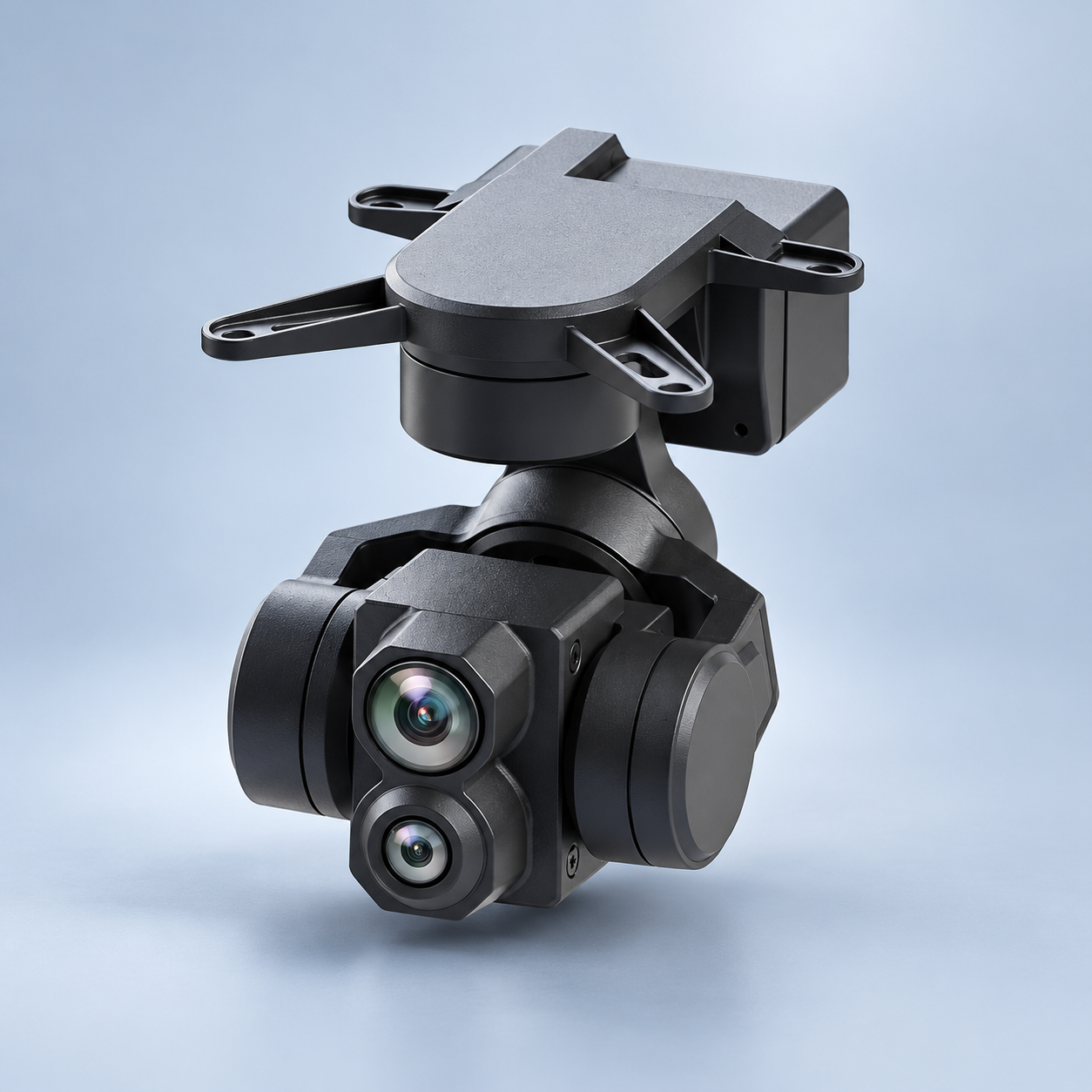 DC1
DC1 3-Axis Dual Visible FHD EO Optical Zoom Micro UAV Gimbal Camera
Cameras -
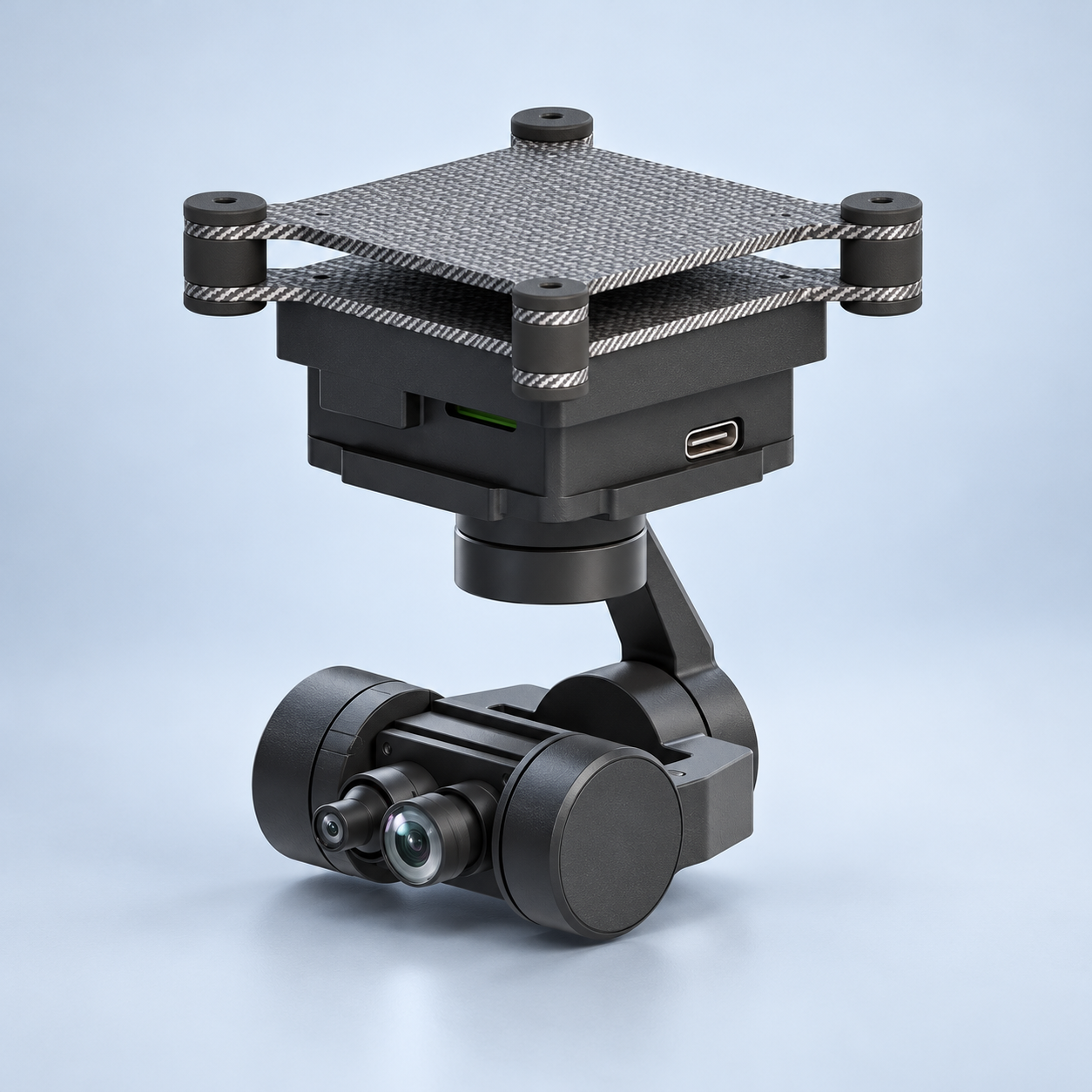 DC0
DC0 3-Axis Dual 4K EO Optical Zoom Micro UAV Gimbal Camera
Cameras -
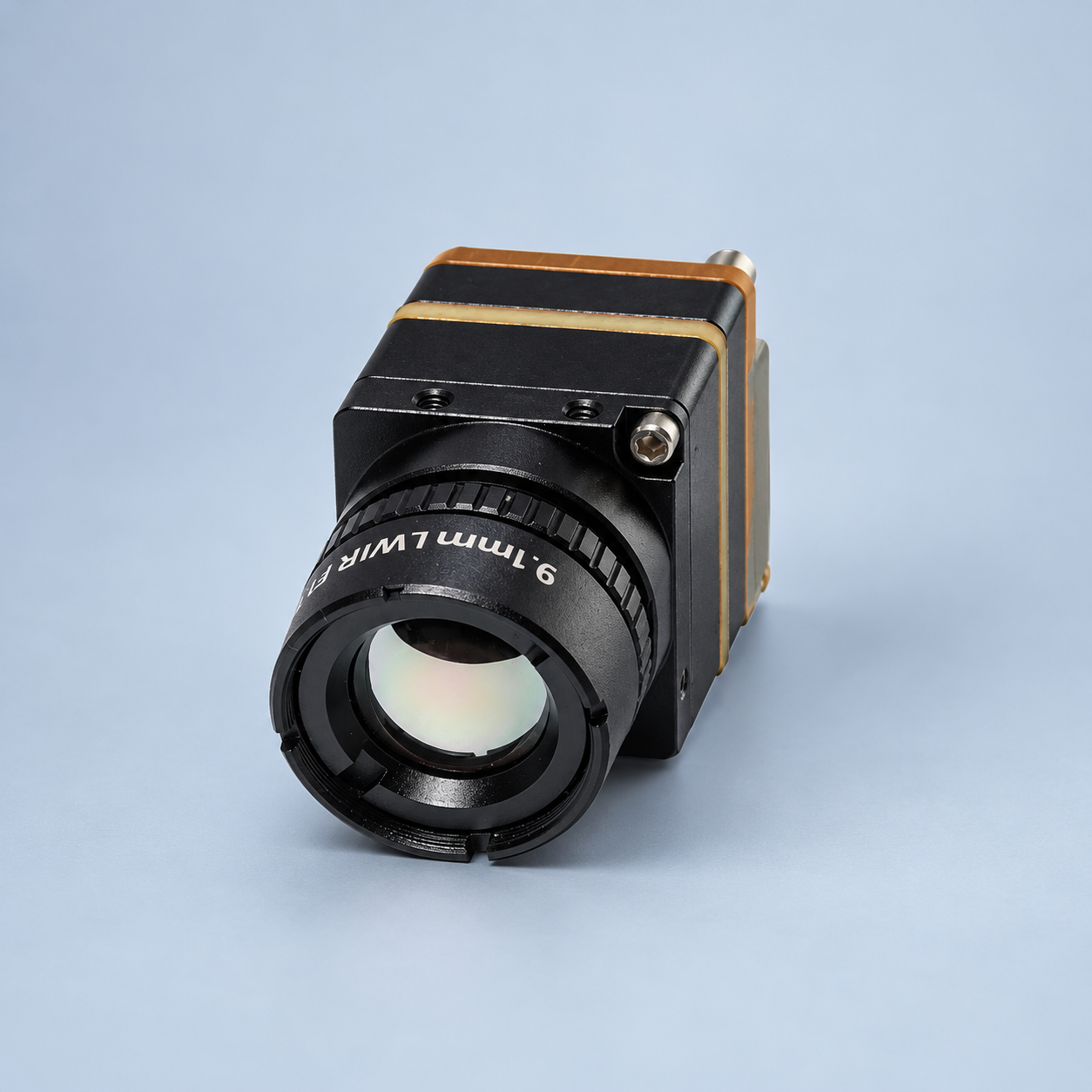 HI640S
 Uncooled Infrared Thermal Imaging Module
Cameras -
 DAI640Pro
 Uncooled Infrared Thermal Imaging Module
Cameras