D-C100EW 100mm Motorized Zoom Thermal Camera Module
Camera Systems · Product guide
The D-C100EW is a thermal imaging camera module designed for integrators and operators building fixed industrial, security, environmental or emergency-response systems. It combines 640×512 uncooled thermal imaging with a 100mm motorized zoom lens, supported network protocols and configurable alarm events. Its narrow field of view favors detailed observation of distant subjects, while RS232, RS485, USB, audio, alarm and microSD connections support broader system integration.
Verified specifications
| Detector and resolution | Uncooled vanadium oxide thermal detector; 640×512 resolution; 12μm pixel size |
|---|---|
| Spectral range and sensitivity | 8–14μm spectral range; NETD ≤35 mK at F1.0 and 300K |
| Lens | 100mm motorized zoom lens with F1.0 aperture and electronic focusing |
| Field of view and focus | 4.4° × 3.5° field of view; focusing range from 10m to infinity |
| Video and network support | H.265 and H.264 compression; TCP/IP, HTTP, HTTPS, FTP, DHCP, DNS, RTP, RTSP, RTCP and ONVIF |
| Interfaces and storage | RS232, RS485, one USB port, one alarm input/output, one audio input/output; microSD/SDHC/SDXC up to 256GB |
| Power | DC12V ±10%; maximum power consumption 5.4W |
| Environmental and mechanical | IP67 front-of-lens sealing; –30°C to 60°C operating temperature; 111 × 171.1mm; 740g |
Thermal Imaging and Long-Range Optics
The D-C100EW uses an uncooled vanadium oxide detector to produce 640×512 thermal imagery. Its specified thermal sensitivity is ≤35 mK at F1.0 and 300K, while the 8–14μm spectral range places the module in the long-wave infrared band. These figures define the sensor configuration, but they should not be treated as a guarantee of detection range without considering the scene and target conditions.
A 100mm motorized zoom lens provides detailed views of distant subjects, and electronic focusing covers targets from 10m to infinity. The 4.4° × 3.5° field of view is comparatively narrow, making the module more suitable for targeted observation than broad-area coverage. Digital zoom at 1x, 2x and 4x provides additional framing options, while brightness, contrast, gamma and pseudo-color settings support visual adjustment.
Network Operation and Event Linkage
The module outputs H.265 or H.264 video and supports TCP/IP, HTTP, HTTPS, RTP, RTSP, RTCP and ONVIF. This provides several options for connecting the camera to a recording, viewing or management system. RTSP is listed for live video transport, but the compatibility of a particular recorder, platform or control application still needs to be checked during integration.
Four event types are specified: electronic fence, cross-border detection, area intrusion and area leaving. A microSD slot supporting microSD, SDHC and SDXC cards up to 256GB provides local recording capability. The module also includes one alarm input/output and one audio input/output, allowing a system designer to assess event signaling and peripheral connections against the installation requirements.

Civilian Monitoring Applications
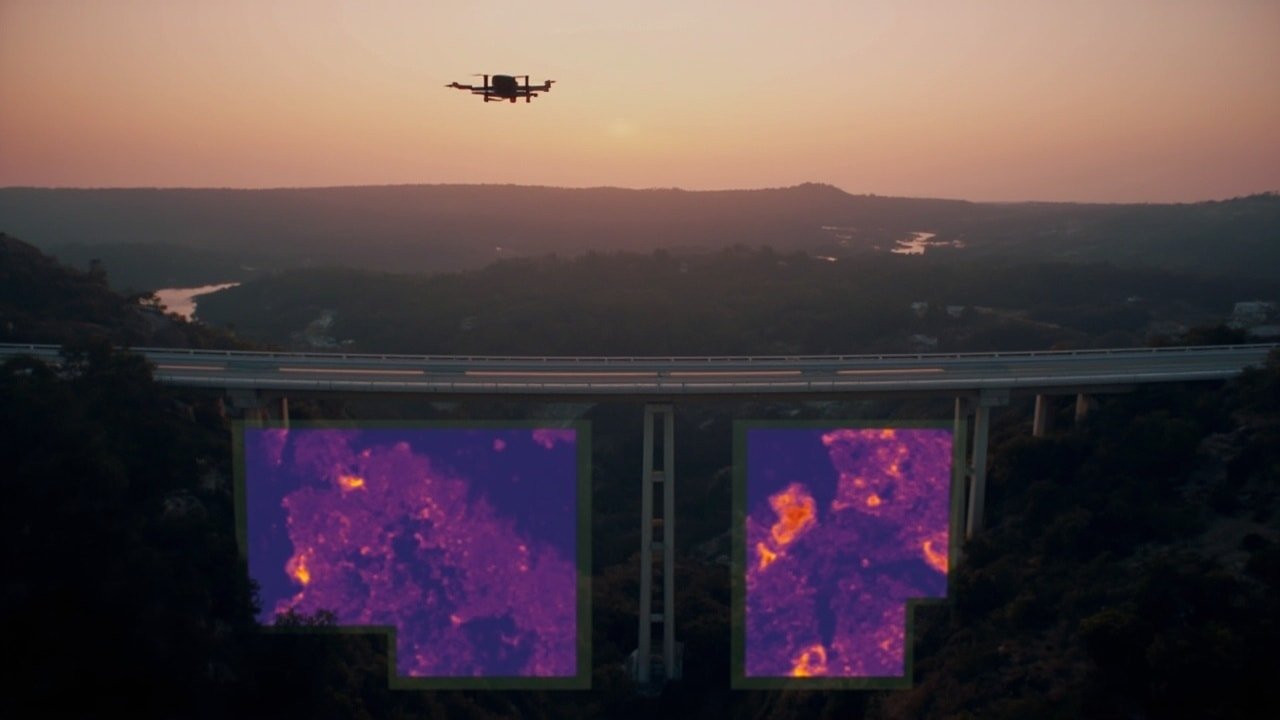
For industrial monitoring, the thermal view can help personnel inspect equipment or processes for visible heat patterns. Perimeter security and critical-infrastructure monitoring are identified use cases for the narrow, long-range optics. The source describes detecting temperature anomalies as an intended industrial role, but it does not provide a temperature-measurement range, accuracy rating or radiometric output specification.
The camera is also positioned for fire and rescue work, where thermal imagery can assist with locating heat sources. Agricultural and environmental applications include observing crop health, livestock and wildlife behavior. In smart-city and urban monitoring systems, the network, alarm and storage options make it possible to consider the module as part of a larger surveillance installation rather than a standalone device.
Integration and Selection Checks
The optical and electrical specifications make the D-C100EW most relevant to fixed installations that require a detailed thermal view and wired network integration. Its 740g weight and 111 × 171.1mm dimensions need to be considered with the chosen housing, bracket and mounting arrangement. The stated IP67 rating applies to the front of the lens, not necessarily the complete assembled system.
Before selecting the module, integrators should confirm several practical details against their own system:
Verify recorder, VMS and ONVIF compatibility with the exact network workflow.
Confirm the 12V supply can meet the DC12V ±10% input tolerance.
Check whether the narrow field of view covers the required monitoring area.
Confirm access, recording and alarm wiring for the selected interfaces.
Review the operating environment against the –30°C to 60°C range.
- Test live video and control behavior with the intended recorder or platform.
- Plan the 100mm zoom and 10m-to-infinity focus range for target distances.
- Define where local microSD recording is needed.
- Validate environmental sealing for the complete installation.
Frequently asked questions
Is the D-C100EW suitable for a fixed surveillance installation?
It appears suitable for fixed systems that need wired network video, local recording and event signaling. The module offers DC power, H.265 or H.264 output, RTSP, ONVIF, microSD storage and an alarm input/output. Confirm the chosen bracket, power source, network platform and peripheral wiring before installation.
Does the 100mm lens provide a wide-area view?
No. The specified field of view is 4.4° × 3.5°, which is narrow and suited to examining smaller or more distant parts of a scene. Wide-area coverage may require another camera or a different lens strategy. Digital zoom options of 1x, 2x and 4x can tighten the view further.
Can this module report calibrated temperatures?
The supplied specifications identify thermal sensitivity, resolution and alarm events, but they do not state a temperature-measurement range, accuracy or radiometric output. Treat the module as a thermal imaging source unless the manufacturer confirms additional measurement functions and provides the corresponding technical documentation.
Which systems should be checked before using ONVIF or RTSP?
Check the exact recorder, video management system, network configuration and control workflow with the intended supplier. The module lists ONVIF, RTSP and other network protocols, but protocol support alone does not confirm that every profile, command and discovery method works with a particular platform.