DX2 Triple-Sensor Gimbal Camera for Compact UAV Payloads
Gimbal Pod · Product guide
The DX2 is a compact three-axis gimbal camera for operators of small UAVs and robotic inspection systems that need visible, thermal, and distance information in one payload. It combines FHD optical imaging, infrared thermal imaging, a laser rangefinder, target tracking, and network video output within a 100 g CNC metal housing.
Verified specifications
| Payload weight | 100 g |
|---|---|
| EO imaging | 1920×1080 at 50 fps; 5× optical zoom and 20× hybrid zoom |
| Thermal imaging | 256×192 at 50 fps with a 7 mm focal length |
| Laser rangefinder | 3–1200 m range with ±1 m distance measurement accuracy |
| Stabilization | 0.1 mrad stability accuracy at 1°/2 Hz, 1 sigma; angular position accuracy ≤0.3° |
| Video output | Ethernet with RTSP; H.264/H.265 encoding; MP4 storage format |
| Control interfaces | UART using TTL 3.3 V or RS232 protocol; optional SBUS |
| Power | 12–28 V DC; average consumption ≤6 W and maximum consumption ≤15 W |
Visible and Thermal Imaging
The DX2 pairs a 1920×1080 visible-light camera operating at 50 fps with a 256×192 thermal imager also operating at 50 fps. The visible camera provides 5× optical zoom, 20× hybrid zoom, and a focal-length range of 2.7–13.5 mm, while the thermal channel uses a 7 mm lens.
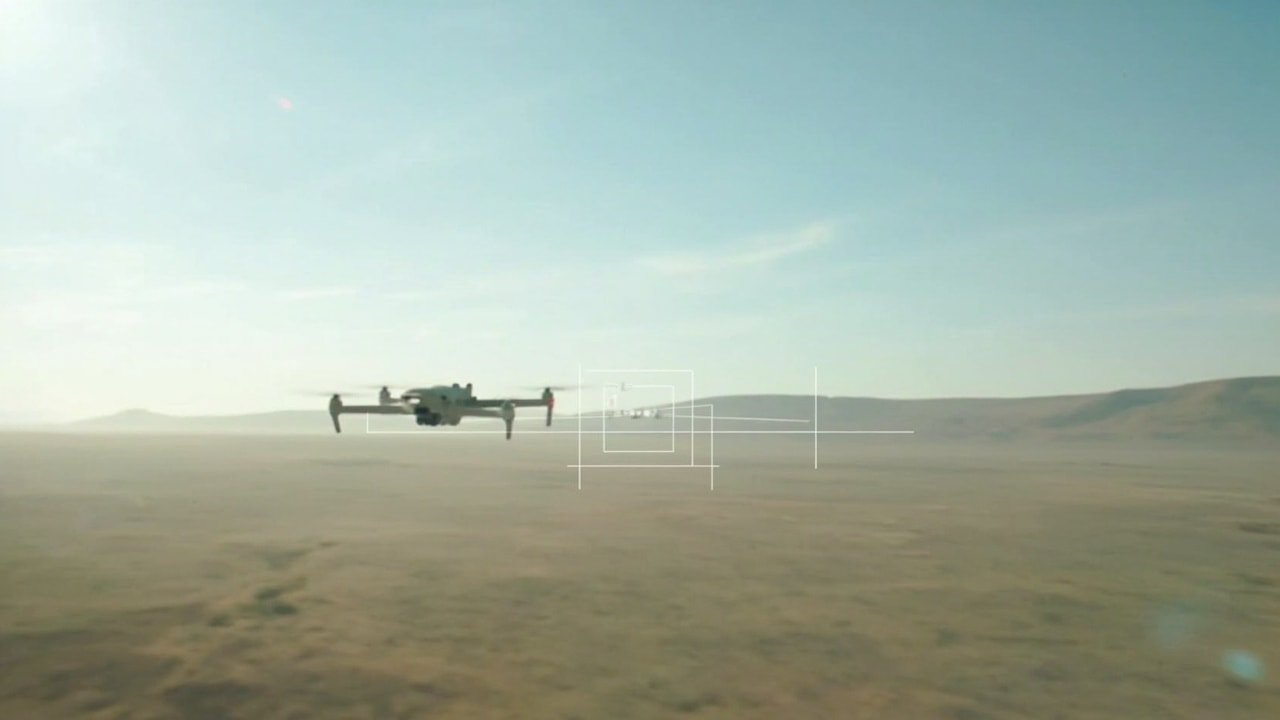
This combination gives an operator two different views of the same scene without carrying separate EO and infrared sensors. Picture-in-picture and an on-screen display can present camera, target, and robot information together, helping users interpret the combined output.
- EO wide field of view: 91.8°×60.2°
- EO telephoto field of view: 23.3°×13.2°
- Thermal field of view: 24.8°×18.7°

Stabilization and Motion Control
The three-axis gimbal supports yaw rotation of ±110°, pitch rotation from −100° to +40°, and roll rotation of ±45°. Maximum angular velocity is specified at no less than 100°/s, while the EO tracking speed is listed at no less than 40°/s.
Stability accuracy is stated as 0.1 mrad at 1°/2 Hz with a 1 sigma value, and angular position accuracy is ≤0.3°. These specifications establish the intended precision of the stabilized assembly, but actual tracking performance depends on the installed platform, control configuration, operating conditions, and integration.
- Confirm available clearance across all three axes
- Validate the selected control protocol with the host system
Ranging and Tracking Functions
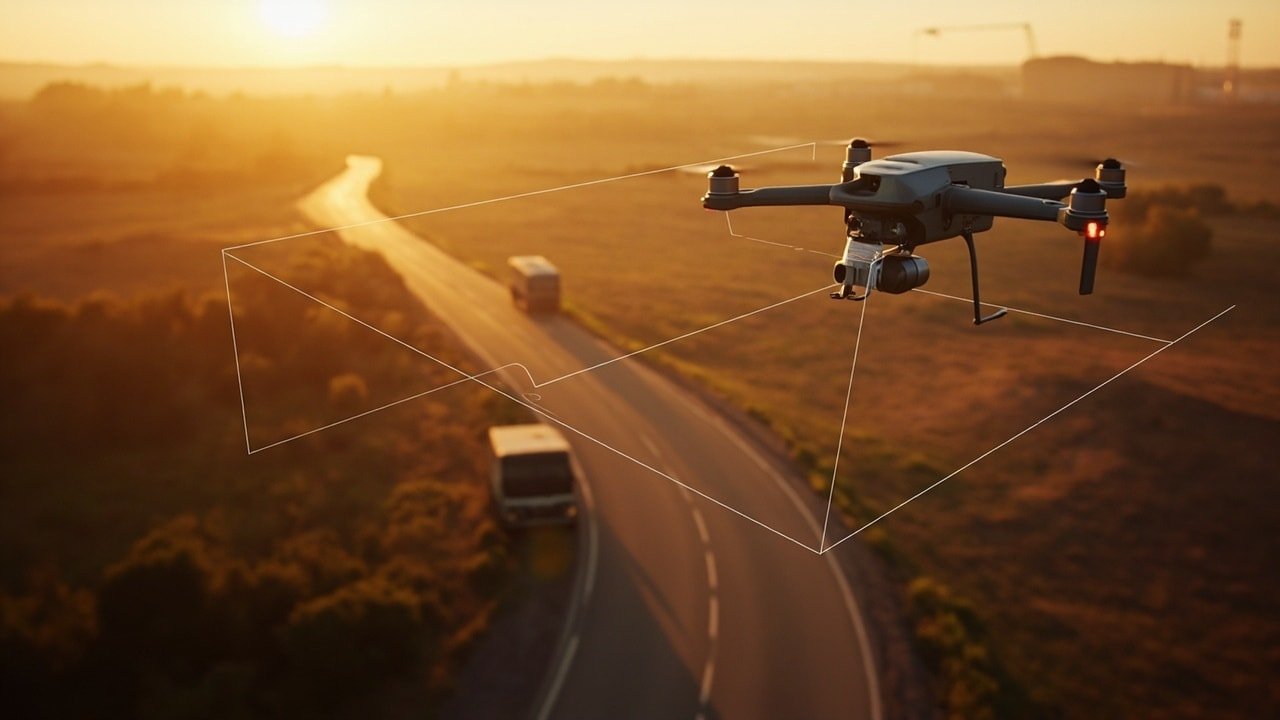
The integrated laser rangefinder measures distances from 3 to 1200 m with a stated accuracy of ±1 m. The payload also supports tracking functions for vehicles and people, while the product description lists object identification alongside vehicle and human tracking.
These functions are designed for target monitoring and field observation rather than as stand-alone measurement tools. Operators should assess how the rangefinder, EO view, thermal view, and tracking overlay appear together in their intended daylight, darkness, range, and target-motion conditions.
- Human and vehicle tracking are documented capabilities
- Review the 3–1200 m ranging range against the intended target distance
Power, Video, and Interfaces
DX2 accepts 12–28 V DC and is rated for average power consumption of no more than 6 W, with a maximum of 15 W. Its operating temperature range is −20°C to +55°C, and the storage range is −20°C to +60°C. These limits should be checked against the aircraft power system and operating environment.
Video is delivered over Ethernet using RTSP, with H.264 or H.265 encoding and an MP4 storage format. Control is available through UART with TTL 3.3 V or RS232 protocol, and SBUS is optional. The default control method is TTL. The metal housing integrates control and network interfaces without exposed external board-to-board connectors.
- Allow for up to 15 W when sizing the power supply
- Verify Ethernet, RTSP, codec, and storage-format support downstream
- Confirm whether TTL, RS232, or optional SBUS suits the platform
Selecting and Integrating the Payload
The 100 g weight and compact housing make DX2 relevant to payload-constrained UAV and robotic inspection projects. The four M2 mounting points and marked installation angles provide defined mechanical references, but integration still requires checking the aircraft’s available volume, mass allowance, vibration environment, and unobstructed sensor views.
For civilian work, the EO channel supports detailed daytime observation and zoomed inspection, while thermal imaging adds a contrasting view for heat-related observation. Forest fire monitoring, environmental projects, public safety, and law enforcement are documented scenarios. These are application contexts, not guarantees of detection performance in every condition.
- Check payload mass, clearance, and the four M2 mounting positions
- Confirm network and control integration before installation
- Test the EO, thermal, ranging, and tracking outputs in representative conditions
Frequently asked questions
What sensors are integrated into the DX2 payload?
DX2 integrates a 1920×1080 visible-light camera, a 256×192 thermal imager, and a laser rangefinder covering 3–1200 meters. The visible channel also provides 5× optical and 20× hybrid zoom, allowing the payload to combine scene appearance, thermal information, and distance data.
How does the DX2 connect and deliver video?
The gimbal uses Ethernet video output with RTSP and supports H.264 and H.265 encoding. Control is provided through UART using TTL 3.3 V or RS232 protocol, with optional SBUS and TTL as the default method. Confirm that the host supports the selected interface and encoding format.
What power and environmental limits should be considered?
The payload accepts 12–28 V DC, with average consumption up to 6 W and maximum consumption up to 15 W. Its specified operating range is −20°C to +55°C. The aircraft power supply, wiring, operating temperature, and installation conditions should be checked against these values before use.
Does the documented stabilization accuracy guarantee target-tracking performance?
No. DX2 specifies stabilization accuracy of 0.1 mrad at 1°/2 Hz, 1 sigma, angular position accuracy of ≤0.3°, and tracking speed of at least 40°/s. Those are documented specifications, but real tracking behavior must be validated with the selected platform, control settings, target, and operating environment.