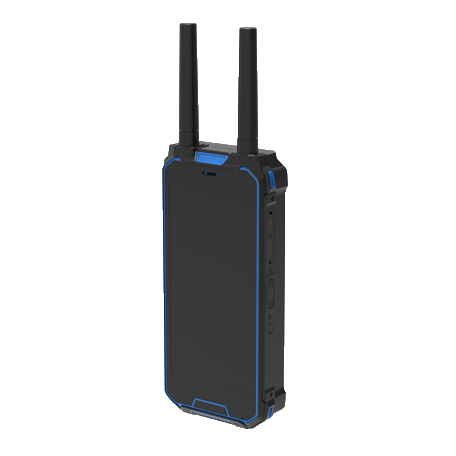
DD300-1 Handheld Anti-Drone Device: 8-Band Detection and 2 km Jamming
A Closer Look at the DD300-1 Counter-Drone System
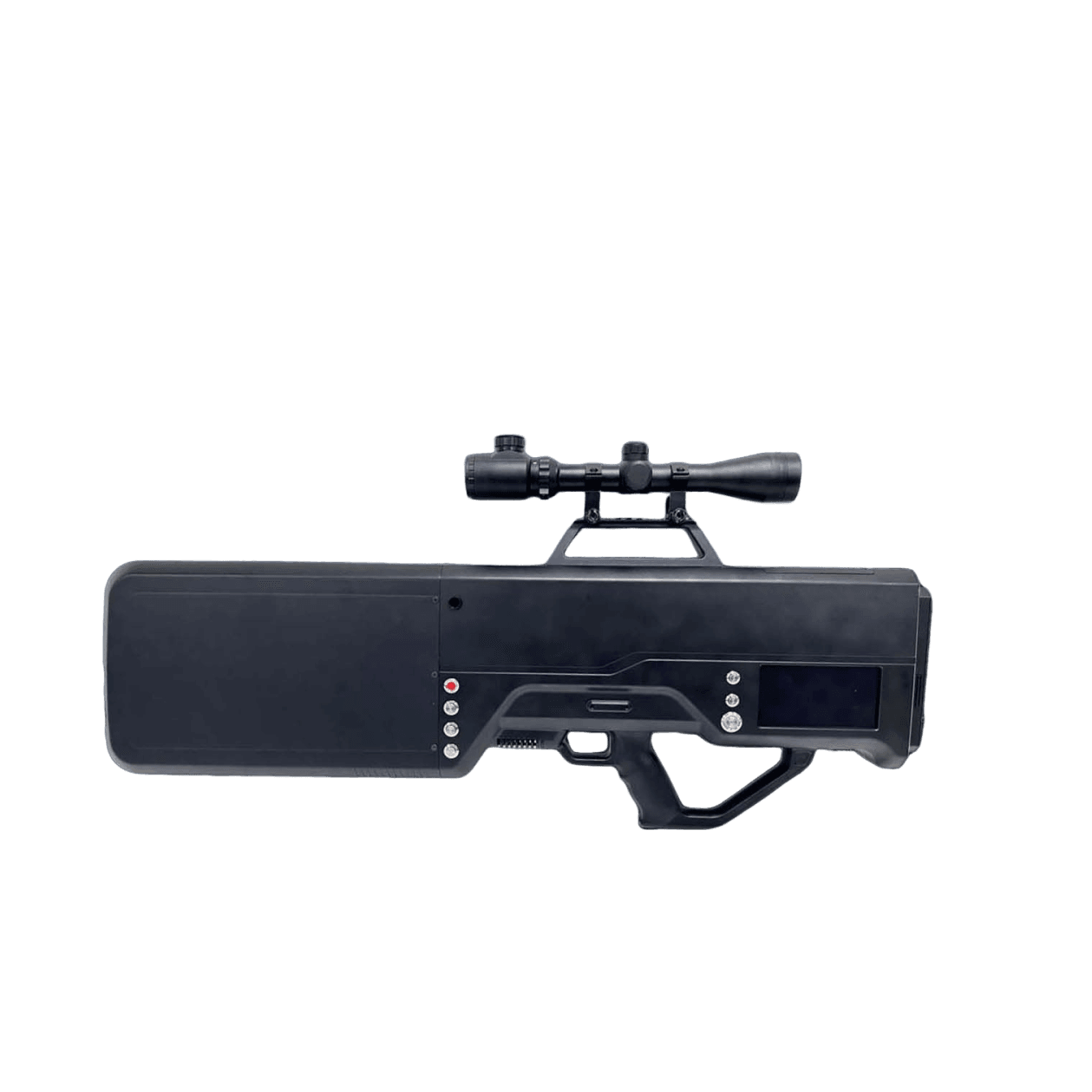
The DD300-1 handheld anti-drone device combines radio-frequency detection with targeted interference in a portable platform. It monitors key frequency ranges from 400 MHz to 6 GHz and supports eight jamming bands between 800 MHz and 5.8 GHz. Therefore, security teams can identify and respond to many RF-controlled and FPV drone threats from a handheld or fixed position. The system offers a detection distance of 2–3 km, while its stated jamming distance reaches at least 2 km. Actual results depend on working conditions and the drone model. In addition, the unit supports 1+N collaborative linkage for coordinated deployments. Its rugged, rifle-style housing includes a display, physical controls, a trigger-style grip, a heat sink, and a carrying-strap buckle. Furthermore, the device supports network positioning, sound and indicator-light alerts, and Chinese, English, and Russian language options. A pair of built-in low-temperature-resistant lithium batteries provides at least 24 hours of operating time. As a result, the DD300-1 suits extended counter-drone operations where mobility and broad signal coverage matter. It can also connect with compatible radar, navigation-spoofing, sight, and remote-control equipment for coordinated systems. The product imagery shows a matte dark exterior, a top-mounted accessory rail, a rear battery module, and a compact screen near the rear section. Meanwhile, the included accessory presentation shows a sight or scope, straps, cables, a power adapter, and additional equipment. Overall, this counter-drone technology is designed for military, security, law-enforcement, infrastructure, and other authorized airspace-protection applications. Operators should use RF detection and jamming equipment only where permitted by applicable laws and regulations.
Key Benefits at a Glance
- Broad coverage: Detection spans listed ranges from 400 MHz to 6 GHz.
- Eight jamming bands: The system targets common control, video, telemetry, and navigation links.
- Long-range performance: Detection reaches 2–3 km, while jamming is specified at 2 km or more, depending on conditions.
- Extended operation: Battery life is rated at 24 hours or longer.
DD300-1 Handheld Anti-Drone Device Specifications
First, the DD300-1 focuses on wide-spectrum awareness and flexible deployment. The specification table below summarizes the available product data. Notably, the stated range can vary with the operating environment, signal conditions, and drone type.

The product diagram identifies the display, power button, controls, heat sink, battery, rail, grip, and strap buckle. It also presents the DD300-1 as a handheld detection and jamming device with eight listed jamming bands.
| Parameter | Specification |
|---|---|
| Model | DD300-1 |
| Device type | Handheld detection and jamming device |
| Detection frequency | 400–1500 MHz, 2200–2500 MHz, and 5100–5900 MHz |
| Detection distance | 2–3 km; specification states ≥2 km depending on conditions and drone models |
| Jamming frequency bands | 800 MHz, 900 MHz, 1.2 GHz, 1.4 GHz, 1.5 GHz, 2.4 GHz, 5.2 GHz, and 5.8 GHz |
| Jamming distance | 2 km; specification states ≥2 km depending on conditions and drone models |
| Battery life | ≥24 hours |
| Working temperature | −40°C to +60°C |
| Weight | ≤6.5 kg, including the battery |
| Dimensions | 770 mm × 110 mm × 305 mm |
| Battery | Two built-in low-temperature-resistant lithium batteries |
| Alarm mode | Sound and indicator light |
| Languages | Chinese, English, and Russian |
Eight Frequency Bands for Signal Interference
The eight jamming bands cover several common drone communication and navigation links. Specifically, the supported bands include:
- 800 MHz for cellular control signals.
- 900 MHz for GSM and UHF-related signals.
- 1.2 GHz for video links.
- 1.4 GHz for telemetry.
- 1.5 GHz for GNSS and GPS-related signals.
- 2.4 GHz for Wi-Fi and control links.
- 5.2 GHz and 5.8 GHz for higher-frequency links and video transmission.
Moreover, the DD300-1 monitors three detection ranges: 400–1500 MHz, 2200–2500 MHz, and 5100–5900 MHz. Its RF scanning, feature recognition, and decoding functions are intended to help identify small, low, and slow drones. The product materials also describe interference with remote-control, image-transmission, and navigation signals. In some scenarios, this interference may cause a drone to return or land. However, outcomes depend on the target system and local conditions.
Portable Design for Fixed or Handheld Deployment
Despite its technical coverage, the DD300-1 is designed for practical field use. The handheld configuration includes a pistol-style grip, trigger, display, physical buttons, and a separate power button. In addition, the built-in heat sink supports the device’s ruggedized design language. A carrying strap can help with transport during longer assignments.
The unit weighs no more than 6.5 kg with its battery and measures 770 mm × 110 mm × 305 mm. Therefore, teams can use it as a mobile tool or position it at a fixed site. Its broad operating temperature range, from −40°C to +60°C, further supports demanding environments.
Operational note: Detection and jamming distances are not guaranteed in every environment. Buildings, terrain, interference, antenna orientation, and drone design can affect performance.
1+N Collaborative Linkage and System Integration
For larger protection zones, the 1+N collaborative linkage feature allows multiple devices to work together. Consequently, operators can build a coordinated detection and response network instead of relying on one unit alone. Network positioning also supports device location and fleet coordination.
Furthermore, the product materials show possible integration with radar and navigation-spoofing equipment. An external guide rail can accommodate sights and remote-control accessories. These options provide a foundation for customized, multi-device deployments, subject to system compatibility and applicable authorization.
Applications for Authorized Airspace Security
The DD300-1 is intended for professional counter-drone and security scenarios. For example, potential application areas include:
- Military and defense: Support protection against surveillance and RF-controlled drone threats.
- Critical infrastructure: Help protect airports, prisons, government facilities, and other sensitive sites.
- Law enforcement: Support controlled airspace during authorized operations and major events.
- Counter-drone operations: Detect and interfere with selected control, video, and navigation links.
- Anti-terrorism missions: Interrupt communications associated with authorized threat-response activities.
Finally, the multilingual interface helps accommodate Chinese-, English-, and Russian-speaking operators. Before deployment, organizations should confirm spectrum permissions, safety procedures, and local regulations for any jamming activity.
Contact Information
Get in Touch
Website: https://uavauto.com
Product Link: View Product Details
Phone: +86 13602546081 (Mr. Wang)
Email: kuiwong@hkdada.com