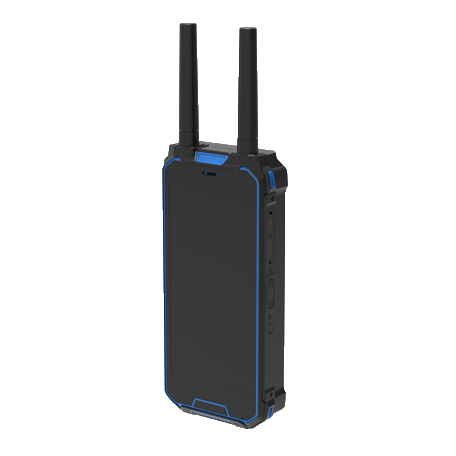
DD300 Counter-Drone Jamming Device: Portable 2 km Protection
A Closer Look at Portable Counter-Drone Protection
Military-quality construction • 2 km or more advertised range • Handheld or shoulder-carried operation
The DD300 counter-drone jamming device is a portable platform designed for authorized military, security, and law-enforcement operations. As a handheld counter-drone jammer, it helps teams address drone remote-control, image-transmission, and navigation signals at extended distances. The product is advertised for a jamming distance of 2 km or more, although actual performance depends on working conditions and the drone model. In addition, its integrated structure supports handheld use and shoulder-carried deployment. Therefore, one operator can reposition the unit as site conditions change. The rugged, rifle-like body uses aviation aluminum and presents a tactical design with a carry handle, pistol-style grip, side controls, display screen, heat sink, guide rail, battery area, and strap attachment points. Moreover, the specification data lists at least 24 hours of battery life, two built-in low-temperature-resistant lithium batteries, and an operating range from -40°C to +60°C. These characteristics make the DD300 suitable for extended field assignments and demanding outdoor environments. The supplied product information describes the device as supporting six frequency bands. However, the listed frequency values include 800 MHz, 900 MHz, 1.2 GHz, 1.4 GHz, 1.5 GHz, 2.4 GHz, and 5.8 GHz. Because the advertised count and visible frequency list do not match, purchasers should confirm the final configuration with the supplier before ordering. Finally, deployment must comply with applicable laws, licensing requirements, and operational authorization rules.

DD300 Counter-Drone Jamming Device Specifications
First, the DD300 combines portable handling with specifications intended for sustained professional use. The table below summarizes the supplied technical information. Range remains dependent on environmental conditions and the target drone.
| Parameter | Supplied specification |
|---|---|
| Listed frequency values | 800 MHz, 900 MHz, 1.2 GHz, 1.4 GHz, 1.5 GHz, 2.4 GHz, and 5.8 GHz |
| Battery | Two built-in low-temperature-resistant lithium batteries |
| Housing material | Aviation aluminum |
| Operation modes | Handheld and shoulder-carried |
How the DD300 Supports Field Deployment
The DD300 uses an integrated structural design for rapid deployment. Specifically, operators can use it by hand or carry it with the shoulder strap. This flexibility helps teams move between checkpoints, perimeter positions, and temporary security locations. Furthermore, the external guide rail can accommodate sights and remote-control equipment, according to the product imagery.

In addition, the product information describes 1+N collaborative linkage. Multiple devices can therefore be coordinated for broader operations. The imagery also presents possible connection with radar and navigation-spoofing equipment. However, the exact integration method and available accessories should be verified before deployment.
- Handheld format for rapid single-operator positioning.
- Shoulder-carried configuration for improved mobility.
- External guide rail for compatible sights or remote-control equipment.
- 1+N collaborative linkage for coordinated operations.
- Aviation-aluminum housing for a rugged professional format.
Professional Counter-Drone Applications
Because the DD300 is portable and designed for extended operation, it can support several authorized security scenarios. For instance, military and defense teams may use it to help establish protected zones. Similarly, law-enforcement units may evaluate it for sensitive-site protection, event security, or dignitary operations. Prison authorities may also consider counter-drone equipment for preventing unauthorized aerial deliveries. In contrast, border and critical-infrastructure teams may require coordinated systems that combine detection, identification, and response procedures.
- Military and defense: Support authorized perimeter-security and counter-drone operations.
- Law enforcement: Add a response option for sensitive locations and protected events.
- Prison security: Help address unauthorized drones near correctional facilities.
- Critical infrastructure: Support layered protection plans around restricted sites.
- Anti-terrorism operations: Assist authorized teams addressing drone-related risks.
Get More Information
For product specifications, availability, configuration details, and authorized-use guidance, contact the supplier directly. In particular, ask the supplier to confirm the advertised frequency-band count, listed frequencies, accessories, and regional compliance requirements.