
Compact IMU Modules for Integrated Attitude Sensing
Camera Systems · Product guide
DAIMU 301 and DAIMU 331 are miniature inertial measurement units for engineers integrating three-axis attitude sensing into drones, robots, vehicles, and industrial equipment. Both combine an MCU with pre-integrated filtering, UART and USB interfaces, and a compact 1.4 g package. The 301 favors a wider accelerometer range, while the 331 provides lower accelerometer noise and improved static precision.
Verified specifications
| Gyroscope measurement range | ±2000°/s |
|---|---|
| Gyroscope bias instability | 3.0°/hr |
| Gyroscope angular random walk | 0.8°/√hr on DAIMU 301; 0.6°/√hr on DAIMU 331 |
| Accelerometer measurement range | ±32 g on DAIMU 301; ±16 g on DAIMU 331 |
| Accelerometer bias instability | ±20 mg on DAIMU 301; ±10 mg on DAIMU 331 |
| Roll and pitch accuracy | 0.05° on DAIMU 301; 0.04° on DAIMU 331 |
| Input voltage | 3.3 V to 16.0 V |
| Power consumption | 120 mW |
| Interfaces | UART and USB |
| Operating temperature | -40°C to 85°C with temperature compensation |
| Mechanical size and weight | 15.4 × 15.4 × 3.5 mm; 1.4 g |
Imaging and Processing Integration
These modules are inertial sensors rather than imaging devices and do not include a camera or lens. Their role in a vision-equipped system is to supply roll, pitch, and yaw information that can be combined with camera-based positioning or control data. The built-in MCU and pre-integrated complementary, Extended Kalman Filter, and Unscented Kalman Filter algorithms provide direct attitude-angle output rather than requiring a host controller to perform sensor fusion.
Both models specify a gyro range of ±2000°/s and yaw accuracy of 0.2°. Roll and pitch accuracy is 0.05° for the DAIMU 301 and 0.04° for the DAIMU 331. These figures describe the modules' specified performance; they do not establish the final accuracy of a complete vehicle, robot, or vision system, whose result also depends on installation and integration.
Choosing Between 301 and 331
The main selection point is the accelerometer trade-off. DAIMU 301 has a ±32 g range, making it the more appropriate of the two when the installation may experience high acceleration or impact. DAIMU 331 reduces the range to ±16 g but offers lower noise values: 0.6°/√hr gyro angular random walk versus 0.8°/√hr, and 0.09 m/s/√hr accelerometer velocity random walk versus 0.12 m/s/√hr.
DAIMU 331 also improves accelerometer bias instability from ±20 mg to ±10 mg and roll and pitch accuracy from 0.05° to 0.04°. Its specification is therefore oriented toward applications prioritizing stability and lower noise. DAIMU 301 remains the clearer choice when mechanical shock and acceleration headroom matter more than the finer static figures.
- Choose DAIMU 301 for wider accelerometer range
- Choose DAIMU 331 for lower noise and higher static precision
- Both retain a ±2000°/s gyroscope range
Supported Civilian Applications
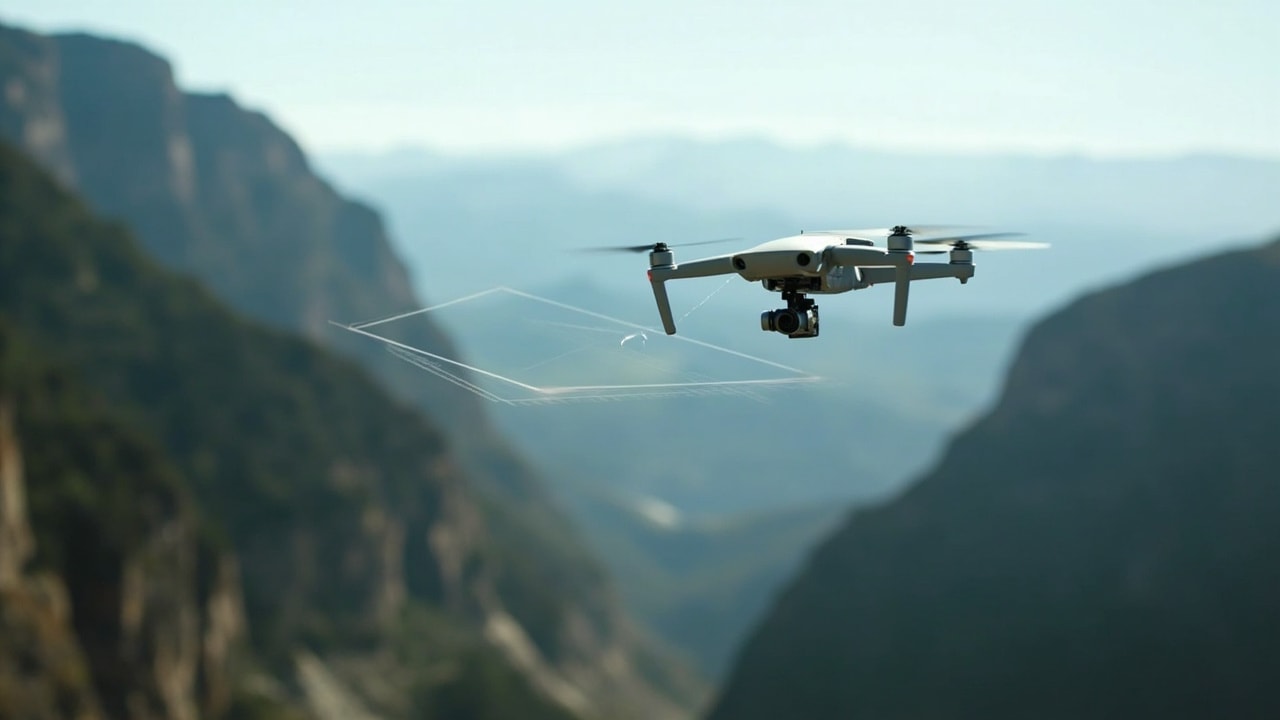
Documented applications include drone and flight-control feedback, mobile-robot positioning and balance, VR or AR motion capture, autonomous-driving perception, and precision automation. The modules can also support agricultural and construction machinery leveling, structural tilt and vibration monitoring, antenna pointing, gimbal stabilization, and robotic joint control.
These are supported application areas rather than guaranteed outcomes for every installation. For example, attitude data may assist a drone's stability control, but the published material does not claim improved wind resistance or a specific control performance under flight testing. System designers should evaluate the selected module against their actual motion profile, environmental conditions, and control architecture.
Power, Packaging, and Interfaces
Both modules use a 15.4 × 15.4 × 3.5 mm package and weigh 1.4 g, reducing the space and mass required for embedded inertial sensing. They operate from 3.3 V to 16.0 V and consume 120 mW. The stated input range allows integration with qualified 3.3 V and higher-voltage supplies, although the complete power budget still depends on the host system and communication method.
UART and USB interfaces support embedded and direct connections, with AT commands and extensible formats listed as communication options. The modules also specify 2000 g shock resistance, 10 g vibration resistance, and 100% magnetic shielding. Magnetic shielding helps reduce interference from external magnetic fields, but it does not by itself confirm suitability for every installation environment.
- Confirm the carrier board supports 3.3–16.0 V input
- Verify UART or USB connector and protocol requirements
- Check mechanical clearance for the 3.5 mm package height
- Assess acceleration against the selected accelerometer range
Frequently asked questions
What is the main difference between DAIMU 301 and DAIMU 331?
DAIMU 301 offers a wider ±32 g accelerometer range, while DAIMU 331 has a ±16 g range but lower noise and better static figures. DAIMU 331 specifies ±10 mg accelerometer bias instability and 0.04° roll and pitch accuracy, compared with ±20 mg and 0.05° for DAIMU 301.
Do the modules provide attitude angles directly?
Yes. Their built-in MCU and pre-integrated complementary, EKF, and UKF algorithms support direct output of roll, pitch, and yaw. This reduces the need to implement the described sensor-fusion processing in the host controller, while final system performance still depends on the surrounding design.
What interfaces and commands are available?
The specified hardware interfaces are UART and USB. Supported communication options include AT commands and extensible formats. Before selecting either module, integrators should verify the physical connector, electrical interface, command behavior, and data timing required by the host system.
Are these modules suitable for drones and industrial systems?
The published applications include drones, flight control, robotics, autonomous-driving perception, automation, and infrastructure monitoring. Their miniature package, wide compensated temperature range, shock and vibration specifications, and attitude output support these uses, but installation-specific validation remains necessary.