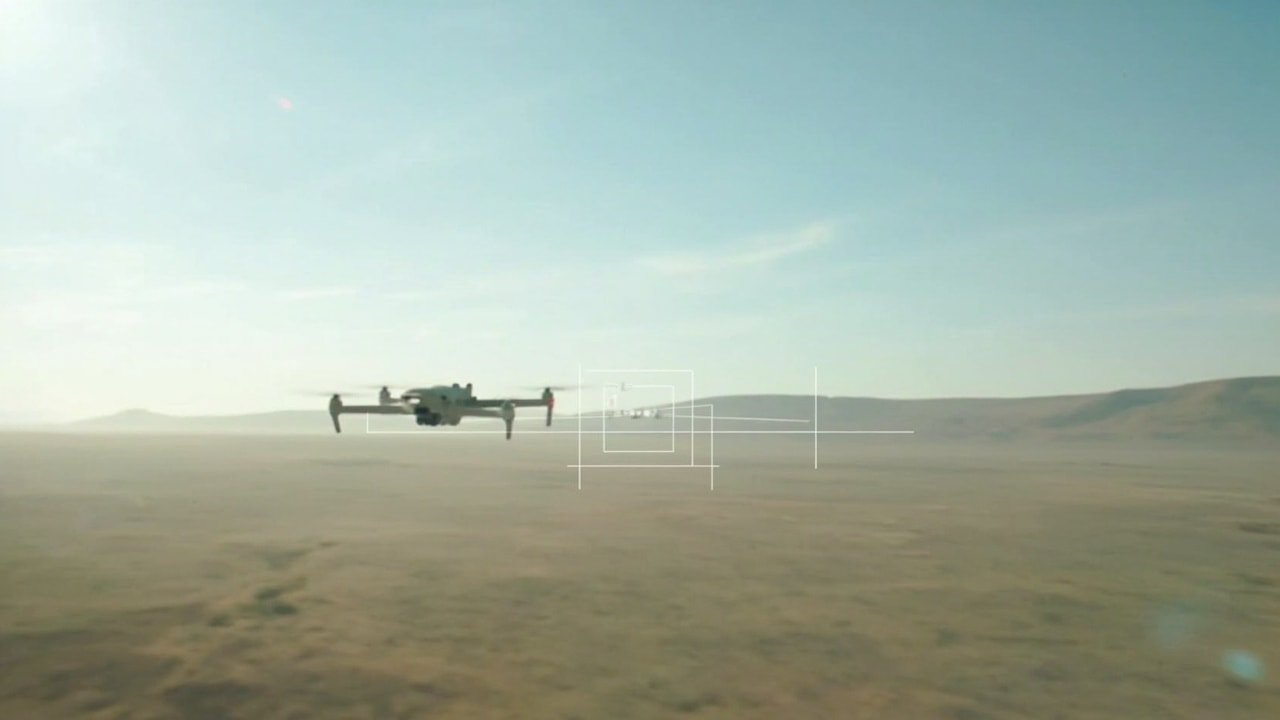
DS60L Lynx-H Gimbal: Lightweight Two-Axis EO Pod with Laser Ranging
Gimbal Pod · Product guide
The DS60L Lynx-H Gimbal is a two-axis gyro-stabilized electro-optical pod for small UAVs, handheld observation kits and vehicle or robot platforms. It combines a 1920×1080 visible camera, a laser rangefinder covering 5 to 1200 metres and dynamic tracking in an 85 g housing, giving imaging and ranging from one lightweight mount.
Verified specifications
| Weight | 85 g |
|---|---|
| Resolution | 1920×1080 at 60 fps |
| Field of View | 19.7° × 11° (16 mm lens) |
| Gimbal Configuration | Gyro-stabilized, two-axis (pitch and yaw) |
| Stabilization Accuracy | 0.1 mrad (1°/2 Hz, 1σ) |
| Laser Ranging | 5–1200 m, ±1 m accuracy |
| Control Interface | Serial port |
| Power and Supply | 12–28 V input; average ≤10 W, maximum ≤20 W |
Imaging, Ranging and Stabilization
The documented sensor set pairs a 1920×1080 camera recording at 60 fps with a laser rangefinder covering 5 to 1200 metres at ±1 m accuracy. The 16 mm lens produces a 19.7° × 11° field of view, a narrow cone that suits long-range observation and inspection tasks where detail at distance matters more than wide situational awareness.
Stabilization works on two axes. Attitude sensing and servo control adjust pitch and yaw in real time to suppress airframe jitter, with a quoted accuracy of 0.1 mrad at 1°/2 Hz (1σ). Yaw travel spans -110° to +110° and pitch -100° to +40°, while angular position accuracy is specified at ≤0.3°.
Control, Power and Integration Checks
Integration starts at the serial port, which is the only control interface documented for this unit. Supply voltage is 12–28 V, consumption averages 10 W or less and peaks at 20 W, so power budgeting and rail conditioning on a small airframe are the practical first checks before anything else.
Because the published protocol details and telemetry formats are limited, treat the following as an integration checklist rather than confirmed compatibility.
- Confirm the flight controller or companion controller speaks the gimbal serial protocol
- Provide a regulated 12–28 V rail sized for the 20 W peak draw
- Confirm 85 g and the head envelope fit the airframe payload bay
- Check the mounting and structure can absorb launch shock of 400 g or more
Where It Fits in Civilian Work
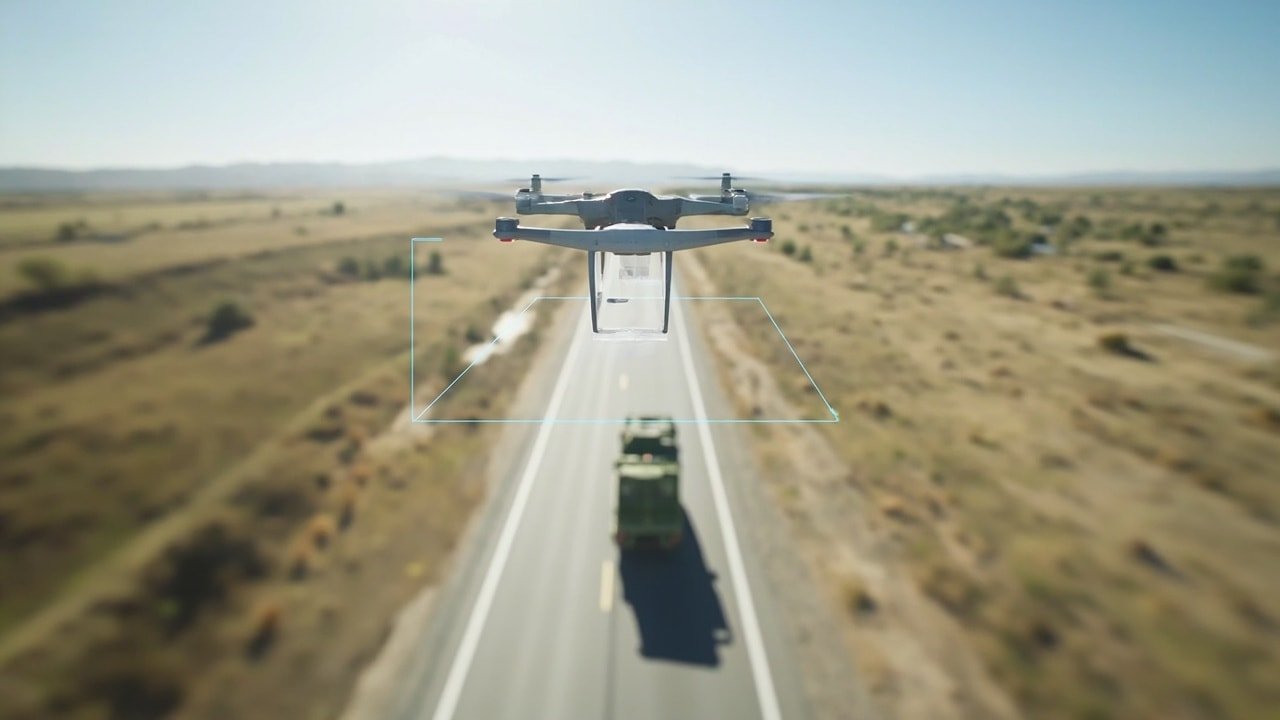
The weight class points to compact UAV reconnaissance: border patrol, search and rescue and power line inspection, where a stable, narrow view and live range data help an operator judge distance to a subject without carrying a heavier payload.
The same mass suits handheld observation kits for dismounted field operators, and vehicle or robot platforms for security patrol, environmental monitoring and bomb-disposal support. A quoted launch impact rating of 400 g or more also supports use on target drones and tube or catapult-launched platforms.
Tradeoffs Before You Commit
Two axes means pitch and yaw only; roll still comes from the host platform, so a vibration-prone airframe will not get full three-axis compensation from this pod. The narrow 19.7° horizontal field of view also means wide-area scanning needs a second look or a different optic.
The product summary describes dual-mode visible and infrared imaging, but the current parameter table publishes only the visible sensor figures, with no thermal resolution, frame rate or lens data. Treat thermal capability as unconfirmed and ask the supplier for those numbers, and for the serial command protocol, before ordering.
Frequently asked questions
Does the DS60L Lynx-H include an infrared thermal channel?
The product summary describes dual-mode visible and infrared imaging, but the published parameter table lists only the 1920×1080 visible sensor, with no thermal resolution, frame rate or lens data. Treat thermal performance as unconfirmed and request those figures before committing to a purchase.
Can the gimbal be carried on a small multirotor?
At 85 g the unit suits small UAVs, provided your craft can supply 12–28 V and handle the 20 W peak draw, and has room to mount the head. Keep in mind that only pitch and yaw are stabilized, so roll compensation depends on the airframe itself.
What does the 400 g launch impact rating mean in practice?
It states the gimbal withstands launch shocks of 400 g or more, which is relevant for catapult or tube-launched platforms and for lightly built airframes. It is a survivability figure rather than a flight-time or imaging guarantee, and actual performance still depends on the installation.
How is the gimbal controlled?
Control is through a serial port, so the platform or a companion controller must speak the same command protocol. Protocol details, telemetry formats and video output type are not published in the current data sheet, so confirm these with the supplier before integration work begins.