DS403 Electro-Optical Pod: Integrated Day-Night Imaging
Gimbal Pod · Product guide
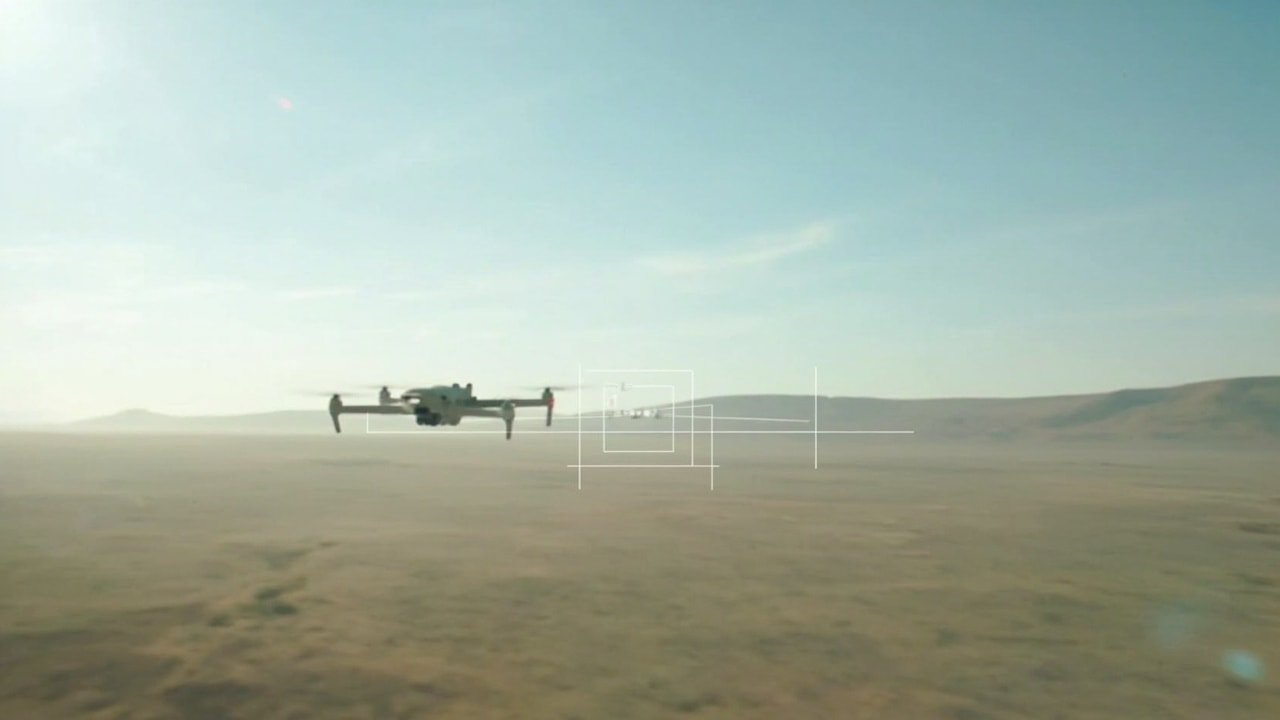
The DS403 Miniature Electro-Optical Pod is a stabilized imaging system for drone, vehicle and other compatible platform operators needing visible-light, thermal and distance-measurement functions in one payload. It combines a 4K visible camera, 640 × 512 infrared sensor, laser rangefinder and assisted target recognition within a compact unit weighing no more than 580 grams.
Verified specifications
| Stabilization | Two-axis gyro stabilization; accuracy ≤0.2 mrad |
|---|---|
| Infrared imaging | 640 × 512 resolution; 14.6° × 11.7° field of view with 30 mm optics |
| Visible imaging | 4K output; 38.4° × 22.2° wide FOV with 8 mm optics; 12.7° × 7.2° narrow FOV with 25 mm optics |
| Laser ranging | 15–3,000 m for a 4 m × 6 m vehicle target; accuracy ±2 m; frequency ≤5 Hz |
| Gimbal movement | Azimuth -150° to +150°; pitch -90° to +30°; maximum angular velocity ≥60°/s |
| Power | 14–28 VDC input; average consumption ≤10 W |
| Weight | ≤580 g |
| Operating temperature | -20°C to +55°C |
Dual-Sensor Imaging Choices
The DS403 pairs a 4K visible-light camera with a 640 × 512 thermal infrared sensor. The visible channel offers wide and narrow fields of view, allowing an operator to balance scene coverage against detail. The thermal channel uses a narrower 14.6° × 11.7° field of view and is intended to support monitoring when visible-light conditions are insufficient.
These are complementary imaging channels rather than interchangeable specifications. Thermal resolution is lower than the visible camera's 4K output, while the two visible optics provide different levels of magnification. Operators should select the appropriate channel according to the scene, required detail and lighting conditions.
- Wide visible optics: 38.4° × 22.2°
- Narrow visible optics: 12.7° × 7.2°
- Thermal field of view: 14.6° × 11.7°
Stabilized Tracking and Ranging
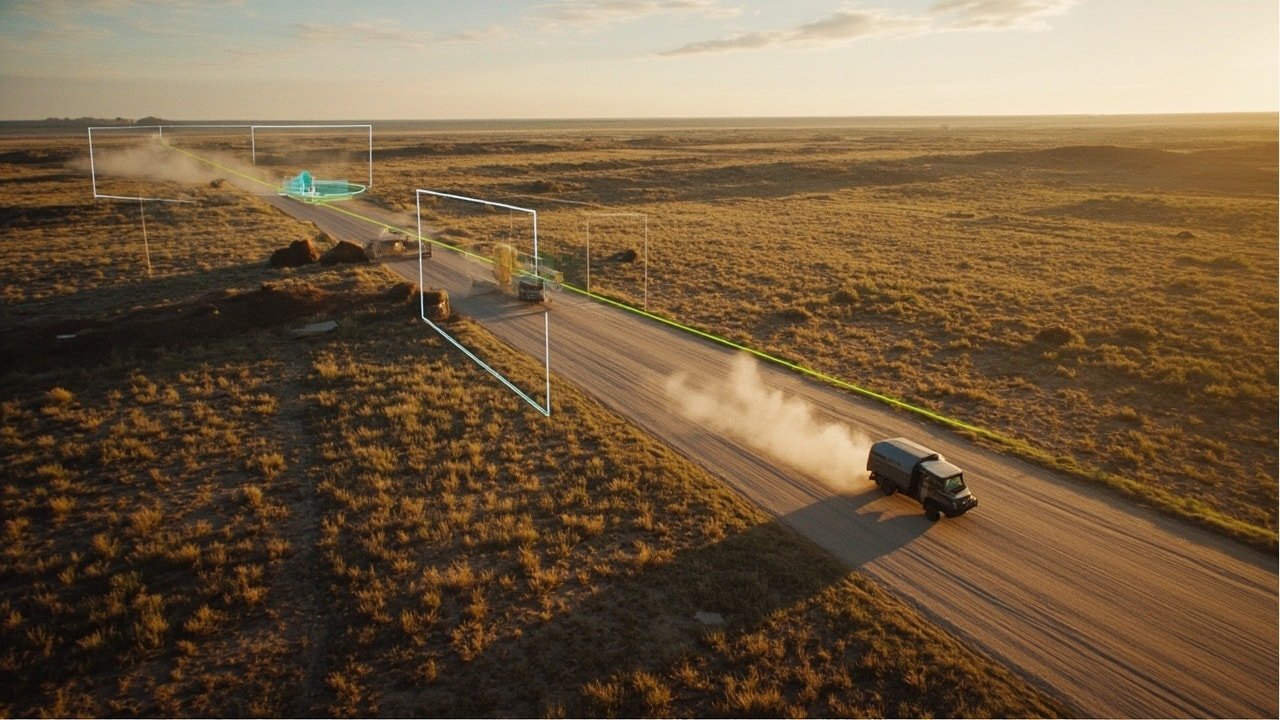
A two-axis gyro-stabilized gimbal supports the DS403's imaging and ranging functions. The specified stabilization accuracy is no greater than 0.2 mrad, with an angular-velocity capability of at least 60°/s. Assisted image recognition is listed at up to 50 Hz, allowing the system to analyze changing scenes and support target tracking.
The integrated laser rangefinder covers 15 to 3,000 meters for the stated 4 m × 6 m vehicle target, with accuracy of ±2 meters and a maximum ranging frequency of 5 Hz. These figures are tied to that target condition and should not be treated as performance measurements for every object or environment.
- Maximum angular acceleration is at least 100°/s²
- Ranging frequency is no higher than 5 Hz
- Recognition frequency is up to 50 Hz
Civilian Monitoring Applications
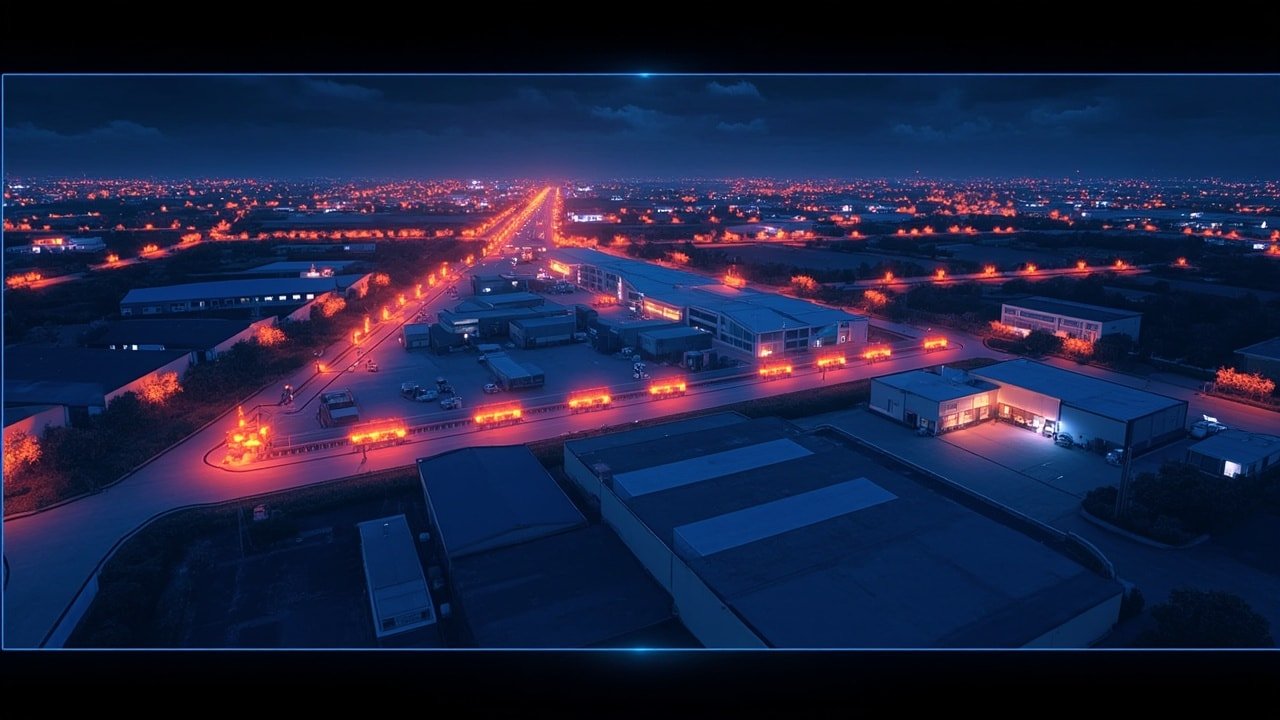
The combined visible, thermal and ranging functions make the DS403 suitable for civilian security surveillance, perimeter monitoring and nighttime observation. The thermal sensor adds a separate imaging option when scene lighting is limited, while the visible optics support detailed daytime observation and wider-area coverage.
Search-and-rescue teams are another documented use case, particularly when locating people at night or in smoke. Platform operators should evaluate the gimbal envelope, payload allowance, power capacity and field of view for each mission rather than assuming the pod is suitable for every airframe or installation.
- Security and perimeter surveillance
- Day and night observation
- Nighttime or smoke-obscured search and rescue
Payload and Integration Checks
At no more than 580 grams, the DS403 is positioned as a compact payload for drones, vehicles and other compatible platforms. It accepts 14–28 VDC input and averages no more than 10 watts. Installers should verify the platform's payload capacity, voltage tolerance, mounting geometry and cooling provisions before integration.
The documented control and video interfaces are not specified in the supplied product data, so compatibility with a particular aircraft, controller or display cannot be confirmed here. Integration should also include checks for the stated gimbal travel, operating-temperature range and required command, video and power connections.
- Confirm payload limit and mounting clearance
- Verify available 14–28 VDC power
- Check gimbal travel against the installation
- Confirm command, video and connector compatibility
Frequently asked questions
What imaging does the DS403 provide?
It combines a 4K visible-light camera with a 640 × 512 thermal infrared sensor. Visible optics include 8 mm wide and 25 mm narrow options, while the thermal sensor has a 14.6° × 11.7° field of view. The available channel depends on the operator's scene and detail requirements.
How far can the laser rangefinder measure?
The stated range is 15 to 3,000 meters when measuring a 4 m × 6 m vehicle, with accuracy of ±2 meters and a maximum frequency of 5 Hz. That target condition is part of the published specification, so it should be considered when comparing the pod with other ranging systems.
Does the DS403 automatically track targets?
The product data specifies AI-assisted target recognition and tracking, with image-recognition frequency reaching 50 Hz. This confirms assisted tracking functions within the pod, but it does not specify every recognition class, tracking scenario or level of operator control available through a particular integration.
What should be checked before installation?
Confirm the platform's payload allowance, 14–28 VDC power availability, mounting clearance and operating-temperature limits. Also verify the required control, video and power connections, because their formats and compatibility are not detailed in the supplied product information.