DA10 PRO Aerial Imaging Features and Integration
Camera Systems · Product guide
The DA10 PRO is a lightweight three-axis gimbal camera for drone operators who need stabilized imagery, flexible camera positioning, and separate recording and transmission options. Its 2K recording, RTSP video output, compact dimensions, and broad working-voltage range support integration planning across compatible aerial platforms.
Verified specifications
| Imaging sensor | 1/2.7 sensor |
|---|---|
| Effective pixels | 200W |
| Lens specification | EFL 2.4 mm; specified focal length f=3.38-14.41 mm |
| Video recording resolution | 2K, MP4 format |
| Image transmission | 1080P RTSP code stream using H.265 |
| Photo resolution | 2K, JPG format |
| Working voltage | 7.2V to 72V |
| Weight | 61 g |
| Overall dimensions | 51 mm L × 43.3 mm W × 61.7 mm H |
| Working temperature | -10°C to 60°C |
| Controllable angles | Pitch -90° to +10°; direction -90° to +90°; roll -45° to +45° |
| Video and control interfaces | Network port for video output and control signal input |
Imaging and Recorded Media
The DA10 PRO uses a 1/2.7 sensor with 200W effective pixels and records video at 2K in MP4 format. It also captures 2K photographs in JPG format. The supplied lens specification lists EFL 2.4 mm and a focal length of f=3.38-14.41 mm, which should be checked against the intended field of view before installation.
Recorded media can be stored on a Micro SD card up to 32 GB using the FAT32 file system. This creates a practical distinction between onboard capture and live viewing: operators can retain local 2K recordings while transmitting a 1080P H.265 RTSP stream.
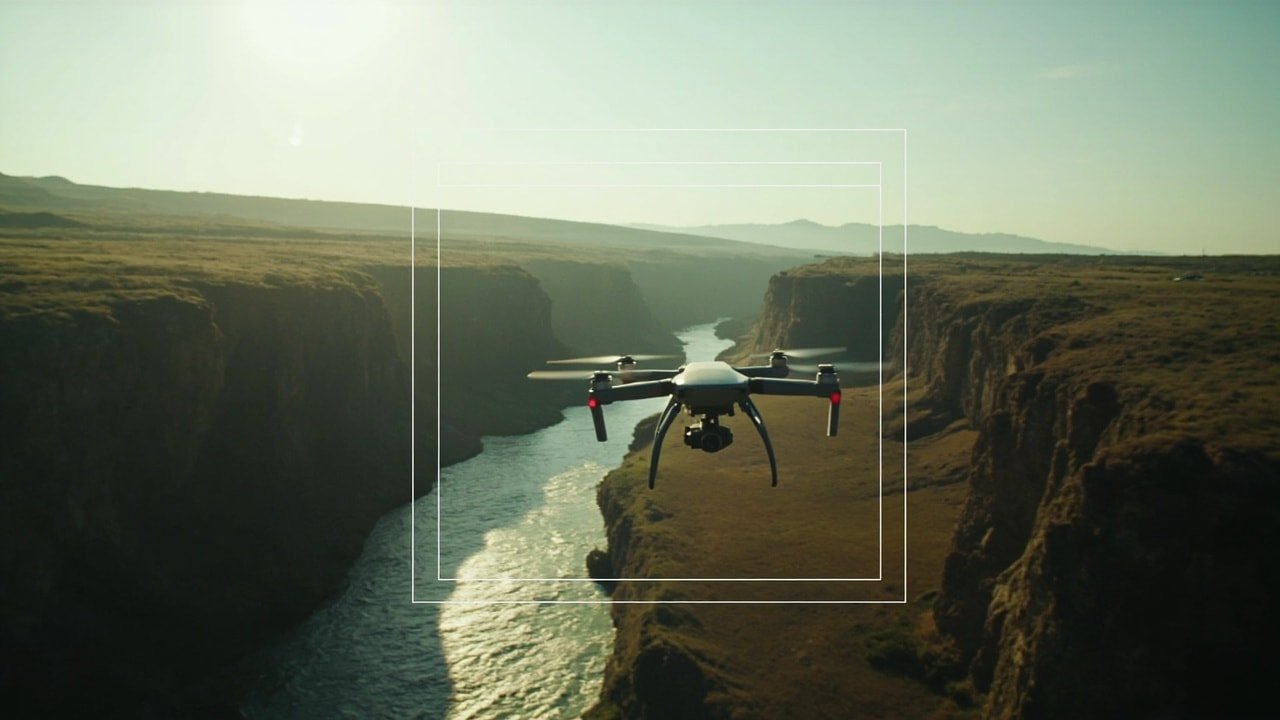
Stabilization and Camera Control
Three-axis stabilization is intended to reduce picture movement caused by aircraft motion. The controllable ranges cover pitch, direction, and roll, allowing the camera to be positioned within documented angular limits rather than left in a single fixed orientation.
Operational modes include hoist or upside-down installation, overall return to center, one-click down, and yaw return to center. These controls can support different mounting positions, but the available gimbal commands must still be confirmed with the selected aircraft or external control system.
- Confirm pitch, direction, and roll limits during setup
- Check return-to-center behavior in every mounting orientation
- Verify command support before connecting external controls
Video Output and Storage
The image-transmission path is specified as a 1080P RTSP code stream using H.265, while onboard recording remains at 2K. This separation gives operators the option of collecting higher-resolution files for later use while using a network stream for live viewing, subject to the receiving system’s RTSP and H.265 support.
Network ports handle both the video output signal and control signal input. Because the product data does not specify connector types, protocols beyond RTSP, or aircraft-control compatibility, those details should be verified before selecting cables, a controller, or a live-view application.
- Confirm the receiver supports RTSP and H.265
- Verify network connector and cable requirements
- Check available Micro SD capacity and FAT32 support
Mechanical and Power Integration
At 61 g, the DA10 PRO is relatively compact for an aerial gimbal camera. Its overall dimensions are 51 mm long, 43.3 mm wide, and 61.7 mm high. Those figures allow operators to compare the unit with available mounting space, clearance around moving parts, and the aircraft’s payload allowance.
The documented working-voltage range is 7.2V to 72V, with a working current of 210 mA. The broad voltage range offers flexibility when planning power integration, but the actual platform supply, wiring, grounding, and connector arrangement need separate confirmation rather than being inferred from the stated limits.
Choosing an Aerial Application
The combination of stabilized imaging, local recording, and live transmission suits aerial cinematography, surveying, and infrastructure inspection workflows. For example, an operator could record 2K files during a flight while using the RTSP feed for live observation, where the receiving and display equipment supports the documented format.
Selection should balance image retention against live-view requirements, available payload capacity, mounting orientation, and control integration. The DA10 PRO is most appropriate for drone builders or operators who can verify power, network, storage, and gimbal-control requirements against their specific aircraft and ground equipment.
- Match the gimbal to the aircraft’s payload and mounting space
- Decide whether 2K recording or live transmission is the priority
- Validate power, network, storage, and control connections
Frequently asked questions
What resolution does the DA10 PRO record?
The DA10 PRO records 2K video in MP4 format and captures 2K photographs in JPG format. Its separate image-transmission specification is 1080P over an RTSP H.265 code stream, so live viewing and stored-file resolution are not the same.
How does the camera connect for video transmission?
Video output uses a network port and is specified as a 1080P RTSP code stream using H.265. Control signals also enter through a network port, but the product data does not identify connector types or confirm particular aircraft or controller compatibility, so integration must be checked separately.
What power supply does the gimbal require?
The stated working-voltage range is 7.2V to 72V, and the working current is 210 mA. This range indicates broad voltage flexibility, but operators should still confirm that their aircraft power source, wiring, and connectors meet the complete electrical requirements.
Can the camera be mounted upside down?
Yes. Hoist mode and upside-down mode are supported, along with overall return to center, one-click down, and yaw return to center. Operators should verify the selected mode and movement limits in the final mounting orientation before flight operations.
Where can the DA10 PRO store recordings?
The camera supports Micro SD storage up to 32 GB with the FAT32 file system. Local storage is intended for 2K MP4 recordings and 2K JPG photographs, while the separate RTSP path provides 1080P H.265 transmission for compatible receiving equipment.