
DAI384S LWIR Thermal Imaging Module – Ultra-Compact 384×288 Uncooled Infrared Camera for UAV & Surveillance
DAI384S: Ultra-Compact LWIR Thermal Imaging Module for UAV and Surveillance
The DAI384S uncooled infrared thermal imaging module represents a breakthrough in miniaturized thermal detection technology. This compact DAI384S module measures just 28x28x30 mm and weighs only 40 grams, making it perfect for space-constrained applications requiring advanced thermal capabilities. The module features 384×288 resolution with 17 um pixel pitch and delivers exceptional sensitivity of less than 40 mK @ f/1.0, ensuring crisp thermal images even in challenging environments. As an uncooled infrared solution, it eliminates the need for cryogenic cooling while maintaining professional-grade image quality. The DAI384S operates at under 1 watt of power consumption and accepts wide input voltages from 4V to 12V, making it ideal for battery-powered portable systems and remote deployments where power efficiency is critical.
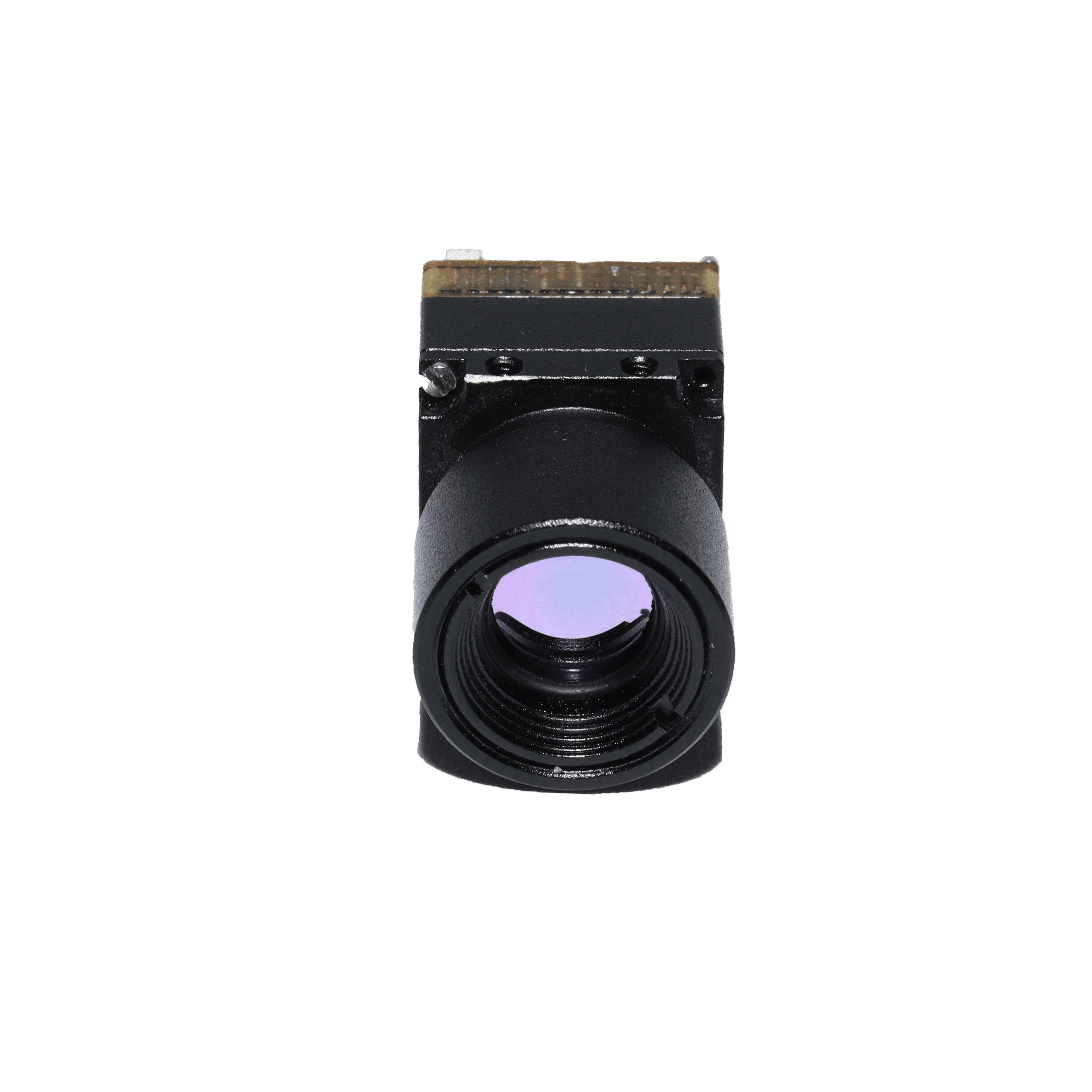
Advanced Thermal Imaging Technology
This micro thermal camera incorporates micro-shutter technology and adaptive non-uniformity correction to ensure consistent image quality across varying thermal scenes. The LWIR spectral band of 8-14 um captures long-wave infrared radiation effectively, while the 50 Hz frame rate provides smooth thermal video output for real-time monitoring applications.
Key Imaging Features
- Digital Detail Enhancement (DDE) processing for improved image clarity
- Display resolution: 768×576 pixels at 25 Hz PAL format
- Multiple lens options: 12 mm to 50 mm for customizable field of view
- Spectral range: 8-14 um LWIR band
- NETD (Noise Equivalent Temperature Difference): less than 40 mK
- Analog and digital video output support
Flexible Interface Options
With support for BT.656, HDMI, RJ45, RS-232, RS-485, TTL, and Peclo-D protocols, integration into existing systems is straightforward and versatile. The DAI384S thermal imaging module seamlessly interfaces with various embedded systems, drones, security cameras, and industrial monitoring equipment.
Application Domains and Use Cases
The low power imaging characteristics of the DAI384S make it exceptionally suitable for various industries requiring compact thermal solutions:
UAV and Drone Applications
Perfect for aerial thermal imaging on drones, enabling search and rescue operations, agricultural monitoring, infrastructure inspection, and wildlife monitoring. The lightweight 40-gram design ensures minimal impact on drone flight time and payload capacity.
Security and Surveillance
The compact form factor and reliable night vision capabilities make it ideal for perimeter protection, border security, port surveillance, and critical infrastructure monitoring systems where 24/7 thermal monitoring is essential.
Industrial Predictive Maintenance
Leverage non-contact temperature monitoring to inspect electrical cabinets, machinery, rotating equipment, and pipeline systems in confined spaces. Detect hot spots and thermal anomalies before equipment failure occurs.
Portable Handheld Devices
Firefighters, building inspectors, law enforcement officers, and field service technicians appreciate the lightweight 40-gram design of handheld thermal cameras for inspection, investigation, and emergency response applications.
Automotive Night Vision
Micro-shutter technology provides enhanced driver assistance systems with reliable thermal perception across diverse lighting conditions, improving safety for drivers in low-visibility scenarios.
Technical Specifications
Core Parameters
- Resolution: 384×288 pixels
- Pixel Pitch: 17 um
- Sensitivity (NETD): less than 40 mK @ f/1.0
- Spectral Range: 8-14 um (LWIR)
- Frame Rate: 50 Hz
- Dimensions: 28x28x30 mm
- Weight: 40 grams
- Power Consumption: less than 1W
- Input Voltage: 4V-12V
- Start-up Time: less than 7 seconds
Environmental Performance
- Operating Temperature (Military Grade): -40C to +60C
- Operating Temperature (Commercial Grade): -20C to +60C
- Storage Temperature: -45C to +70C
- Humidity: 5% to 95% non-condensing
- Vibration and Shock: MIL-STD-810G compliant (GJB 150)
- Temperature Shock Resistance: -5C per minute
- Protection Features: Reverse polarity and over-voltage protection
Communication Interfaces
- Video Output: BT.656, HDMI, analog
- Control Protocols: RS-232, RS-485, TTL, Peclo-D
- Network: RJ45 Ethernet
Frequently Asked Questions
What is the difference between cooled and uncooled thermal imaging modules?
The DAI384S is an uncooled infrared thermal module that operates at room temperature, eliminating the need for cryogenic cooling systems. This results in lower power consumption, faster start-up times (under 7 seconds), reduced size and cost, and maintenance-free operation compared to cooled thermal cameras. Uncooled sensors like the DAI384S are ideal for portable, battery-powered, and continuous operation applications.
Can the DAI384S be integrated into existing surveillance systems?
Yes, the module supports multiple interface protocols including BT.656, HDMI, RJ45, RS-232, RS-485, TTL, and Peclo-D, making it compatible with most existing security and surveillance infrastructure. The standard 28x28x30 mm form factor facilitates straightforward mechanical integration into new or existing camera housings.
What lens options are available for the DAI384S?
The module supports interchangeable lenses ranging from 12 mm to 50 mm focal length, allowing users to customize the field of view from narrow telephoto (long-range detection) to wide-angle coverage (short-range situational awareness) based on specific application requirements.
Is the DAI384S suitable for outdoor industrial environments?
Absolutely. With an operating range from -40C to +60C, 95% humidity resistance, and MIL-STD-810G vibration and shock compliance, the DAI384S is engineered for demanding industrial, military, defense, and outdoor applications including UAV operations, border surveillance, and industrial process monitoring.
What is the typical detection range for the DAI384S thermal module?
Detection range depends on lens selection and target size. With a standard 19mm lens, the DAI384S can typically detect human-sized targets at ranges up to 500-700 meters and vehicle-sized targets at ranges up to 1.5-2 kilometers under favorable conditions.
Get a Quote for DAI384S Thermal Imaging Module
Interested in integrating the DAI384S ultra-compact LWIR thermal imaging module into your product or system? Contact our technical team for competitive pricing, volume discounts, and customization options including lens integration, cable assemblies, and housing solutions. We offer sample evaluation units and comprehensive technical support for seamless integration into your thermal imaging camera products.
Key Benefits:
- Ultra-compact design: 28x28x30 mm, only 40 grams total weight
- Professional-grade thermal imaging: 384×288 resolution, less than 40 mK sensitivity
- Low power consumption: Under 1 watt for extended battery operation
- Wide input voltage range: 4V to 12V compatible with various power systems
- Fast start-up: Under 7 seconds from power-on to operational
- Military-grade environmental tolerance: MIL-STD-810G compliant
- Versatile interfaces: HDMI, BT.656, RS-232, RS-485, TTL, RJ45
- Multiple lens options: 12mm to 50mm for application flexibility
Applications: UAV thermal imaging, drone surveillance, security cameras, industrial monitoring, automotive night vision, handheld thermal cameras, firefighting equipment, building inspection, and defense systems.
Related Products
Thermal Camera Modules
Browse our complete range of thermal imaging modules
UAV Thermal Cameras
Explore thermal cameras designed for drone integration
Product Page
View detailed product specifications and pricing
Website
Related Posts
-
DAI640Pro Uncooled Infrared Thermal Imaging Module: Ultra-Compact Low-Power Core for Drone Payloads & OEM Integration
-
DAI640G Uncooled Infrared Thermal Imaging Module for Industrial and Security Applications
-
DAI640Pro: The Ultra-Compact Thermal Imaging Module for Drones and Portable Systems
-
HI640S Uncooled Infrared Thermal Imaging Module – Ultra-Compact OEM Solution