
Camera Systems · Product guide
The DAI640Pro is a shutterless, uncooled infrared thermal imaging module for OEM designers and system integrators. Its 640×480 detector, 20 × 20 × 14 mm PCB dimensions and 9.1 g weight excluding the lens suit compact instruments, UAV payloads and other embedded thermal systems. Configurable lenses and video and communication options help align the module with different integration requirements.
Verified specifications
| Detector | Uncooled infrared microbolometer without TEC |
|---|---|
| Resolution and pixel pitch | 640 × 480 pixels at 12 μm |
| NETD | ≤40 mK at 300 K, f/1.0 |
| Frame and spectral range | 50 Hz detector rate; 8–14 μm LWIR |
| Dimensions | 20 × 20 × 14 mm PCB, excluding lens |
| Weight | 9.1 g, excluding lens |
| Power input and consumption | 2.5–5.5 V DC input; typical consumption below 1 W |
| Interfaces | BT.656 digital video, PAL CVBS analog video and RS-232 communication |
Detector and imaging controls
The DAI640Pro uses a shutterless, uncooled 640 × 480 microbolometer with 12 μm pixels. Its specified NETD is ≤40 mK at 300 K with an f/1.0 lens, while the 8–14 μm band covers long-wave infrared applications. Digital Detail Enhancement, automatic or manual brightness, black-hot and white-hot polarity, pseudo color and horizontal or vertical image flip provide practical controls for embedded imaging workflows.
Digital zoom is adjustable from 1.0× to 8.0× in 0.1× steps, and crosshair reticles can be configured. The detector operates at 50 Hz, while the PAL display output is specified at 25 Hz and 768 × 576 pixels. These are separate stated rates, so integrators should confirm which timing applies to their selected output path.
- Verify the required frame timing for each available output
- Check lens and zoom settings against the intended scene
- Confirm polarity, reticle and image-flip configuration
Physical and electrical integration
At 20 × 20 × 14 mm excluding the lens, the module is designed for space-constrained assemblies. The stated 9.1 g weight also excludes the lens, making final installed mass dependent on lens choice and mounting hardware. Typical consumption below 1 W supports low-power designs, while the 2.5–5.5 V DC input range reduces the need for a single fixed supply voltage.
Reverse-polarity and under/over-voltage protection are built in. External power input is available, and a five-key keypad provides external control. Integrators still need to evaluate connector placement, lens clearance, heat dissipation and supply behavior within the complete enclosure rather than treating module dimensions as finished-product dimensions.
- Budget for the lens, connector and mounting hardware
- Calculate total mass with the selected lens
- Test startup and continuous operation in the final enclosure
Output and configuration checks
The module provides BT.656 digital video, PAL CVBS analog video and RS-232 communication. Optional digital video interfaces and communication ports allow further configuration for particular system requirements. These options should be treated as configuration choices to verify at ordering and engineering stages, not as confirmation that every interface is present in every supplied configuration.
Lens options include 12, 19, 25, 35 and 50 mm, among others. Changing the lens changes the optical configuration and should be considered alongside NETD conditions, because the published sensitivity figure is specified at f/1.0. OEM teams should align the lens, output interface, power input and control requirements before finalizing a build.
- Confirm the exact output ports in the ordered configuration
- Select a lens appropriate to the required field of view
- Review electrical and mechanical requirements with the supplier
Civilian application considerations
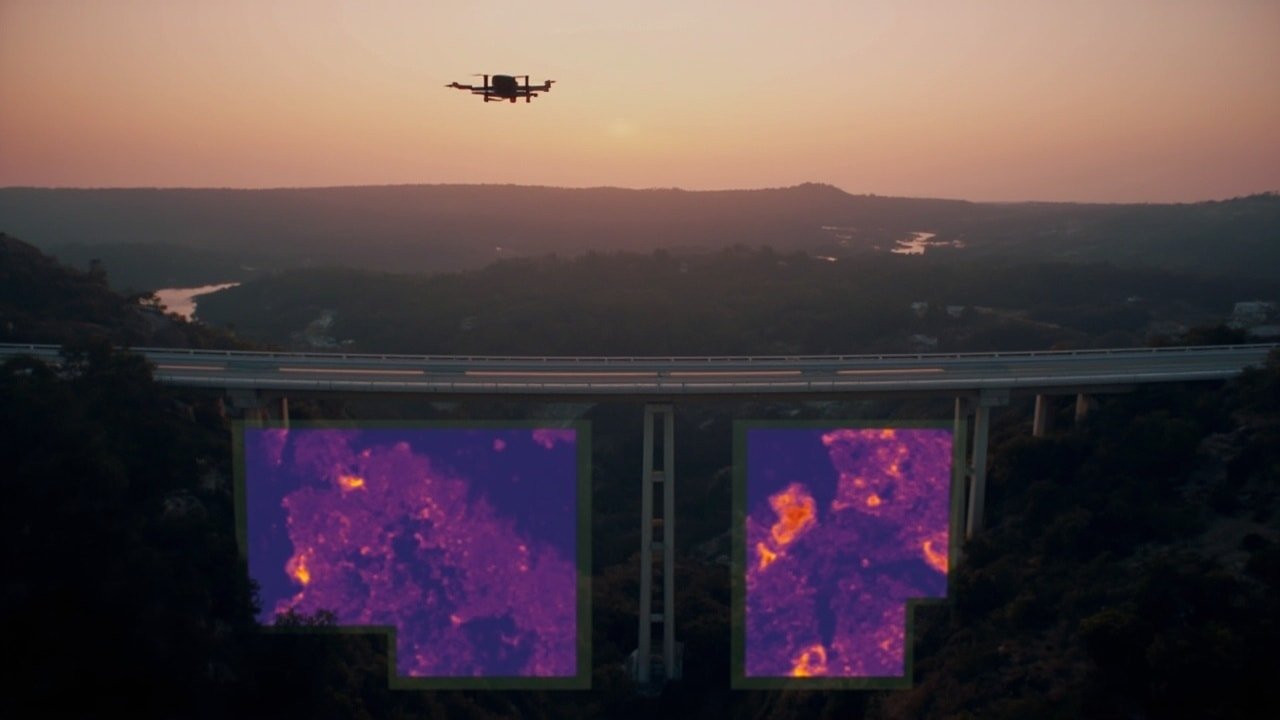
The combination of low weight, compact dimensions and low power consumption makes the DAI640Pro relevant to UAV inspection payloads, handheld diagnostic tools, building inspection equipment and industrial monitoring systems. Its thermal detector can support observation of temperature-related differences in cabinet, bearing or equipment inspections, subject to the selected lens, mounting stability and the integrator’s measurement workflow.
Commercial configurations are specified for operation from −20°C to +60°C, while special application configurations extend from −40°C to +60°C. Storage range is −45°C to +65°C, with 5–95% non-condensing humidity. The product also lists GJB 150 vibration and shock standards and temperature-shock resistance; these stated requirements should be checked against the intended installation and application.
- Select the commercial or special temperature configuration
- Match mounting and vibration conditions to the use case
- Validate performance in the assembled civilian product
Frequently asked questions
What makes the DAI640Pro suitable for compact OEM equipment?
The module measures 20 × 20 × 14 mm and weighs 9.1 g without the lens, with typical power consumption below 1 W. These specifications support integration planning for small instruments and UAV payloads, although final size, mass and thermal performance also depend on the lens, mounting and enclosure.
Which video and communication interfaces are listed?
The listed interfaces are BT.656 digital video, PAL CVBS analog video and RS-232 communication. The product also allows customization of digital video interfaces and communication ports, so integrators should confirm the exact ports included in the ordered configuration before designing the host electronics.
Can the module operate across different supply voltages?
Yes. Its specified operating input range is 2.5–5.5 V DC, with typical consumption below 1 W. Reverse-polarity and under/over-voltage protection are included, but the complete system still requires suitable power regulation, startup sequencing and validation in its intended installation.
What lens and environmental details should be checked?
Available lens examples include 12, 19, 25, 35 and 50 mm, while the published NETD of ≤40 mK is stated at 300 K and f/1.0. Operating temperature depends on commercial or special configuration, so lens suitability and the required temperature range should be confirmed before integration.